
Read More
MoMA, Centre Pompidou and M+ have formed a cultural alliance to broaden global perspectives on modern art, announcing a 2028 Kandinsky exhibition, a May 2027 "What is Contemporary?" symposium in New York, and collaboration in curatorial and conservation research.
ADVERTISEMENT
SCROLL TO CONTINUE WITH CONTENT
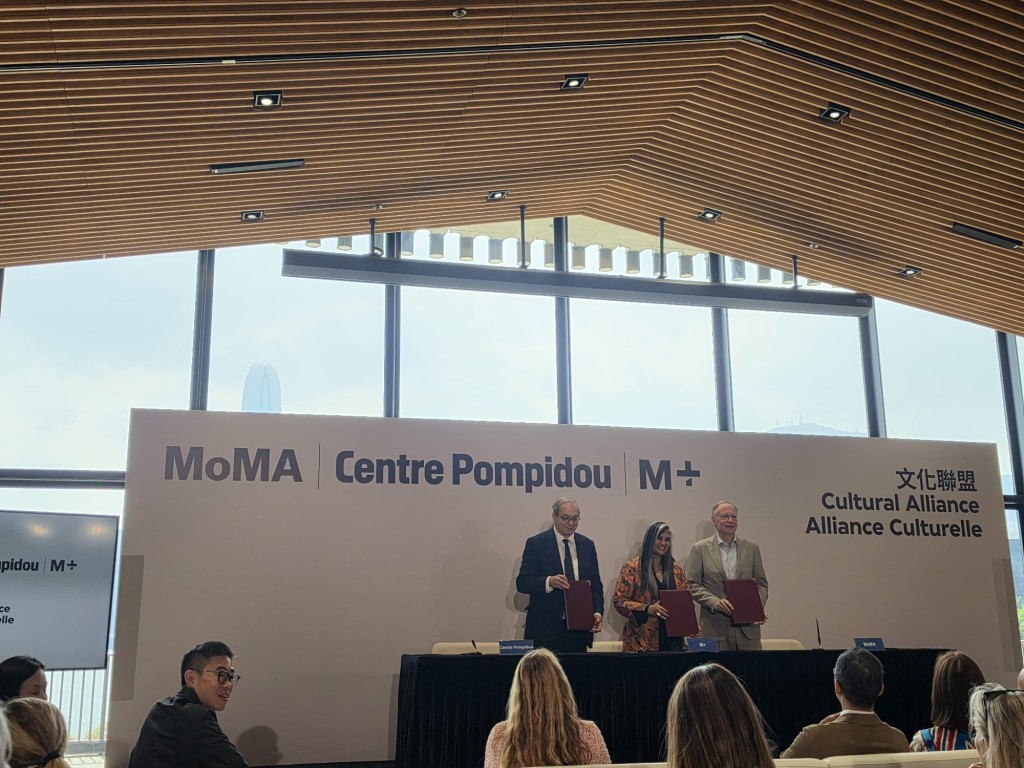
The Museum of Modern Art in New York, Centre Pompidou in Paris and M+ in Hong Kong have formed a landmark cultural alliance aimed at broadening how modern and contemporary art is understood worldwide, challenging the long-standing dominance of Western perspectives.
The partnership, announced at a dialogue in Hong Kong coinciding with M+'s fifth anniversary, brings together institutions from three continents in a shared commitment to "decenter" the traditional art historical narrative.
"This diversity is so rich, so powerful, and our institutions will bridge what that means through our collections, through the stories in those collections," said Suhanya Raffel, museum director of M+.
Christophe Cherix, the David Rockefeller director of MoMA, said the alliance allows the museums to think about the world "not from one perspective" and to push the field "in a new direction." Laurent Le Bon, president of Centre Pompidou, framed the collaboration as a shift from talk to action: "We will keep our identity. But the sum of what we are going to do is more than each of us."
Concrete initiatives announced
The alliance will deliver tangible programming, which include:
· A joint Kandinsky exhibition at Centre Pompidou and M+ in 2028
· A research symposium, "What is Contemporary?", at MoMA in May 2027
· Ongoing collaboration in curatorial research, conservation research and professional development across the three institutions
The directors said bringing their teams together had already generated unexpected ideas, with a shared contemporary exhibition concept emerging organically from their discussions.
Museums as spaces to bridge
Against the backdrop of a global museum boom, Raffel described museums as "spaces to bridge" offering safe environments to encounter ideas and histories. Le Bon noted that amid constant talk of AI and virtual worlds, "people want to see real things" — and the goal is "not bigger institutions, but better experiences."
On security, the directors were unequivocal. "We will never compromise on security," Raffel said, describing the alliance as a family in which institutions look out for one another.
As M+ marks five years, Raffel said the alliance opens new possibilities: "We can dig deep and share in a way that we hadn't thought possible. I feel extremely optimistic about what's to come."