Read More


Night Recap - September 28, 2026
12 hours ago



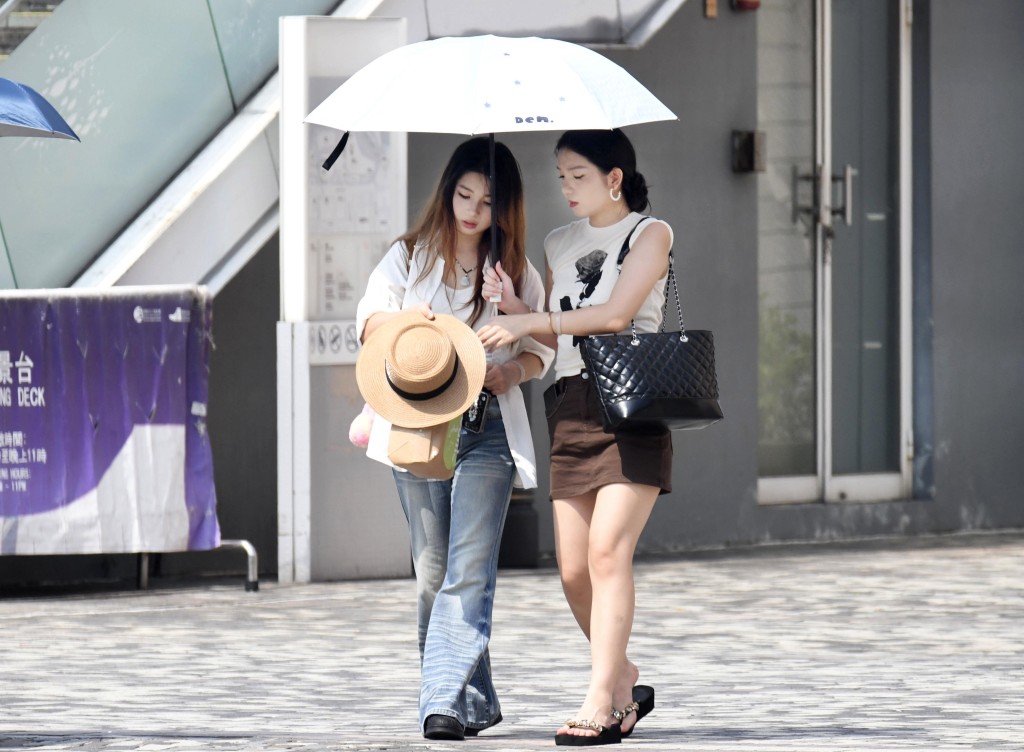
HK faces week of extreme heat with temperatures soaring to 34 degrees
28-09-2026 03:01 HKT


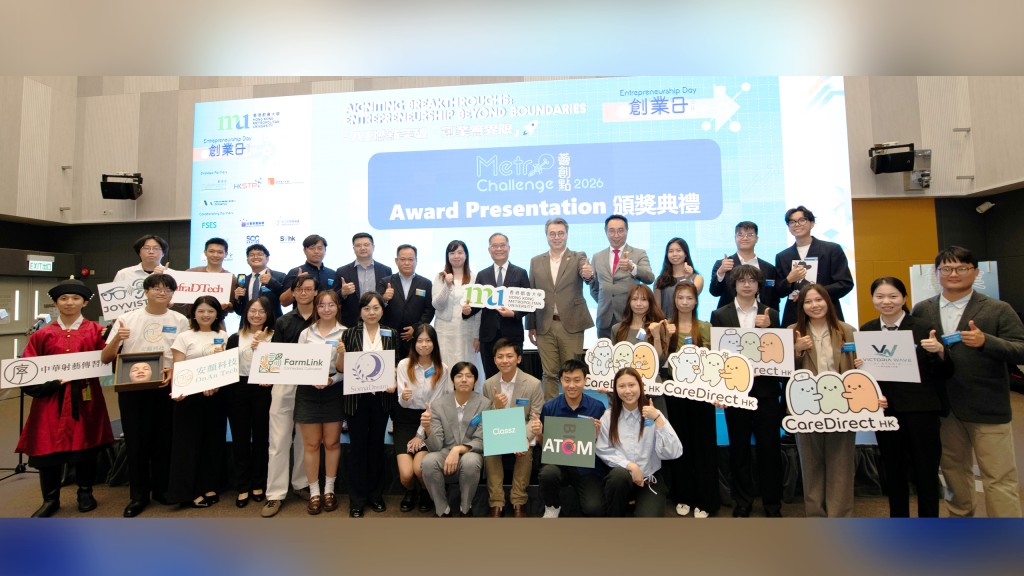
Turning an unconventional idea into a viable commercial venture requires more than raw ambition; it also calls for funding, institutional backing, and market validation. At Hong Kong Metropolitan University (HKMU) Entrepreneurship Day 2026, student innovators demonstrated how university-backed incubation bridges classroom concepts and commercial reality.
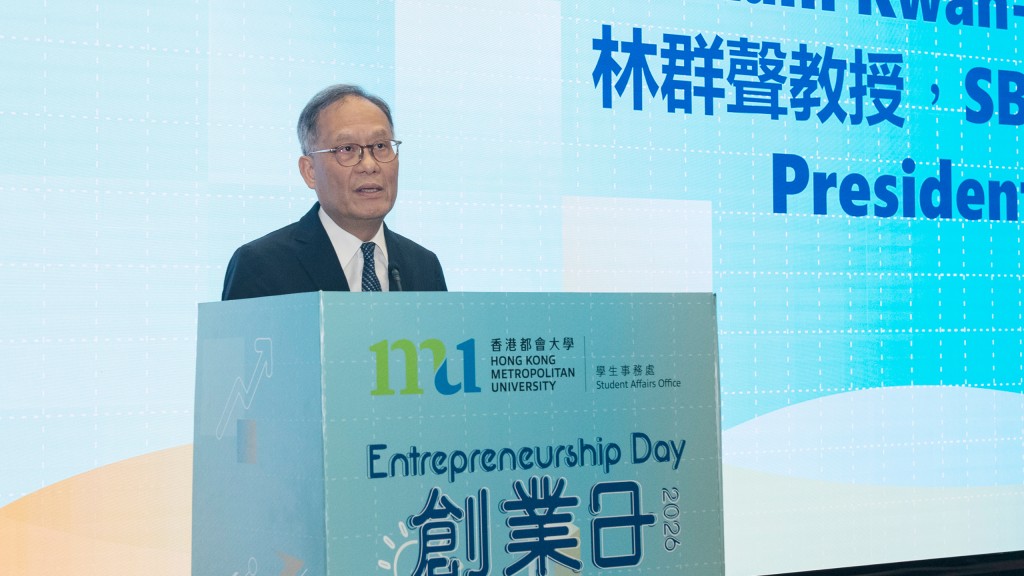
Highlighting HKMU’s commitment to entrepreneurship and innovation as Hong Kong’s first university of applied sciences, HKMU President Professor Paul Lam Kwan-sing delivered an encouraging keynote address. “Today, having a good idea matters more than where you come from, how much capital you start with, and even what your formal credentials are,” Professor Lam stated. “If you have a good idea and with the support of our university, you might be able to start a company.”
To support students at different stages of their entrepreneurial journeys, HKMU has established a multi-stage support ecosystem. A journey can begin with the annual Hackathon, where students receive guidance to solve real-world problems presented by invited industry partners. Winning teams earn fast-track entry into the MetroChallenge, which awards HK$100,000 in implementation funding alongside 10 months of structured incubation support. Once the startups demonstrate early market potential, they may apply to the HKMU Incubation Programme for a HK$250,000 grant, and eventually apply for the HKMU Angel Fund Programme, which provides up to HK$1 million in acceleration investment to drive long-term growth.
This year, the MetroChallenge yielded 11 winning teams, which were showcased alongside approximately 30 innovative exhibits, providing a vibrant platform for industry partners and seasoned entrepreneurs to engage with emerging startups. Three selected teams illustrate how HKMU supports students in developing early-stage ventures.
Addressing Hong Kong’s ageing building crisis, with over 27,000 private blocks exceeding 30 years of age, InfraDTech shows how HKMU’s platform propels students into specialised sectors. Leveraging the University’s practical curriculum, Bachelor of Science with Honours in Science (STEAM) students Henry Cheng Tung-hei, Joshua Paul Maguigad, and Wong Ting-hin partnered with faculty advisor Dr Kenneth Pak Chun-wai, Senior Lecturer in the School of Science and Technology, to launch their non-destructive testing enterprise in their third year.
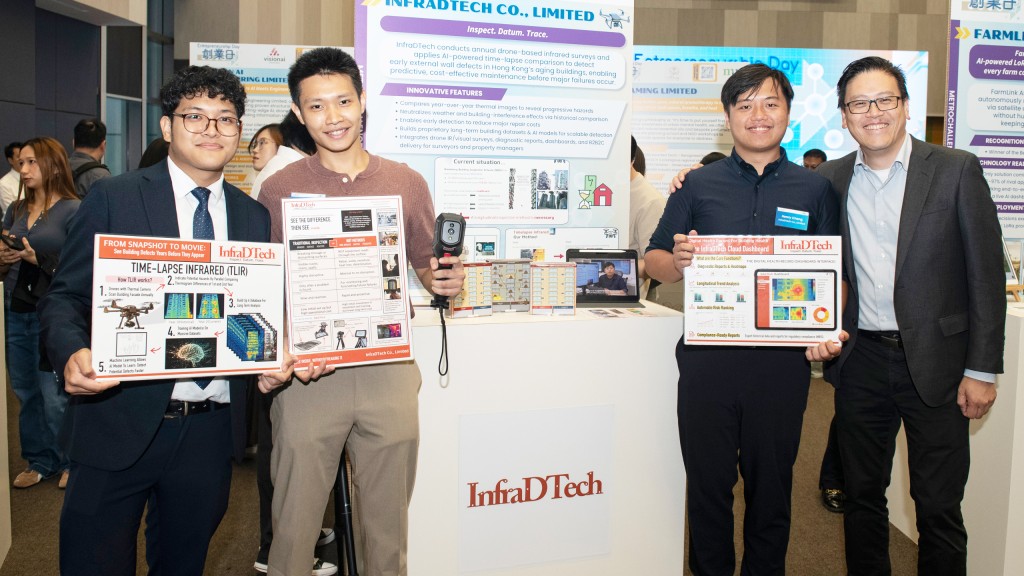
The students channelled their technical interests into developing practical solutions for building-maintenance challenges. Their core innovation is Time-lapse Infrared technology. Unlike traditional snapshot surveys assessing façades on a single afternoon, it tracks temperature dynamics year over year. Using drone thermography and AI pattern matching, the system detects anomalies, including water seepage, voids, and rebar corrosion, long before concrete spalling threatens public safety. This preventative approach slashes overall maintenance costs.
Through HKMU’s structured support, the founders gained opportunities to test their solution in commercial settings. The startup has already achieved swift commercial traction, conducting surveys across Hong Kong and executing a ground-penetrating radar contract for a major Macau resort within months. Backed by university resources, the team is now training towards certified signatory standards to attain official accreditation under the Hong Kong Laboratory Accreditation Scheme.
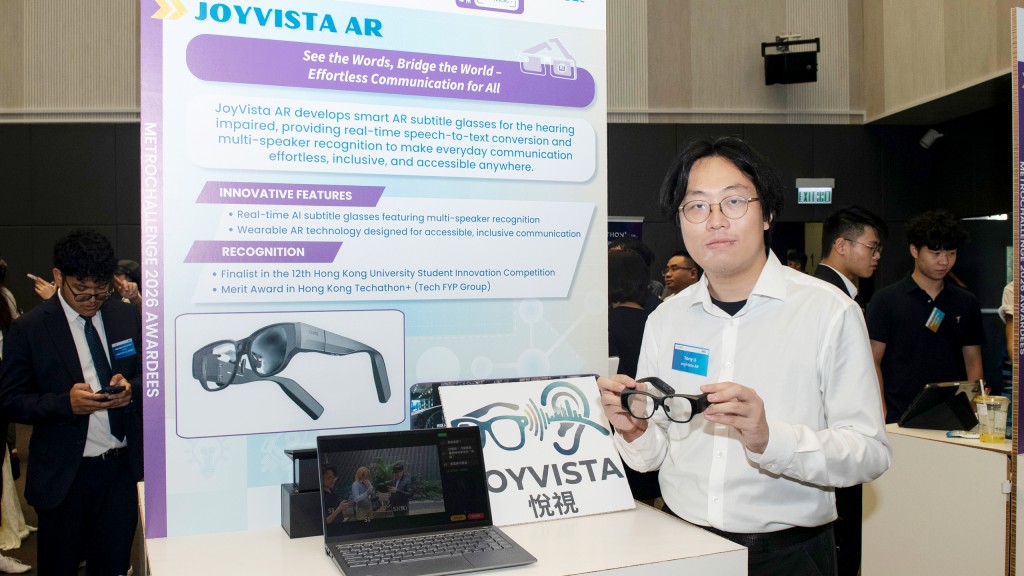
Developed by Bachelor of Science with Honours in Computing student Tony Li Sin-chiu and his teammates, JoyVista AR creates smart augmented reality subtitle glasses to tackle communication barriers in noisy settings. Unlike conventional apps requiring users to look down at phones, sacrificing vital eye contact, JoyVista AR displays real-time subtitles within the wearer’s line of sight.
To suit local communication habits, their custom AI models have mastered Cantonese’s “nine tones and six registers”, filter speech fillers, and handle mixed-code “Chinglish” seamlessly. The device features multi-speaker recognition capabilities to facilitate smoother bidirectional dialogue, while a front-facing camera captures sign language from a first-person perspective, converting gestures into synthesised speech to communicate with hearing peers.
“The greatest takeaway from this journey has been empathy,” said Li, reflecting on their shift towards user-centred design. Beyond seed capital, HKMU provided startup mentors to guide commercial strategies and connected the team with the Hong Kong Science Park and NGOs like Silence for practical testing. Crucially, a university-led tour to Guangzhou incubation hubs revealed the Greater Bay Area’s potential. By demonstrating how low operating costs and local subsidies can bypass Hong Kong’s steep commercial rents, the visit inspired the team to adopt an Original Design Manufacturer (ODM) approach and target the wider cross-border market.
Cross-disciplinary startup OnAn Technology combines artificial intelligence with high-precision full-colour 3D printing for mortuary aesthetics. Inspired by the team’s interest in providing support to bereaved families, the venture was co-founded by Bachelor of Business Administration with Honours in Sustainable Tourism and Hospitality Management student Bobo Tsui Pui-chi, Sports and eSports Management student Agnes Ho Yan-tung, and a student from another institution.
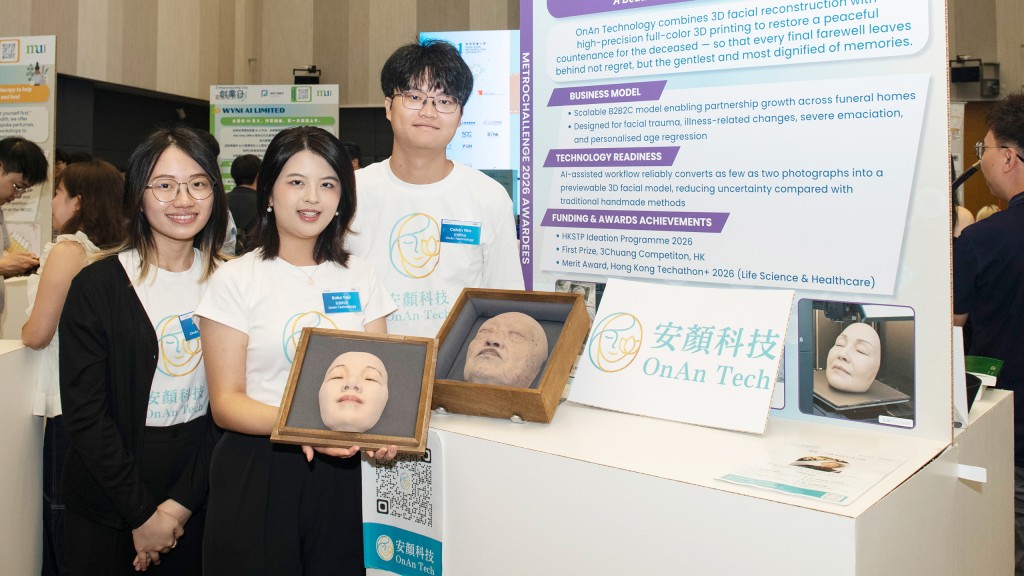
The team’s AI workflow converts a few photos into a lifelike 3D facial model within hours, replacing days of manual sculpting while overcoming male digital sculptors’ aesthetic communication barriers regarding female beauty. Operating via a Business-to-Business-to-Consumer(B2B2C) model with licensed morticians, the firm is also pioneering pre-need planning alongside palliative care NGOs, using 3D scanners so clients can personally approve their own final aesthetic.
“For students like us entering mature, highly sensitive sectors, we need institutional credibility,” explained Tsui. HKMU provided dedicated social enterprise mentors to guide delicate commercial operations and offered the crucial seed funding needed to test their business with confidence. Today, the team is considering potential future opportunities in the Chinese Mainland.