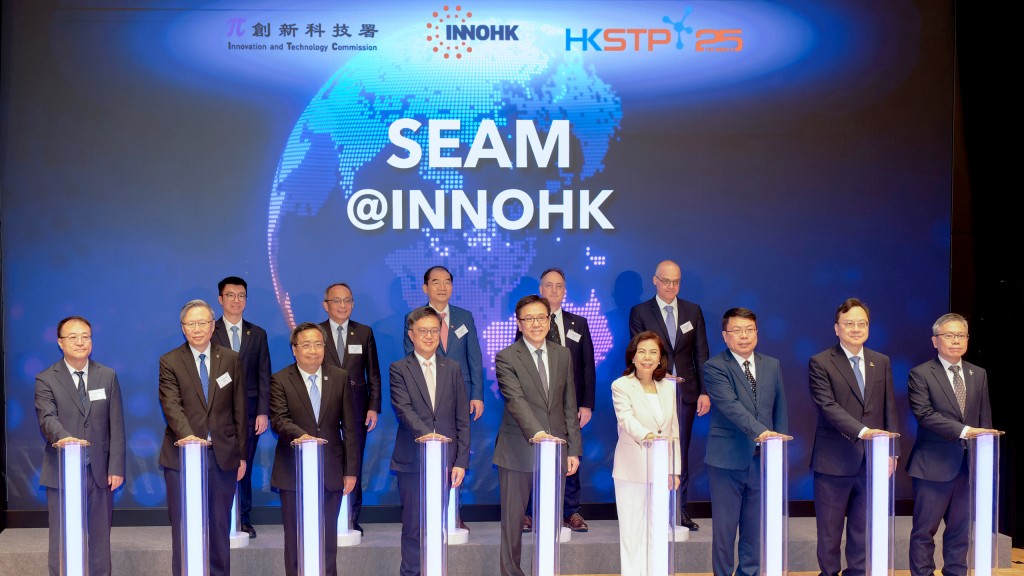
The Innovation and Technology Commission, together with Hong Kong Science and Technology Parks Corporation (HKSTP), launched the third InnoHK research cluster, “SEAM@InnoHK”, at Hong Kong Science Park on 1 September 2026. Focused on sustainable development, energy, advanced manufacturing, and materials, it received around HK$2.5 billion in government funding and brings together eight research centres, with more than 30 world-class universities and research institutions.
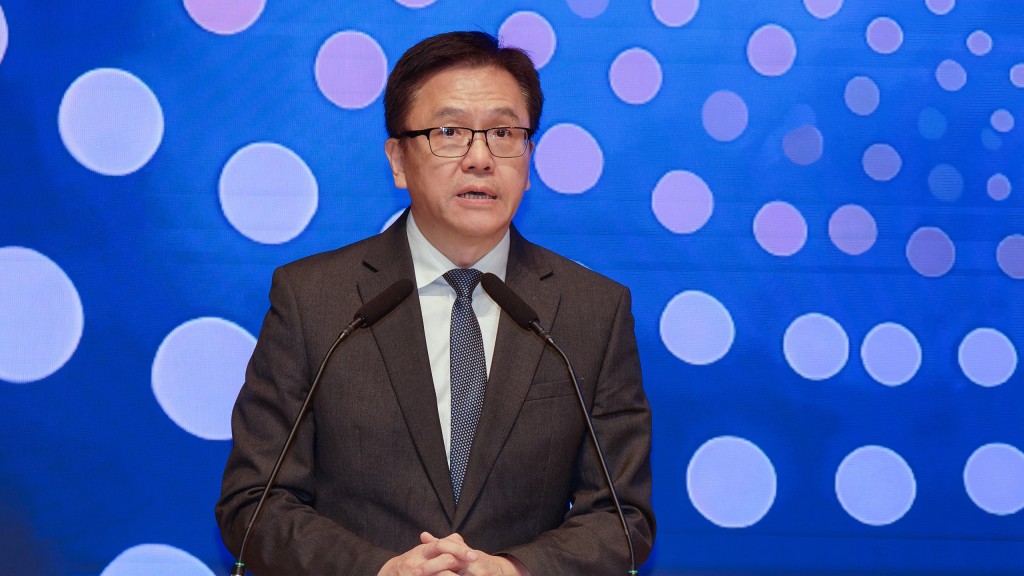
At the launch ceremony, Professor Sun Dong, Secretary for Innovation, Technology and Industry, said Hong Kong has five of the world’s top 100 universities and strengths in engineering, environmental sciences, and materials sciences. As the nation’s “super connector”, Hong Kong has attracted global technology enterprises, capital, and top-tier talent. He said integrating advanced technologies into local industries demonstrates a commitment to cutting-edge research and translating outstanding outcomes into real-world applications, accelerating Hong Kong’s development into an international innovation and technology hub.
Professor Sun Dong, Secretary for Innovation, Technology and Industry
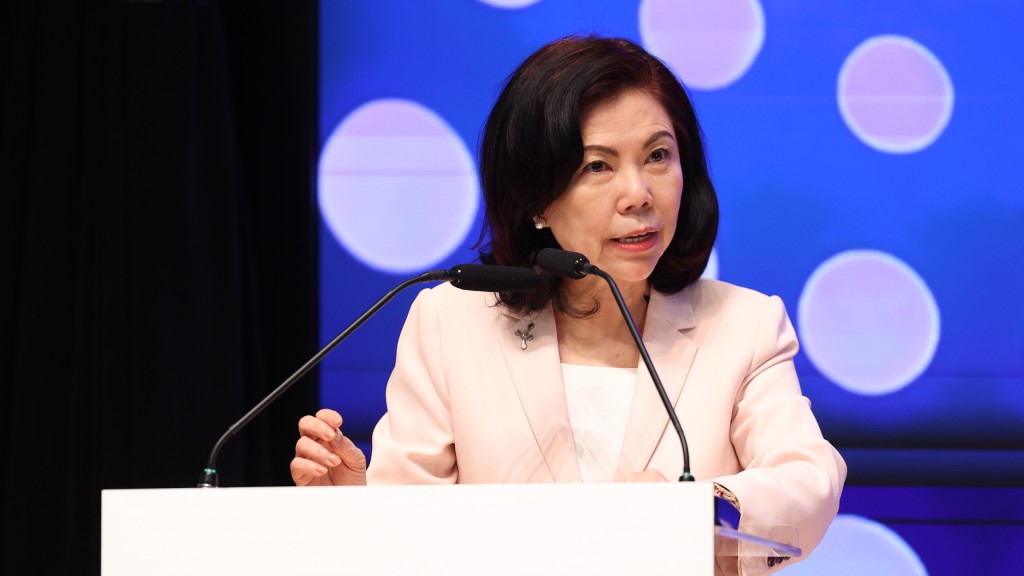
Ms Cordelia Chung, Chairman of HKSTP, praised the InnoHK research cluster for demonstrating the power of collaboration amongst world-eminent scholars, researchers, and global partners. HKSTP will continue providing research facilities, academic and research connections, and access to talent and investor networks to help InnoHK teams turn breakthroughs into market-ready solutions with tangible impact.
Ms Cordelia Chung, Chairman of HKSTP
Committed to planet resilience, net-zero emissions, and enhanced living standards, four research centres under the newly launched cluster are spearheading transformative green technologies.
Smart Grids and Advanced Energy Technologies for Resilient Cities
The InnoHK Research Centre for Intelligent GRID and Energy Technologies (I-GET), established by The Hong Kong Polytechnic University, integrates renewables, smart buildings, data centres, electric vehicles, and energy storage, for flexible grid interaction.
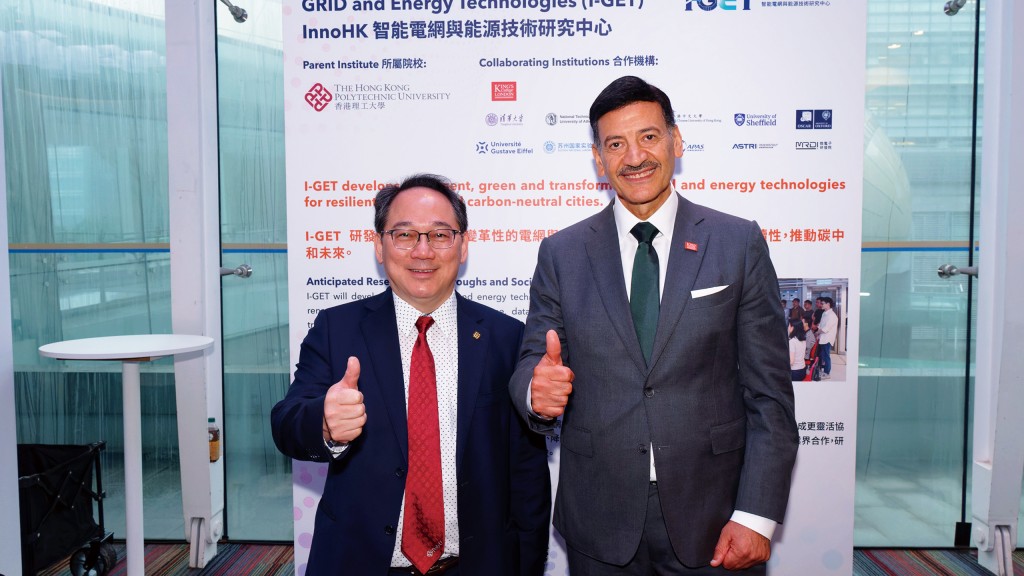
Professor Sir Bashir M. Al-Hashimi, Centre Co-head of I-GET and Senior Vice President (Research & Special Initiatives) at King’s College London, said conventional grids risk severe overload if utilities simply inject more electricity into the network. By embedding cognitive intelligence, I-GET dynamically manages non-essential peak demand and reallocates capacity to vehicle-charging spikes, maintaining reliable power without disrupting daily routines. Professor Chung Chi-yung, Centre Head of I-GET, highlighted that InnoHK bridges global expertise with the Greater Bay Area, manufacturing, accelerating commercial spin-offs and shaping international standards.
Centre Head Professor Chung Chi-yung and (right) Co-head Professor Sir Bashir M. Al-Hashimi of I-GET.
Complementary Energy Storage and Renewables Research
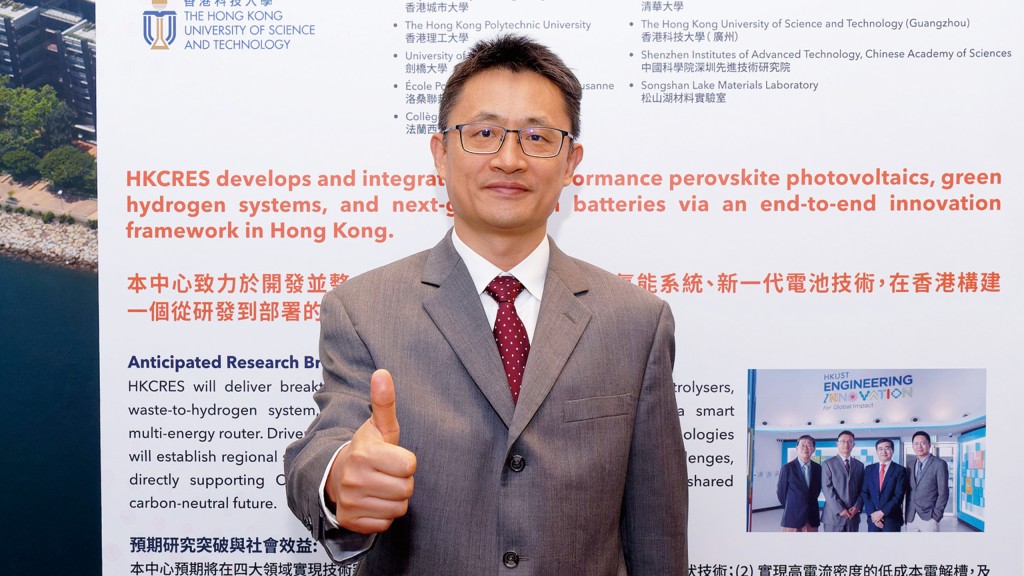
The InnoHK Hong Kong Centre for Renewable Energy and Storage (HKCRES), established by the Hong Kong University of Science and Technology, bridges laboratory-scale electrochemical research and utility-scale deployment. It focuses on perovskite photovoltaics, cost-effective electrolysers, waste-to-hydrogen systems, hydrogen storage, fuel cells, and next-generation batteries, all synchronised via a smart multi-energy router. Centre Head Professor Shao Minhua said advanced battery storage and smart microgrids will improve power reliability, curb grid fluctuations, and accelerate transport electrification over the next three to five years. The centre is also piloting hydrogen-blended natural gas power generation, supporting Hong Kong’s carbon neutrality goals and Asian commercialisation.
Centre Head Professor Shao Minhua of HKCRES
Sustainable Manufacturing and AI-Accelerated Eco-Materials
Environmental sustainability demands an overhaul of how goods are manufactured, packaged, and discarded. Two cluster centres, the InnoHK Centre for Advanced and Smart Manufacturing (CASM) and the InnoHK Sustainable Materials & Advanced Renewable Technologies Centre (SMART Centre) are embedding AI, robotics, and advanced materials into circular production systems.
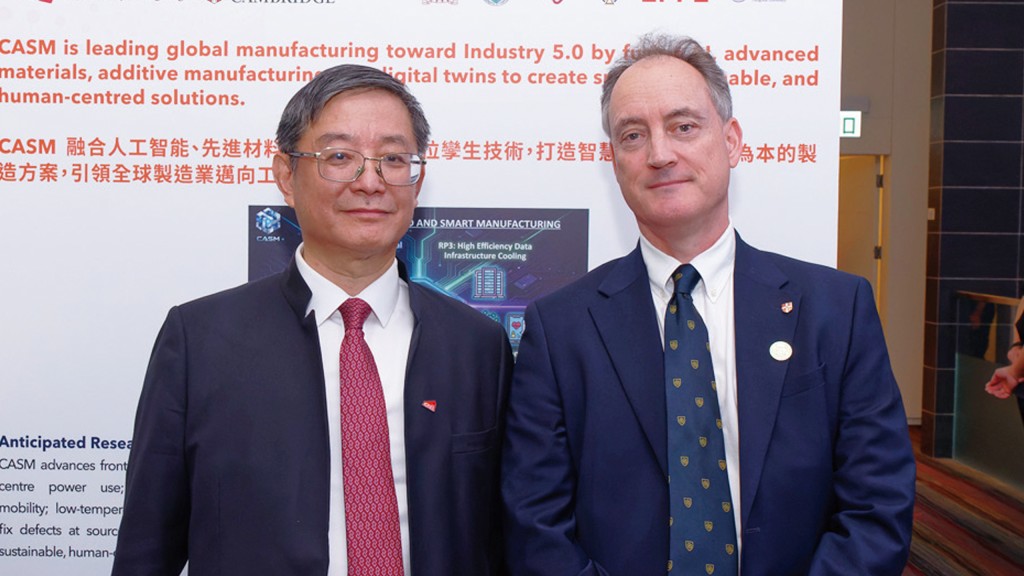
CASM, jointly led by City University of Hong Kong (CityUHK) and the University of Cambridge,develops sustainable, human-centric technologies to support Industry 5.0. Professor Colm Durkan, Centre Co-head of CASM and Head of the Department of Engineering at Cambridge, explained that the centre addresses the rising energy demands from dense urbanisation and expanding digital infrastructure. Research spans refrigerant-free cooling for HVAC systems and thermal-management solutions boosting data centres energy efficiency. In manufacturing, CASM uses digital twins, additive manufacturing and AI-assisted inspection to enable manufacturers to simulate production, detect defects early, and curb scrap losses. Professor Lu Jian, Centre Head of CASM, said CASM plans joint R&D teams with industry partners, especially in the Greater Bay Area, to refine innovations in real production settings.
Centre Head Professor Lu Jian and (right) Co-head Professor Colm Durkan of CASM.
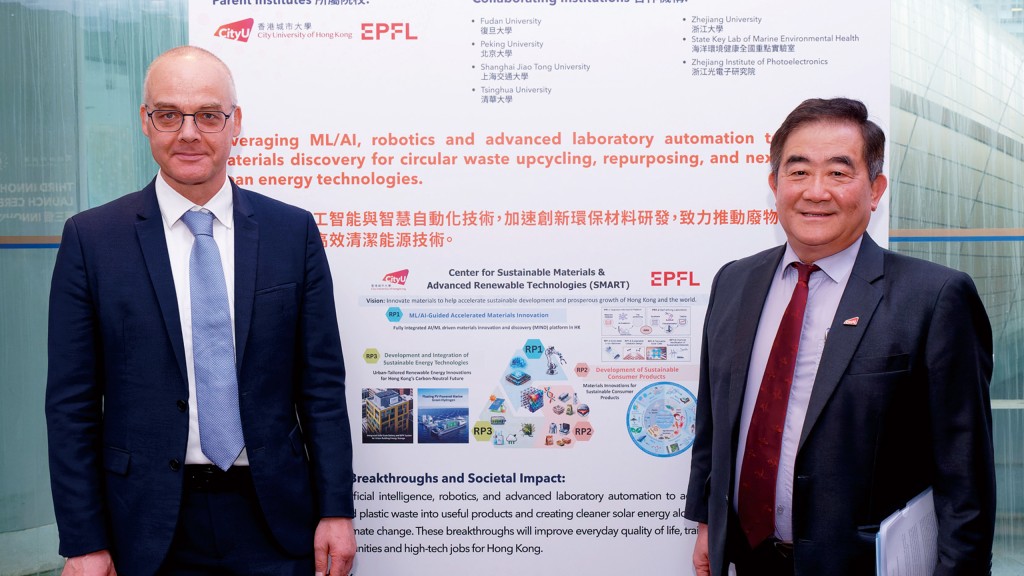
Operating alongside smart production, the SMART Centre, led by CityUHK and École Polytechnique Fédérale de Lausanne (EPFL), tackles the slow materials discovery. Professor Harm-Anton Klok, designated Co-head of SMART Centre and Director of EPFL’s Polymers Laboratory, explained that uniting machine learning with robotics into a 24/7 smart laboratory, accelerating eco-friendly materials discovery by 10 to 100 times at lower costs. It upcycles industrial food processing waste and seafood discards into biodegradable packaging and non-toxic components for cleaner solar devices and safer batteries, cutting petrochemical plastics and landfill accumulation. Professor Alex Jen, designated Co-head of SMART Centre, added that dual-supervision schemes with EPFL train local and Mainland talent in AI and robotic screening while broadening global horizons.
(Left) Centre designated Co-head Professor Harm-Anton Klok and (right) designated Co-head Professor Alex Jen of SMART Centre.
Pioneering Advanced Materials and Deep-Tech Frontiers
Beyond environmental sustainability and clean energy networks, SEAM@InnoHK extends its multidisciplinary reach into deep-tech frontier science.
The InnoHK Centre for Heterogeneous Integration and Production (CHIP), established by The Chinese University of Hong Kong, overcomes silicon limitations by integrating 2D materials with proprietary wafer bonders and transfer printing equipment, creating independent semiconductor manufacturing capabilities. Collaborating with the National University of Singapore, and 2010 Nobel Laureate in Physics Sir Konstantin Novoselov, CHIP fosters breakthroughs across AI, communications, healthcare and automotive industries.
Concurrently, the InnoHK Power Semiconductors and Applications Centre (PowerSAC), led by the Hong Kong University of Science and Technology, will advance wide-bandgap gallium nitride and silicon carbide power devices pairing intelligent power chips with automated design tools to cut energy loss and footprints across AI computing and electric vehicles. Collaborating with 2014 Nobel Laureate in Physics Professor Hiroshi Amano on material growth and physics analysis, PowerSAC tackles real-world technology transfer.
In fundamental chemistry, the InnoHK Centre of Functional Materials for Energy and Sustainability (CFMES), led by The University of Hong Kong, develops electrical-enabled battery materials, light-emitting and light-enabled technologies. Involving 2016 Nobel Laureate in Chemistry Professor Ben L. Feringa, these breakthroughs power green energy conversion while incubating translational start-ups.
Finally, the InnoHK Centre for Space Manufacturing Technology (CSMT), established by the Hong Kong Institute of Science & Innovation of Chinese Academy of Sciences, pioneers orbital additive manufacturing, ultra-low-loss optical fibres, biomaterials and lunar regolith construction techniques to support national deep-space exploration and terrestrial technological advancements alike.
A Cohesive Vision for Hong Kong’s I&T Future
The three InnoHK research clusters—Health@InnoHK, for medical technologies; AIR@InnoHK, for artificial intelligence and robotics; and the newly established SEAM@InnoHK, strengthen Hong Kong’s world-class research landscape. The eight research centres span semiconductors, space manufacturing, renewable energy, and smart grids. Echoing the national 15th Five-Year Plan in high-end manufacturing, strategic emerging industries, and green transformation, these capabilities solidify Hong Kong’s foundation as an international innovation and technology hub.