Hong Kong International Airport has become the world’s first airport to deploy automated robots to repaint runway markings, cutting working hours by about two-thirds and saving an estimated HK$400,000 in paint costs annually compared with manual painting.
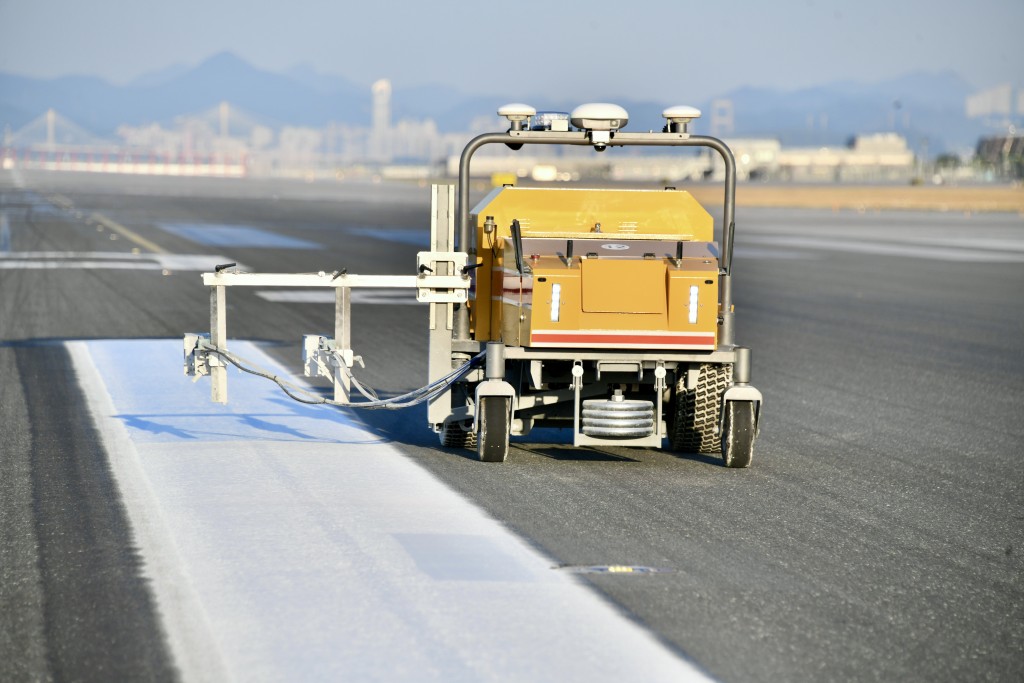
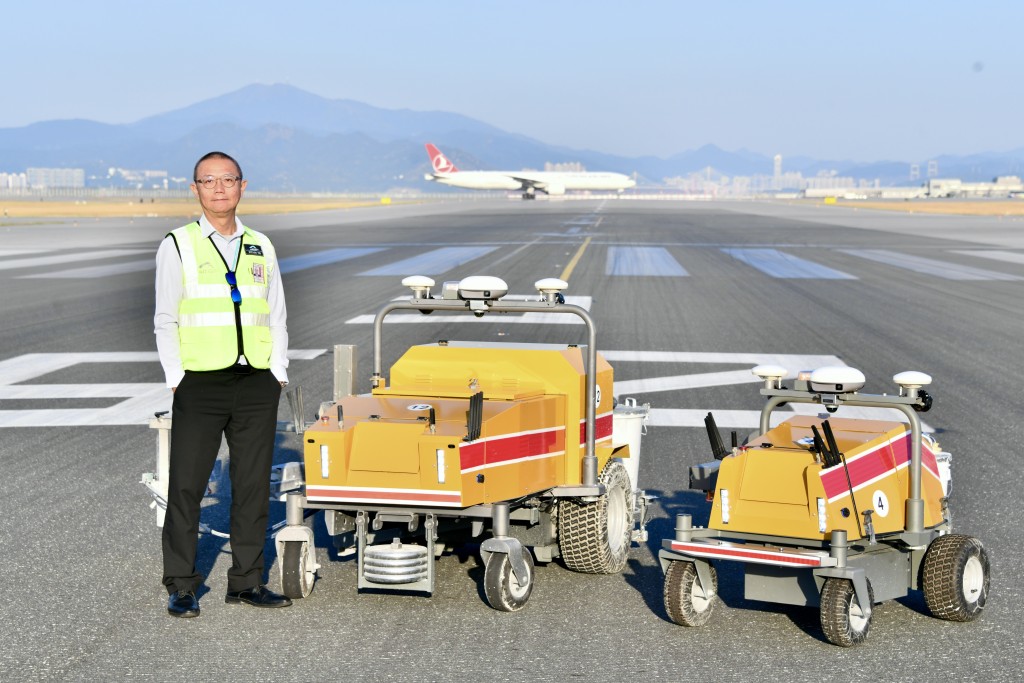
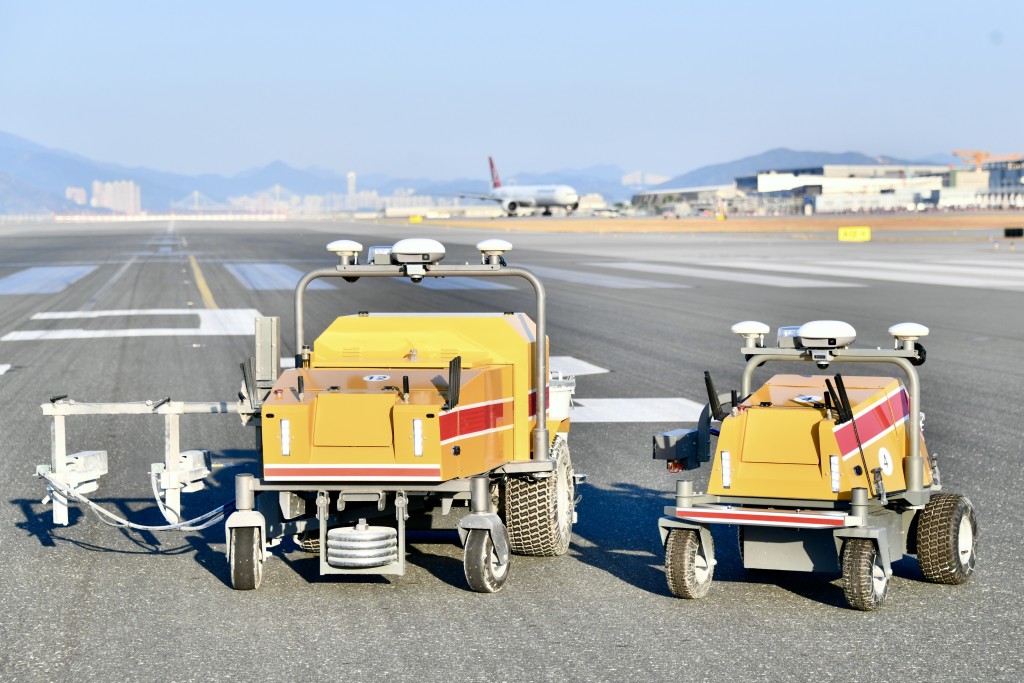
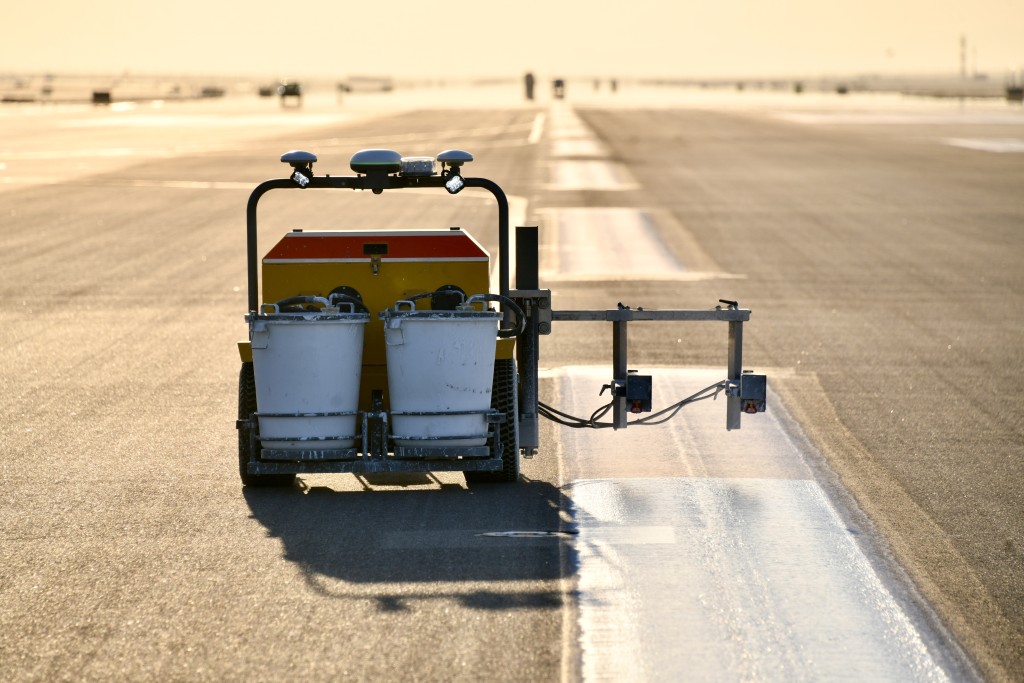
Developed in partnership with Shenzhen-based FJ Dynamics, the robots include dual-nozzle models for spraying straight lines and single-nozzle models for precision work on turns.
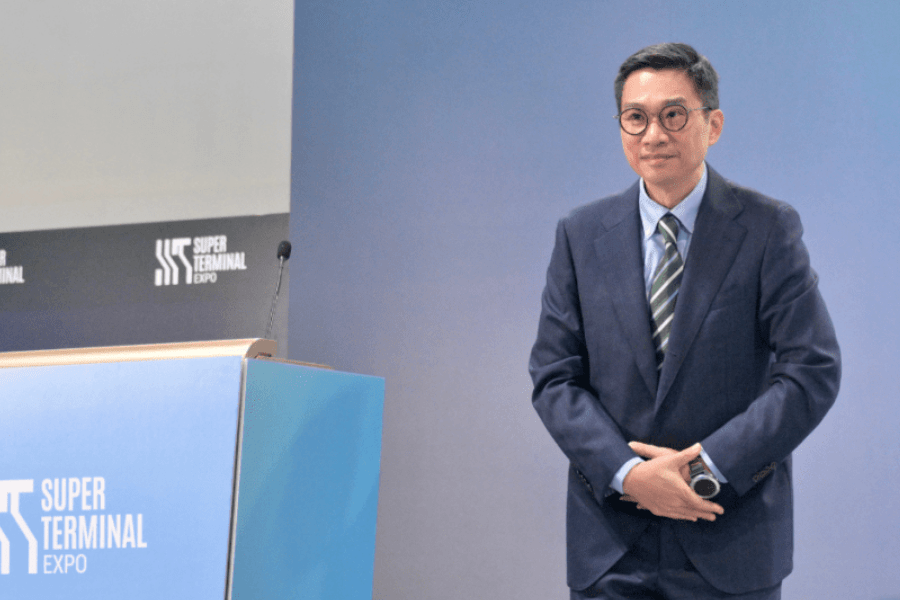
Airport Authority Hong Kong’s chief operating officer Steven Yiu Siu-chung said runway markings are repainted at intervals ranging from once a week to once every six months.
He said manually repainting the center lines for a runway used to take about three hours, but the robots can complete the work in one hour, reducing working hours by an estimated two-thirds and saving about HK$400,000 in paint annually.
Yiu said runway repainting is demanding work that has been difficult to recruit for, as staff must work through overnight maintenance windows. While the robots now handle routine repainting, staff still carry out some procedures manually. The authority expects a long-term hybrid approach to help ease the workload on the runway maintenance team.
The robots began operating in September following a nine-month testing period. They use real-time kinematic (RTK) satellite navigation to update their position coordinates, drawing on multiple satellite systems: the United States’ GPS, Russia’s GLONASS, the European Union’s Galileo and China’s BeiDou. The systems enable the robots to repaint markings with centimeter-level precision.
Equipped with high-resolution RGB cameras and LiDAR, the robots can also stop automatically when they detect obstacles.
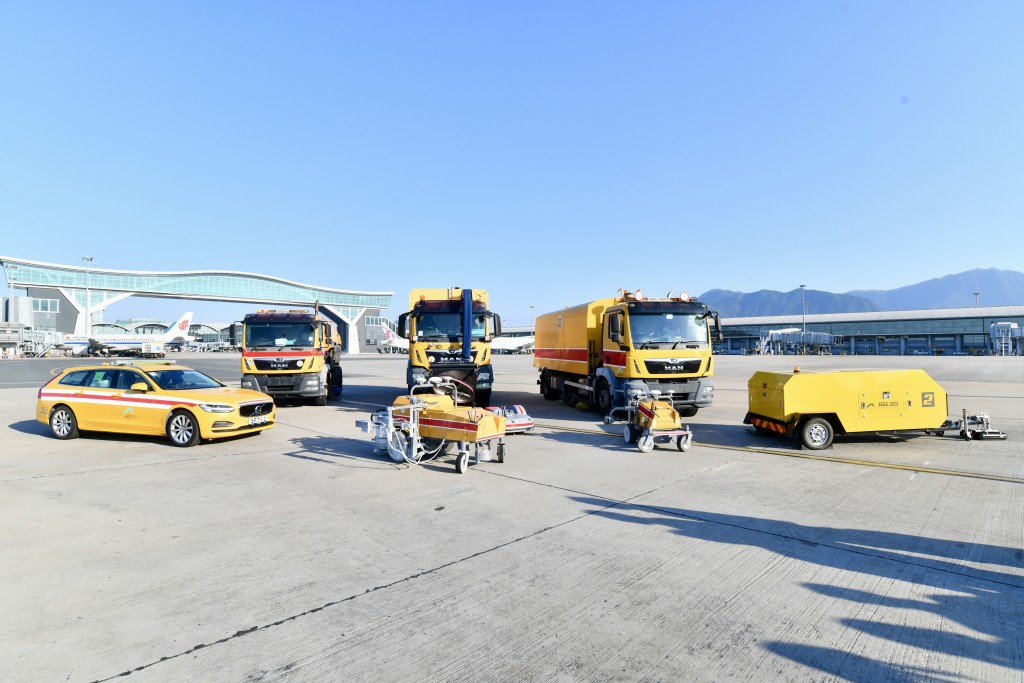
The Airport Authority also uses runway sweepers, rubber-removal vehicles and lawn-mowing robots as part of its regular runway maintenance program.