Read More
To align with the national 15th Five-Year Plan and the HKSAR Government’s “AI for All” inclusion initiative, the Hong Kong Science and Technology Parks Corporation (HKSTP) recently signed a Memorandum of Understanding (MoU) with SenseTime. The two parties will join hands to build the largest domestically developed AI Data Centre (AIDC) in Hong Kong, targeting a computing capacity of 40,000P+ (PetaFLOPS) by 2030. The move aims to propel the thriving development of Hong Kong’s “Artificial Intelligence+” (AI+) innovation and technology (I&T) ecosystem, empowering diverse industries to move towards AI-enabled transformation.
ADVERTISEMENT
SCROLL TO CONTINUE WITH CONTENT
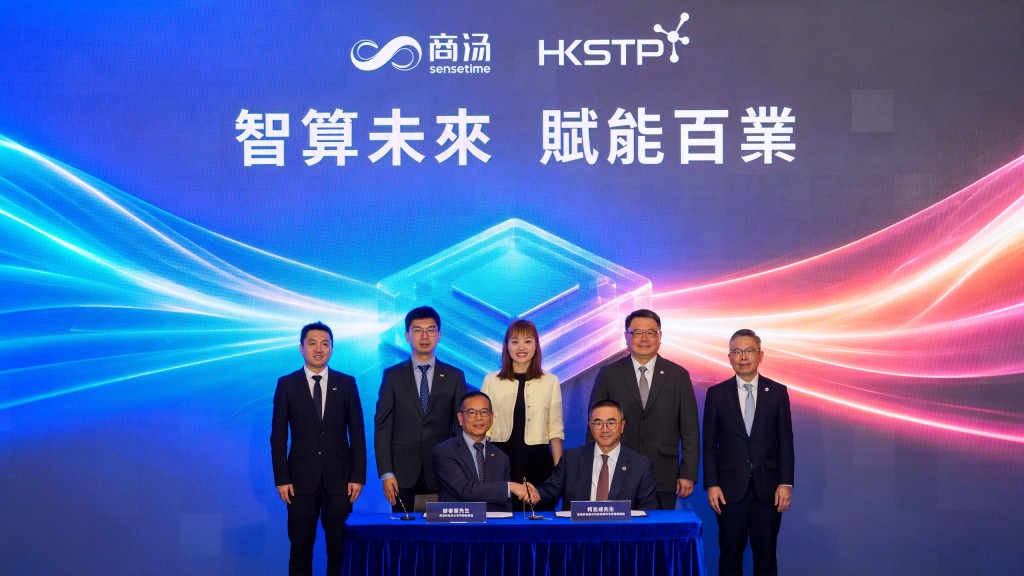
The MoU signing ceremony was officiated by Lillian Cheong, Under Secretary for Innovation, Technology and Industry, as Guest of Honour. Witnessed by Sunny Chai, Chairman of HKSTP, Terry Wong, CEO of HKSTP, Xu Li, Chairman of the Board and CEO of SenseTime, and Yang Fan, Co-founder and Director of SenseTime, the MoU was signed on behalf of the two parties by Eric Or, Chief Ecosystem Development Officer of HKSTP, and Alvin Zou, Vice President, Asia-Pacific Business Group of SenseTime.
A phased roadmap for Hong Kong’s AI computing infrastructure
Terry Wong detailed a three-phase rollout for the AIDC. “The first phase is expected to be completed by the end of this year,” Wong said. “The second phase is slated for deployment in 2028, followed by a third phase that will scale the facility to its full capacity by 2030, equipped with the computing power of approximately 40,000P.”
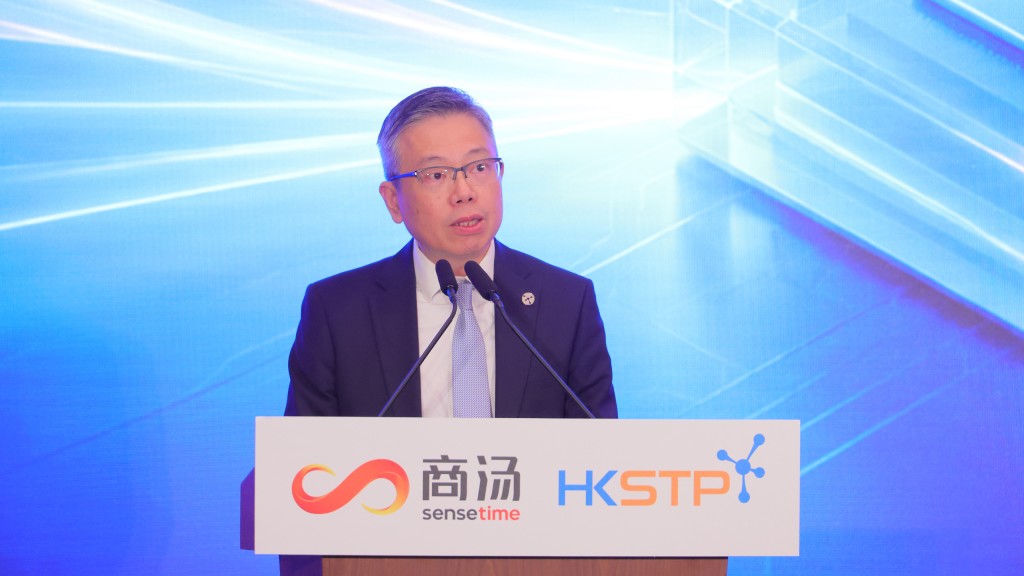
Terry Wong, CEO of HKSTP
“This collaboration will not only accelerate technological innovation and the local deployment of applications but also propel the thriving development of Hong Kong’s ‘AI+’ I&T ecosystem, empowering industries across the board and helping Hong Kong move towards a future of AI industrialisation and the AI-enabled transformation of industries,” Wong said.
Equipped with a diverse range of domestically produced GPU computing clusters, the new AIDC will integrate high-speed optical interconnection solutions with green energy-saving and energy-storage technologies to build a high-performance, sustainable, and self-reliant computing infrastructure for Hong Kong. Beyond providing raw computing power, the project will bring SenseTime’s large-model capabilities, applications and AI infrastructure experience to the city, making them fully accessible to Science Park startups and the broader enterprise ecosystem.
“Starting from Hong Kong, we hope to expand to the Chinese mainland and globally, attracting more enterprises to re-establish their headquarters or research and development centres in the city, helping Hong Kong move towards a future of AI industrialisation and the AI-enabled transformation of industries,” Wong noted.
Leveraging Hong Kong as a strategic hub for global ‘Token’ expansion
As the Science Park’s first unicorn company, SenseTime brings the mature operating model of its AIDC in Lingang, Shanghai—which has reached a total computing power of 40,400P—to Hong Kong. Through the deep integration across computing power, models and applications, SenseTime aims to help the city create benchmark AI applications in high-value sectors such as finance, healthcare, education, urban governance, and content generation.
Xu Li emphasised that the primary starting point for building the AIDC in Hong Kong is to be “application-driven”. He explained that developing large models and the international rollout of domestically developed computing capabilities, such as GPUs and CPUs, require a strategic foothold.
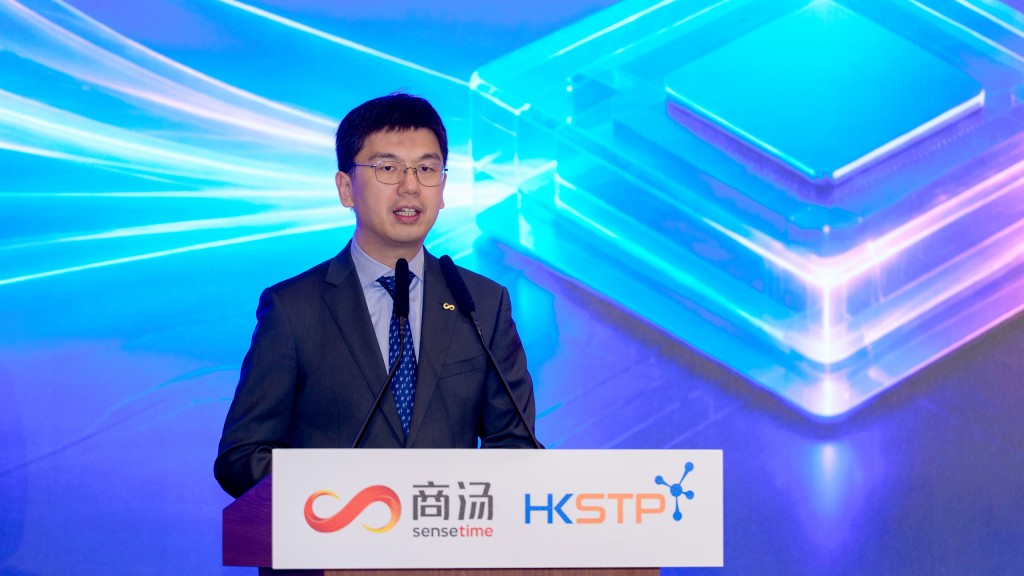
Xu Li, Chairman of the Board and CEO of SenseTime
“By building the AIDC in Hong Kong, we hope to attract more enterprises to join in building the AI ecosystem,” Xu said.
As large-scale model applications shift rapidly from training-driven to inference-driven, token consumption has become a crucial factor in scaling AI deployments. Beyond technological implementation, SenseTime highly values Hong Kong’s unique strategic position, citing its capital, policy advantages, and robust potential for international expansion.
“There are many innovations in the Chinese mainland that have undergone extensive optimisation and training,” Xu pointed out. “When these ‘Tokens’ need to go global, Hong Kong serves as an excellent hub, enabling users worldwide to access these interfaces.”