Read More














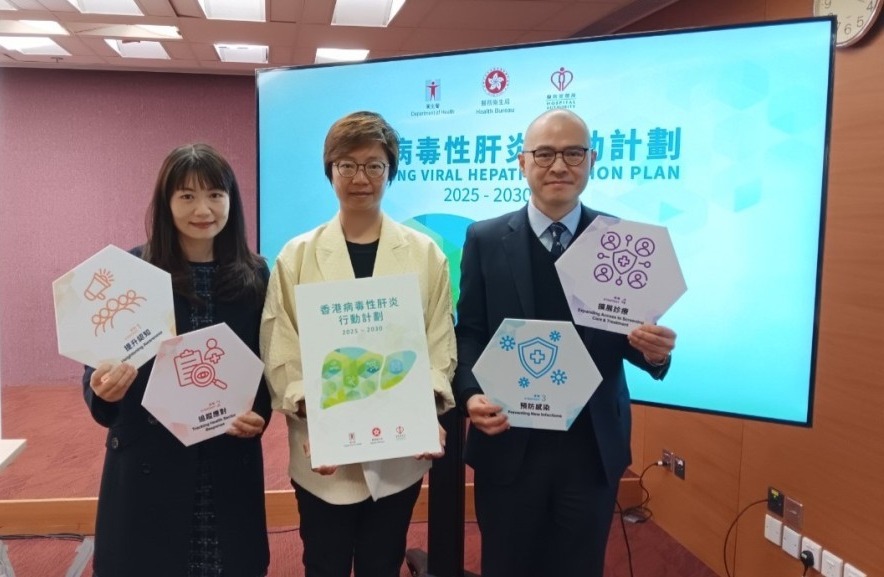
The government introduced the Hong Kong Viral Hepatitis Action Plan 2025-2030 on Tuesday, targeting elimination of the public health threat from viral hepatitis by 2030 through enhanced awareness, monitoring, prevention and improved access to screening, care and treatment.
According to government figures, around 410,000 residents have hepatitis B, but 40 percent remain undiagnosed, and 70 percent lack proper medical follow-up, according to official data.
The Hong Kong Viral Hepatitis Action Plan 2025-2030 will introduce a new risk-based hepatitis B screening program to facilitate early detection and treatment.
The Primary Healthcare Commission said the program will be based on a “chronic disease co-care” model, where screening and ongoing management will be provided by District Health Centres (DHC) and family doctors through strategic procurement and a co-payment method.
Eligible individuals can register at DHC to receive a free hepatitis B surface antigen rapid test. If the result is positive, they will be referred to a family doctor for blood testing.
Diagnosed patients will access government-subsidized follow-up, including tests, imaging and medications from the co-care drug list, at no additional cost.
Christy Lam Yu-yuk, Assistant Commissioner for Primary Healthcare, noted that the program will target high-risk groups, particularly those born in 1988 or earlier whose family members or sexual partners have contracted chronic hepatitis B and those who have no known medical history of chronic hepatitis B nor related symptoms.
She added that the program is expected to benefit around 300,000 potential patients in Hong Kong, with details regarding co-payment amounts to be released early next year.
Earlier this month, around 770 family doctors joined the program, allowing citizens to register and complete their screening within two weeks.
Lam expressed confidence that they would meet demand once the new initiative is launched and emphasized ongoing efforts to encourage more doctors to participate in the program.