Most of us in Hong Kong are saddened to see the level-five Tai Po Wang Fuk Court Fire of November 26, which not only shocked Hong Kong residents, but was widely reported in the international press, severely hurting our image as a world class city renowned for public safety.
The extent of damage to life and property is unprecedented and the need to re-house some 2,000 families that had lost their homes and belongings, both short term and long term, will entail a difficult and costly series of activities.
The investigation to determine the cause of fire had only just started at the time of writing, and I hate to prejudge the outcome, but I hope my views below, which are mainly focused on the technical issues, may help readers to understand a bit more of the issues.
First and foremost is what caused the fire and why it had extended to seven tower blocks, literally within minutes.
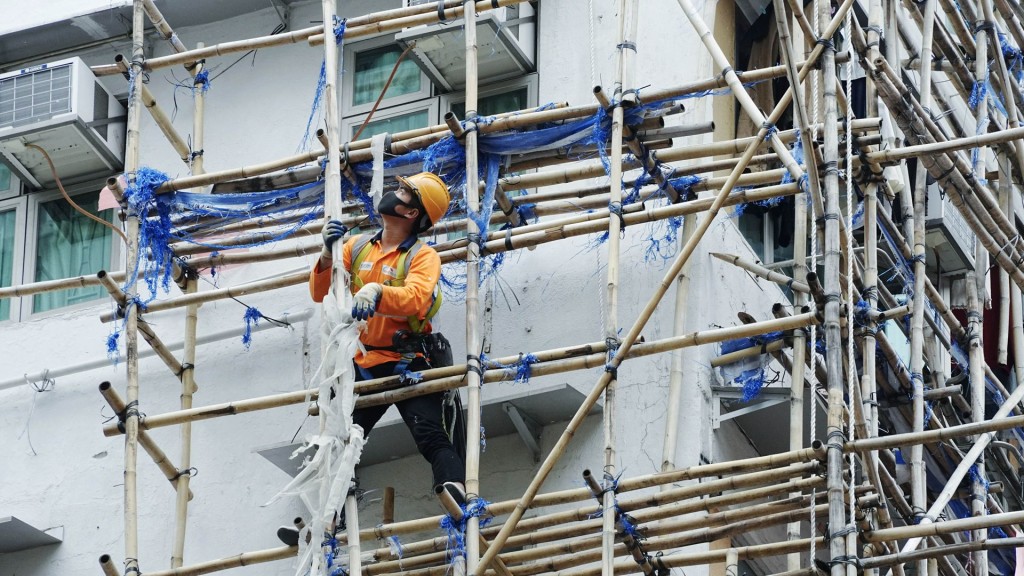
The group of buildings were tall blocks of public housing under the home-ownership scheme, built over 40 years ago. Maintenance responsibilities rest with the individual owners, most of whom are from low-income families. At the time of the fire, the exterior of the buildings were under renovation, with scaffoldings surrounding them, but with residents still living in the apartments. The scaffolding was of bamboo, with protective nets hung over them to prevent debris affecting the pavements and surroundings. To further protect the building, styrofoam boards were used to cover all windows, apparently to prevent scratches and damage.
It is commonly believed that somehow a fire started at a low level of one tower block. The protective net caught fire which extended to the foam boards. The weather was dry and the wind direction quickly fanned the flames to burn upward and spread to other towers, resulting in seven of the eight blocks catching fire. The fire was burning so quickly and extensively that, by the time the fire brigade arrived, it was already so extensive that existing methods and equipment were not able to control it.
Existing fire protection and firefighting equipment for residential blocks were the usual: break glass alarm, dry fire hydrant and hose reel – considered effective in fighting fire in an apartment of a building. But as the fire alarm was inoperative at that time, as it was reported, these systems would not be operative and would not work even with firefighters at the scene. Fire engines with ladders are not designed to fight fire over 20 stories tall, and firefighting for taller floors require firefighters entering the building to connect hoses to fire hydrants to douse the fire. With temperature estimated to be at about 500 degrees Celsius, it would not be possible for firefighters, or even robots, to enter the building to extinguish fire.
As to whether fire engines from the mainland with taller ladders, or drones, or helicopters can help to fight the fire, the director of Fire Services has already explained why they would not work. Even if we were to clear the road access to allow the huge fire engines to reach the site, the different hose connection and communications systems may not be compatible with ours and could cause more confusion than help.
I shall refrain from commenting on the planning, design, and actual repair activities that led to this calamity, as I understand our government will form an independent commission to investigate the cause and make recommendations. The consultant and contractor are already under criminal investigation.
This huge fire raises a lot of questions within the construction industry and the property management sector. How should we plan and execute maintenance work for tall blocks in the future? Should we use other forms of construction, such as using gondolas or climbing platforms instead of scaffolding? Should we replace bamboo scaffolding with the metal tube type? How shall we plan activities so that only one block is worked on at a time? And how can we ensure only fire-retardant materials will be used and what would be the effective means of certification?
Extending our thoughts, should we plan future buildings to be further apart from each other, and use new technologies to prevent and fight fire? Can we design special drones to fight fire effectively at that height and for fires of that large extent?
Engineers plan and design systems based on known and expected scenarios, but once in a while, new scenarios occur and we will need to device newer and different methods to deal with them. Human life must be protected at all costs, so we must continue to develop new schemes and operation regimes to meet this.
Let us hope such incidents will not recur, but meanwhile we should all unite to help those who have been affected by this most unfortunate incident, and avoid speculating and blaming at this sad time. Hong Kong is our beloved city, and we have all helped to make it grow and prosper. We must maintain this positive spirit to ensure our sustainable long-term future.
Veteran engineer Edmund Leung Kwong-ho casts an expert eye over features of modern life