Read More



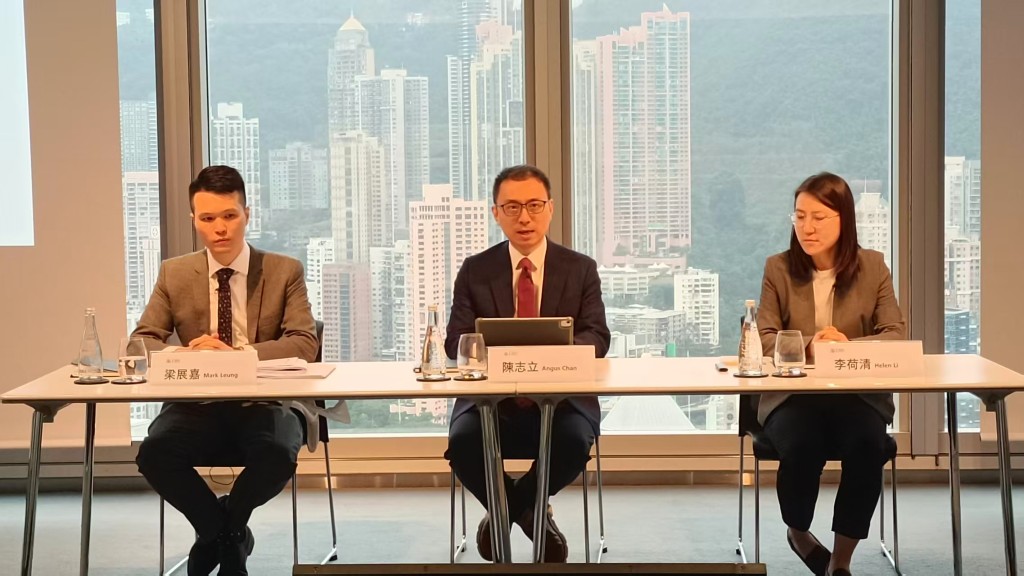

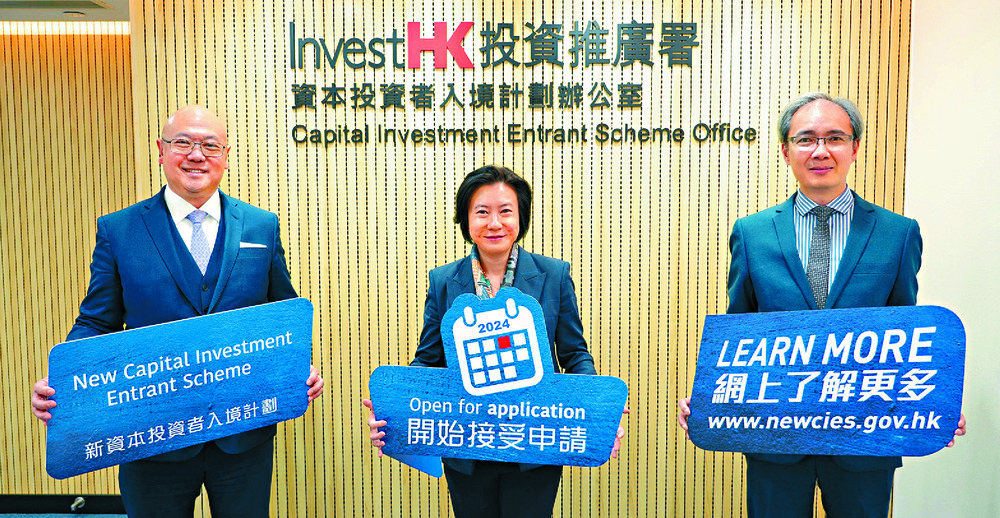
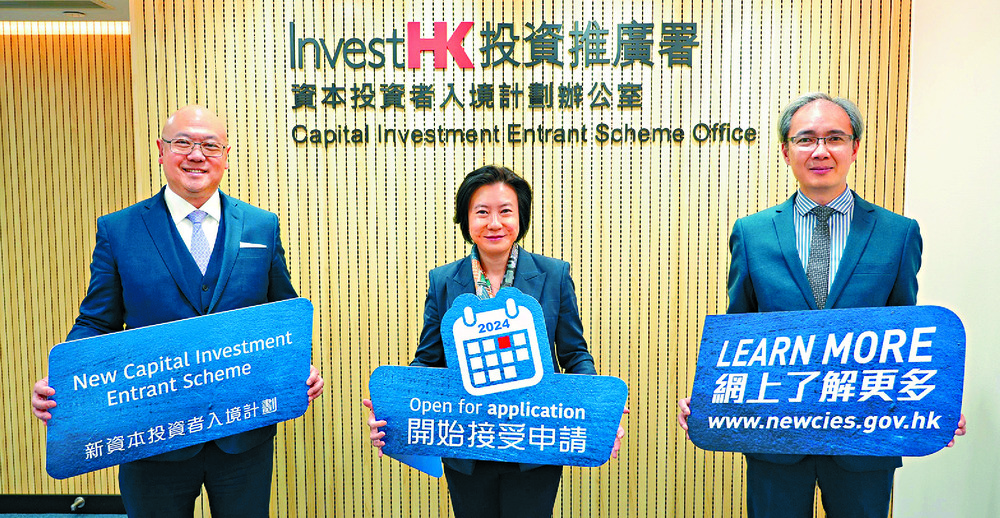
Last Friday, Hong Kong kicked off its new investor visa scheme earlier than planned, on the heels of lifting all housing curbs, including stamp duty for foreign buyers.
Originally scheduled for a mid-year launch, the New Capital Investment Entrant Scheme or New CIES targets wealthy people who are willing to invest HK$30 million to live in the city.
InvestHK revealed it had received some applications of the first day without revealing a number, and more than 100 inquiries, saying the response showed that high-net-worth individuals have confidence in the city's business environment.
However, amid escalating tensions between China and the West and economic challenges, the million-dollar question is whether the city still has what it takes to attract 4,000 wealthy investors and HK$120 billion of their cash in a single year.
While the target is ambitious - two-and-a-half times more than what Hong Kong pulled in during the last year of its old scheme - the HK$30 million price tag for the right of abode is far cheaper than the HK$58 million investment that Singapore demands from the well-heeled to live in the Lion City.
Still, some analysts worry that the city is not attractive as before for rich foreigners, with the bourse and property market struggling for momentum.
All about investment
The revived CIES raises the minimum investment to HK$30 million from HK$10 million in the previous version. Like its predecessor, it requires applicants to place their money in investment products only for seven years on the trot, with mainlanders excluded unless they are permanent residents of another country.
The old scheme, launched when Hong Kong was in recession in 2003, ran till 2014 bringing in a total of HK$216 billion, including HK$48.7 billion in 2014, but was then suspended after more than 25,000 investors - mostly mainlanders - made their home in the city and the government shifted its focus to attracting talent instead.
The decision to resurrect the investor visa comes amid lackluster markets and an intense race for wealth among Asia Pacific nations.
Under the New CIES, applicants must invest HK$27 million or more in stocks, bonds, certificates of deposits, subordinated debts, collective investment schemes or limited partnership funds. As many as 800 funds authorized by the Securities and Futures Commission will be available for them to invest. They can also invest up to HK$10 million in non-residential properties.
The remaining HK$3 million must be placed into a portfolio managed by the government-led Hong Kong Investment Corporation to support firms or projects specializing in technology and innovation, as the city is striving to transform itself into a global tech hub.
The seven-year lock-in period will qualify participants for permanent residence if they live in the city continuously during the same period.
Scheme members can also relocate their spouses and unmarried children aged below 18.
Secretary for Financial Services and the Treasury Christopher Hui Ching-yu says the scheme is attractive, compared to Singapore's more costly and demanding global investor program or GIP.
Singapore gets stricter
Last March, Singapore tightened its control on entrance via investments, raising the threshold to S$10 million (HK$58.74 million) from S$2.5 million for establishing a new business or joining an existing one.
After a five-year stay, investors who want to renew their visas must hire at least 30 employees, 20 more than the previous scheme. And half of them must be Singaporeans.
If the affluent prefer a simple investment, they must put S$25 million into funds selected by the GIP, 10 times the previous requirement.
A third option is to set up a single-family office which manages S$200 million or more worth of assets in the city-state, S$50 million of which must go into selected products.
While Singapore has not revealed the number of applicants for its latest scheme, it accepted around 60 new permanent residents each year between 2020 and 2022 through the previous plan.
Aussie attraction
There are other developed economies in the region that offer cheaper investor visa options compared to Hong Kong.
Australia requires as little as A$1.5 million (HK$7.89 million) for four years and a two-year mandatory residency during the investment period.
It topped the list of global migration destinations with an expected net inflow of 5,200 high-net-worth individuals last year, a report by Henley & Partners finds.
Japan currently requires foreigners to secure a place of business and at least two full-time employees or an investment of 5 million yen (HK$270,100) to qualify for business residency, and may remove these requirements to attract foreign entrepreneurs and grant them a two-year stay as early as April.
On the other side of the world, the United Kingdom needs millionaires to invest 2 million (HK$19.8 million) or more to acquire a residency.
Nonetheless, Hong Kong's government is confident that the city will do well in the race for high-net-worth individuals in Asia, citing a rich variety of investment products, a favorable tax regime and free capital flows.
Ambitious target
The new wealthy residents are expected to infuse HK$120 million of fresh capital into the city, a calculation based on the 4,000 applications received on average each year during the previous scheme, says Hui.
But not everyone is convinced.
"There's no doubt the revived investor visa will bring fresh capital to the city, but it is hard to tell whether Hong Kong is still attractive amid economic and geopolitical uncertainties," says Francis Kwok Sze-chi, the vice chairman of the Hong Kong Institute of Financial Analysts and Professional Commentators.
Also, Hong Kong's investment environment remains challenging. The stock market has fallen for four consecutive years and the Hang Seng Index is around 50 percent down from its record high of 33,153 points hit in January 2018.
The city has long been one of the world's priciest property markets but home prices are languishing at seven-year lows. Weak global demand, China's economic slowdown, Sino-US tensions, and the high-interest environment are still clouding sentiment.
This year, Morgan Stanley expects the HSI to range from 11,350 to 18,000 points while Citibank Hong Kong has slashed its interim target by 17 percent to 19,000 points.
While real estate agents expect home prices to rebound up to 5 percent, both Morgan Stanley and Citi warn of another 10 percent fall. The removal of all stamp duties, however, might give the market some succour.
Mainlanders to the fore
But for rich mainlanders who want to provide their children easier access to global education, the investor visa is still attractive, says Ryan Lam, senior vice president and head of research of the treasury division at Shanghai Commercial Bank, basing his prediction on inquiries received by the bank.
Though mainlanders are still excluded from the scheme, they can first acquire residencies in overseas nations to be eligible for the visas.
Data shows that nearly 90 percent of applicants under the old scheme were from the mainland.
Hong Kong is now also targeting wealthy Southeast Asians under the new initiative but Lam doesn't think the effort will significantly pay off, as people from these nations may not be able to adjust to Chinese culture and life in Hong Kong.
Shih Wing-ching, the chairman of Hong Kong's leading realtor Centaline disagrees, saying the city is still attractive with its favorable lifestyle and development opportunities.
However, Shih believes the bar should be lowered to lure more middle-class families and talented workers.
Otherwise, he warns, Hong Kong may end up with more trust-fund babies than it needs, and wealthy heirs who don't need to work won't be an asset to the city in the long run.