






Read More




Hong Kong stocks gain by noon
9 hours ago



Jollibee founder buys Mid-Levels luxury flat for $160.75m
24-11-2026 20:48 HKT
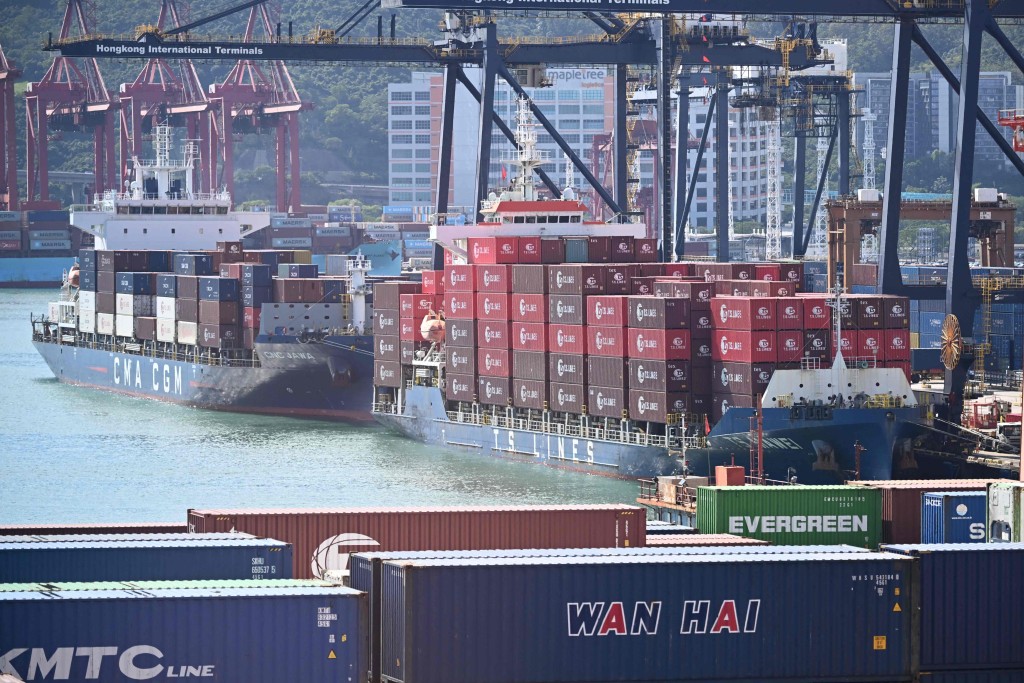
Hong Kong's exports picked up pace to surge 65.6 percent in October over a year ago, far outpacing the market forecast of 59.4 percent, fuelled by the global artificial intelligence supercycle, data from the Census and Statistics Department showed on Thursday.
The solid exports performance came after a year-on-year increase of 64.9 percent in September - the fastest monthly expansion pace in over four decades. The value of total exports recorded HK$764.5 billion last month.
Imports eased from September's strong growth of 57.8 percent, rising 56.2 percent to HK$783.8 billion in October, also above the market estimates of 52.9 percent.
The city logged a visible trade deficit of HK$19.3 billion, equivalent to 2.5 percent of merchandise imports.
For the first 10 months, the value of total exports climbed 47.4 percent, while that of imports rose 46.2 percent.
Looking ahead, robust global AI investment and related demand will continue to support Hong Kong's merchandise trade performance, a government spokesman said.
Nonetheless, external uncertainties persist, with developments in international trade and technology policies, risks associated with the rapid expansion of global AI investment, and evolving geopolitical tensions warrant close monitoring, the spokesman added.
Particularly, Hong Kong's exports to the United States and Mexico delivered robust performance, growing 105.2 percent and 258.6 percent, respectively, while total exports to Asia as a whole increased by 66.1 percent in October.
As a global re-export trading hub, Hong Kong has seen solid growth in exports to the United States over the past year, so the new US tariff threat will inevitably have an impact, though a limited one, said Samuel Tse, senior economist and strategist, head of Hong Kong Fixed Income Research at DBS Bank (Hong Kong)
With the city's trade gradually shifting towards Southeast Asia and other emerging markets, its reliance on the US market has relatively declined, indicating the short-term tariff impact remains manageable, he added.
For mainland China, Tse noted that its exports have become far more diversified than in the first term of US President Donald Trump, so the impact of new US tariffs on Chinese exports would also be relatively mild.
He added that exports to the US now only account for 10 percent of China's total, sharply falling from around 20 percent during Trump's first term.