When coffee is spilled at an office block in a futuristic enclave of Singapore, AI-powered cameras and sensors detect it and send a cleaning robot right away.
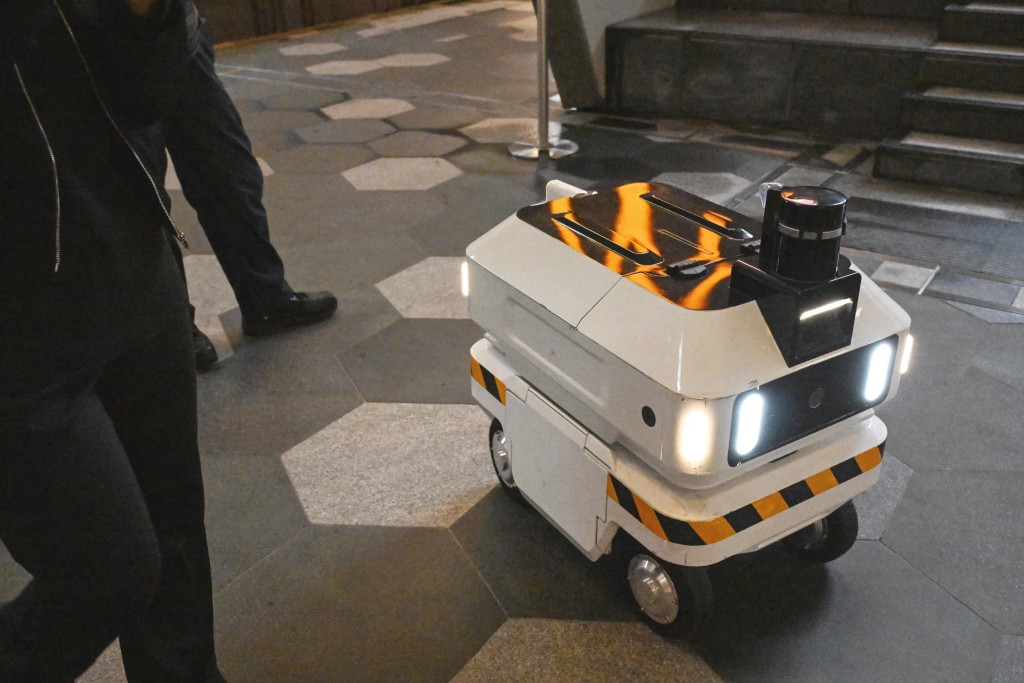
The wheeled robot receives a signal from an operations hub, rolls off its dock and takes a lift to the eighth floor, where it finds the mess and clears it up -- all without human intervention.
It was part of a staged demonstration in Punggol Digital District in suburban Singapore, where the city-state is carrying out real-world trials of tech that could become part of everyday life.
A district-wide "live test-bed" of this kind, allowing companies to experiment in an urban environment, is rare globally, said Tang Bing Wan, chief digital and technology officer at JTC Corporation, Singapore's industrial landlord.
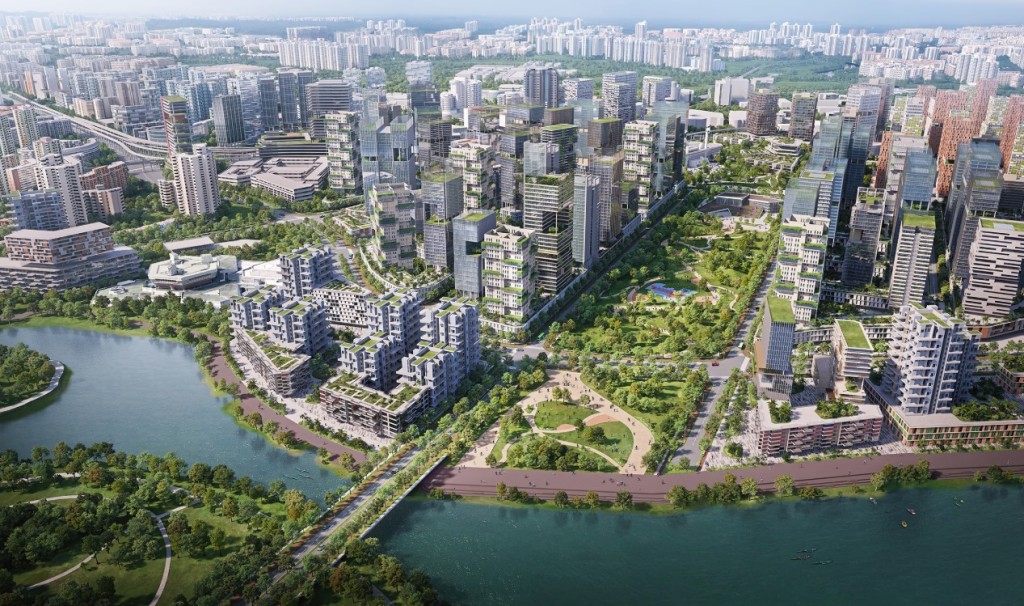
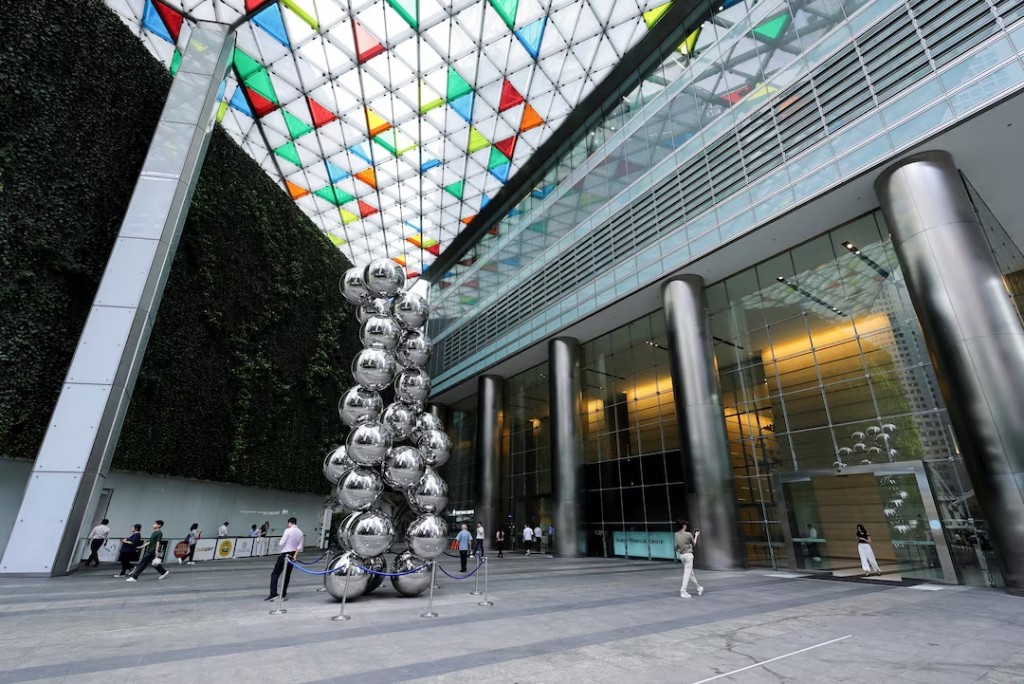
The government-developed mini-city, PDD for short, spans 50 hectares (120 acres) -- a bit bigger than Vatican City -- and currently houses eight businesses and office blocks, as well as a mall, university campus and metro station.
"Companies that dabble in robotics, cybersecurity and even the financial services industry" are based there, with more set to join, Tang told AFP.
PDD, which borders residential areas, is not strikingly futuristic to walk around.
But behind the scenes, a centralised digital platform helps run infrastructure, from waste disposal to elevators.
There are also plenty of robots around -- including machines designed to alleviate the ageing city-state's manpower crunch in areas such as cleaning and security.
A wheeled robot that can deliver food orders to offices is also being trialled.
- Central platform -
Despite the shrinking workforce, Singapore residents expect their surroundings to remain clean, safe and well-maintained, said Ong Chen Hui of the Infocomm Media Development Authority.
"Robotics offers a real part of the solution" by doing physically taxing routine tasks, freeing up workers for jobs requiring "human judgement, care, and skill", Ong said.
The district will be formally inaugurated next month in a grand ceremony headed by the prime minister.
A district-wide "open digital platform" coordinates the robots and connects different locations, gathering data from thousands of cameras and sensors on everything from air temperature to foot traffic.
Artificial intelligence analyses the data, enabling the system -- with the help of human operators -- to respond to problems, anticipate disruption, and reduce energy use and waste.
Elevator movements can be reduced during periods of low demand, while restaurants can anticipate busy hours to adjust staffing and food preparation.
Centralised air-conditioning controls can also be adjusted in real time, to use less power.
A digital replica of the district displayed on a giant screen at the operations centre gives staff there a real-time view of PDD and helps them spot or predict anomalies.
PDD probably has "the highest concentration of robots in Singapore where they can roam freely, because the estate is designed" that way, said James Tan, a director at government technology arm GovTech.
- 'Not dystopian' -
Companies use PDD to test their robots and other new tech before wider deployment, and JTC's Tang said safety rules are being crafted to prevent accidents.
"It's not a dystopian future. That's not what's happening here," he said.
Hospital worker Amanda Lim, 34, who lives nearby, said her children like the robots.
"They will chase and play with them," she said while strolling with her family at the mall.
Despite increasing global concern over the potential risks of AI technology, no one AFP spoke to at PDD expressed concern over data privacy or surveillance.
Among the companies leading trials in the government-built district is homegrown LionsBot, which makes fleets of cleaning machines for what it envisions as the "cleaner of the future" who will no longer be holding a mop.
And Japan's Panasonic is testing a shared communications system for robots from different manufacturers, using PDD's digital infrastructure.
Takeshi Ando, managing director at Panasonic's innovation centre at PDD, said similar trials conducted in Japan took more time.
Ando explained that, unlike at PDD, he had to deal individually with a fragmented group of building managers, regulators and government agencies.
The district's university campus, the Singapore Institute of Technology, allows academics to "work very closely and almost seamlessly with companies", said its president Chua Kee Chaing.
In the surrounding neighbourhood, too, autonomous shuttles -– carrying a human safety operator -- are already ferrying passengers on public roads.
Retiree Veronica Tan, 62, was unfazed by the increasing automation.
"Robots are still robots, so it's up to humans to decide how advanced the technology is," she said.
AFP