






Read More







Defying the demographic cliff: restoring hope
06-10-2026 04:56 HKT

Man steals gold chain worth $70,000 from Tai Po jewelry store
14-10-2026 17:37 HKT


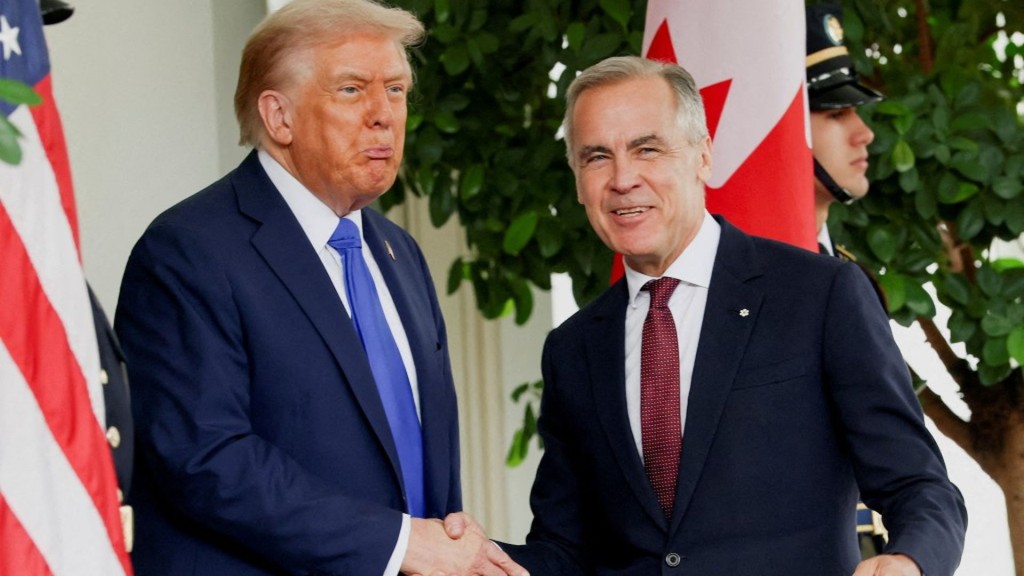
The sudden collapse of high-stakes cross-border trade negotiations between Ottawa and Washington, followed by the aggressive enforcement of sweeping 50 percent US tariffs on Canadian goods, has triggered an unprecedented diplomatic crisis across North America. In a historic press conference on Parliament Hill, Canadian Prime Minister Mark Carney declared that Canada was effectively "at war" after being targeted by economic coercion, pledging immediate dollar-for-dollar retaliatory tariffs taking effect on September 8 on American steel, dairy, electronics, and agricultural machinery. Warning that "the old Canada-US relationship is over" and that Washington's "signature was written in pencil," Carney's sharp rejoinder marks a definitive structural rupture in what was historically celebrated as the world's most integrated and predictable bilateral partnership.
For over seven decades, American grand strategy took for granted an indispensable geopolitical asset: a peaceful, economically aligned, and compliant northern perimeter. The Canada-US border – spanning nearly 9,000 kilometers as the longest undefended frontier in the world – spared Washington the strategic necessity of fortifying its northern flank. This geographic luxury allowed the Pentagon to project decisive military power across Eurasia while anchoring American industrial supply chains in securing Canadian natural resources and energy. Canada currently supplies approximately 60 percent of US crude oil imports, 85 percent of its electricity imports, and nearly all of its imported natural gas, alongside vital critical minerals essential for defense and high-tech manufacturing.
However, the blunt weaponization of tariffs against Ottawa dismantles the institutional trust underpinning the Canada-United States-Mexico Agreement and broader continental integration. By treating a foundational neighbor as an economic adversary, Washington has shattered the long-standing assumption of a tranquil backyard. Faced with unilateral coercion, Canadian political consensus across partisan lines has hardened around economic sovereignty and strategic self-reliance. This enduring friction introduces severe unpredictability into joint Arctic surveillance, North American Aerospace Defense Command modernization, and continental defense coordination at a time when American military bandwidth is already severely strained across Eastern Europe and the Middle East.
The sudden collapse of continental trade certainty has transformed Canada's export diversification from an aspirational policy goal into an existential national imperative. Recognizing that maintaining a 70 percent export dependency on the US represents an untenable security liability, the Carney administration is aggressively mobilizing to double non-US trade and foreign investment over the coming decade.
This structural recalibration inevitably reshapes Canada's engagement with China. While diplomatic relations have weathered acute political strain in recent years, economic gravity is rapidly reasserting itself. With the expanded Trans Mountain pipeline delivering Canadian heavy crude directly to Pacific tidewater, and with Canadian exporters seeking stable, long-term markets for liquefied natural gas, agricultural staples, potash, and critical battery minerals, Asian supply chains – with China as their central engine – represent the primary viable alternative to American protectionism. Canadian energy exports to China more than tripled from US$3.2 billion in 2023 to US$9.7 billion in 2025, almost exactly offsetting the decline in energy exports to the United States over the same period.
For Beijing, the North American rupture weakens Washington's ability to assemble a unified Western containment coalition while opening substantial commercial opportunities in clean energy, resource trade, and industrial supply chains. As Ottawa learns the costly lesson of overreliance on a volatile southern neighbor, pragmatic, resource-driven diplomacy between China and Canada becomes increasingly compelling. By driving its closest ally to pursue strategic and economic autonomy, Washington is discovering that hegemonic overreach abroad inevitably begins by fracturing stability at home.