
Read More
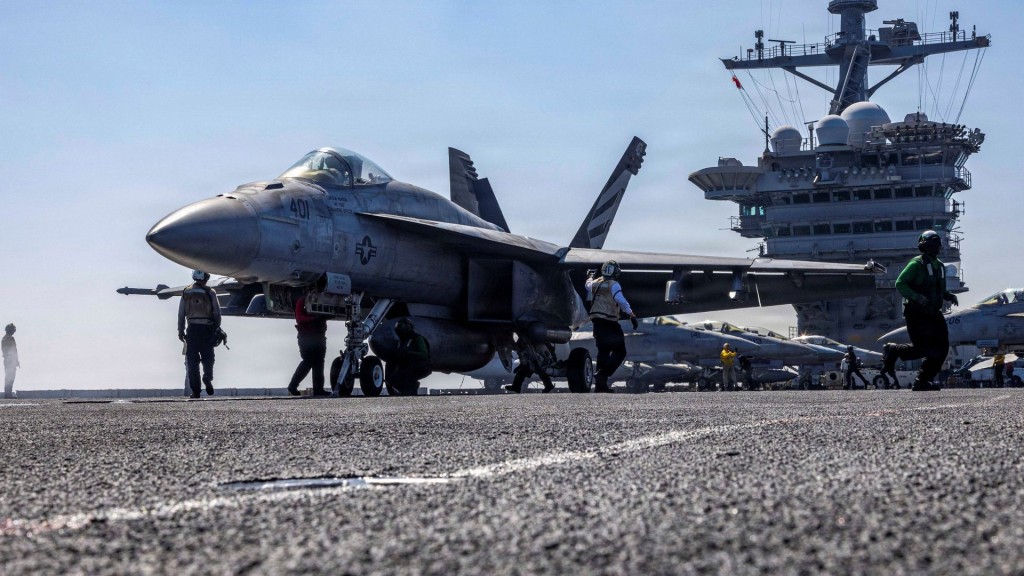
The strategic redeployment of American carrier strike groups, air defense systems, and precision assets to ongoing conflicts in the Middle East and Eastern Europe has exposed the hard limits of Washington's global commitments. Much like the Gulf monarchies whose skepticism of American security guarantees spurred autonomous alignments like the Mecca defense pact, traditional US allies across the Asia-Pacific are confronting an uncomfortable reality: Pax Americana is dangerously overextended. As Washington struggles to balance simultaneous commitments across multiple global theaters, the credibility of its extended deterrence umbrella is visibly eroding. This strategic uncertainty is dismantling post-war defense orthodoxies, accelerating regional conventional rearmament, and pushing nuclear hedging into mainstream policy debates in both Seoul and Tokyo.
ADVERTISEMENT
SCROLL TO CONTINUE WITH CONTENT
Re-evaluation of non-proliferation taboos
Confronted with the dual risks of American tactical distraction and long-term isolationism, US regional partners are actively reassessing their non-nuclear postures. In South Korea, domestic political discourse has shifted decisively toward sovereign deterrence, with robust public and elite backing for exploring independent nuclear weapons capabilities or negotiating formal nuclear-sharing mechanisms with Washington. South Korea's advanced civilian nuclear infrastructure and indigenous ballistic missile technology provide it with immediate technological latency should it cross the nuclear threshold.
Simultaneously, Japan is experiencing a historic re-examination of its foundational security taboos. Although Tokyo has long adhered to the Three Non-Nuclear Principles – pledging never to possess, manufacture, or permit the introduction of nuclear weapons – rising regional anxieties and calls by conservative leaders to debate deterrence without taboos have placed these guidelines under severe strain. Discussions surrounding NATO-style nuclear sharing and the re-interpretation of the non-introduction clause are gaining traction within the ruling Liberal Democratic Party. Possessing a complete civilian nuclear fuel cycle and a domestic stockpile of approximately 45 tons of separated plutonium, Japan operates as a virtual nuclear power. A coordinated push toward nuclearization in either Seoul or Tokyo would effectively shatter the global Non-Proliferation Treaty architecture, triggering an irreversible nuclear chain reaction across East Asia.
Balancing economic gravity and deterrence
For Beijing, navigating this volatile landscape requires learning from Washington's primary strategic vulnerability: the trap of imperial overstretch. Decades of exorbitant foreign defense spending, far-flung base networks, and endless overseas entanglements have depleted American fiscal resilience and fragmented its strategic focus. Attempting to replicate this expansive, expeditionary model would merely exhaust China's domestic resources and accelerate the formation of hostile balancing coalitions.
Yet, history demonstrates that economic interdependence alone cannot guarantee peace; deep trade ties did not prevent the catastrophic breakdowns of 1914, nor can commerce defend vital maritime sea lanes of communication from disruption. China's optimal strategy is therefore a calibrated synthesis of robust regional deterrence and overwhelming economic centrality. While maintaining modern, defensive maritime capabilities, Beijing must ensure that economic integration remains its primary regional anchor. By deepening industrial supply chains through the Regional Comprehensive Economic Partnership, institutionalizing maritime crisis-management mechanisms with its neighbors, and promoting an inclusive Asian security architecture, China can reassure anxious regional capitals. In doing so, Beijing can demonstrate that sustainable regional stability is built on enduring economic synergy rather than unsustainable military expansion.