Read More
Sources said the government is proposing to double the quota for non-local students at eight subsidized universities to 40 percent in the coming policy address, to be delivered next Wednesday (Oct 25), in order to transform Hong Kong into an international higher education hub.
ADVERTISEMENT
SCROLL TO CONTINUE WITH CONTENT
The current quota for non-local students is 20 percent of the approved student number targets for public-funded undergraduate places. And universities can admit non-locals by the way of over-enrollment.
It is understood that the government has consulted the universities and obtained their support. For a yearly subsidized quota of 15,000 local undergraduates, the increase means the number of non-locals will jump from 3,000 to 6,000.
According to Sing Tao Daily, The Standard’s sister paper, the government will also encourage universities to admit students from the Southeast Asia region as well as regions participating in the Belt and Road Initiative so that the quota won’t be monopolized by mainland students.
It is also understood that the government has reminded universities to address the issue of mainland students occupying most of the non-local quota to avoid affecting their levels of internationalization, leading to a decline in the global rankings.
According to data by the statistics department, the number of mainland students has occupied over 70 percent of the quota for non-local students two years in a row since 2021/22.
Sources also said authorities will roll out measures to attract non-local students to stay in Hong Kong and work following graduation.
So far, only one percent of non-local students are willing to stay in Hong Kong after getting their degree and authorities are aiming to push the rate to 5 percent, equivalent to that in the UK and the US, sources added.
Lawmaker and Lingnan University’s associate vice president Lau Chi-pang welcomed that proposal and believes it won’t affect the study opportunities of local students.
Lau said universities may need to make some adjustments in facilities and dorm arrangements, such as adjusting the dorms’ ratio of local and non-local students.
He pointed to the city’s well-developed transportation network and thinks local students won’t be impacted.

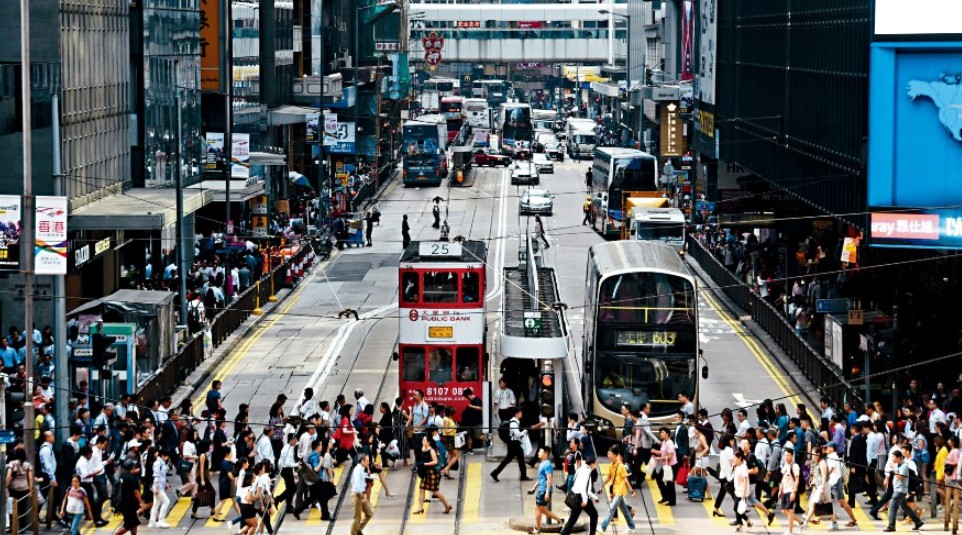
File photo.