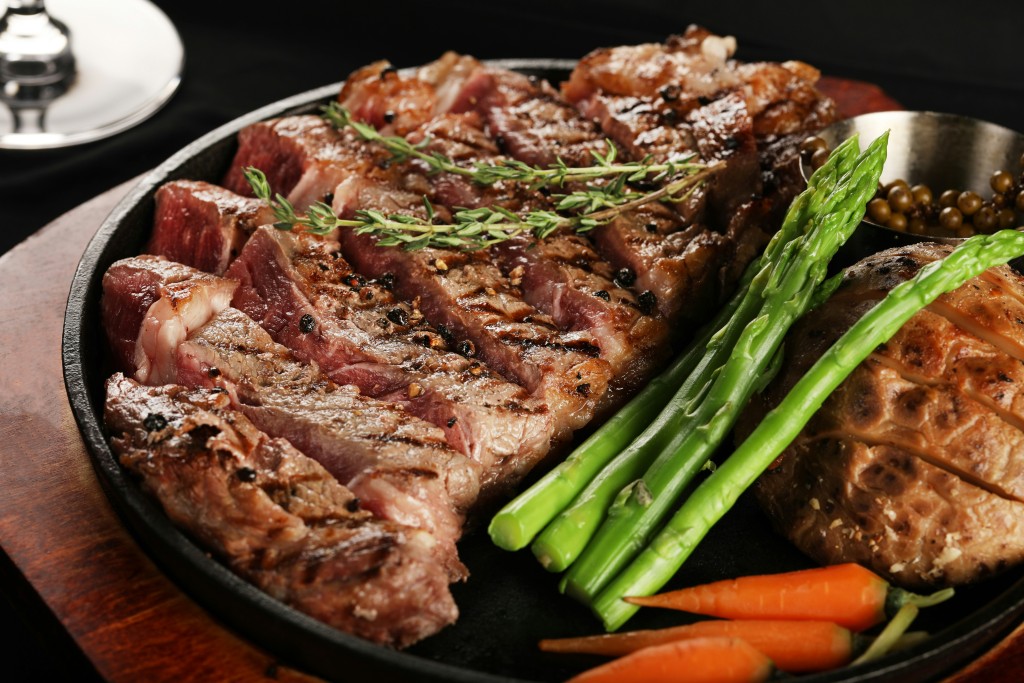
Celebrity chef Lambert Givens said in an interview with foreign media: "Pan-frying steak requires high heat to form a dark brown, crispy crust, and the choice of oil is crucial." To achieve an appetizing seared aroma, steak must reach high temperatures. If oil with a smoke point lower than the cooking temperature is used, the oil will burn before the steak is seared. As a result, the steak not only has a burnt, bitter taste and fills the kitchen with smoke, but the deteriorated oil may also produce harmful compounds.
Therefore, the ideal choice is oil with a smoke point of about 204°C (400°F) or above. Such oils can withstand high heat, do not burn easily, help form an ideal crust on the beef surface, and lock in the juices.
6 Recommended Oils—Do Not Use Butter to Pan-Fry Steak
Experts recommend the following 6 oils:
-
Canola oil
-
Grapeseed oil
-
Refined avocado oil
-
Refined vegetable oil
-
Refined safflower oil
-
Refined peanut oil
Lambert explains that canola oil and grapeseed oil are widely used in restaurant kitchens and can highlight the beef's original flavor. Refined avocado oil, vegetable oil, safflower oil, and refined peanut oil all have high smoke points and neutral flavors, making them suitable for high-temperature cooking. Many chefs like to use beef tallow, which has a high smoke point and adds flavor; however, it is a saturated fat and should be used in moderation.
Butter has a smoke point of only about 177°C (350°F), lower than the high heat required for pan-frying steak. If butter is used to start the pan, it will burn at high temperature and produce a bitter taste. If you like the aroma of butter, add it over low heat when the steak is nearly done, and baste the steak with it for seasoning.
To pan-fry an ideal steak every time, pay attention to the following steps:
-
Choose a suitable cut and quality
Different cuts have different flavors and textures; choose according to personal preference. High-quality steak should have an appropriate amount of marbling, evenly distributed, bringing juiciness and aroma.
-
Thaw and bring to room temperature
Before cooking, take the steak out of the fridge and let it return to room temperature to avoid the outside being cooked while the inside is raw; bringing it to room temperature also helps the seasoning penetrate.
-
Pat dry
Use kitchen paper towels to pat dry the surface moisture of the steak. Moisture causes the steak to "steam" rather than "sear," affecting the crispy result.
-
Preheat the frying pan
Preheat the frying pan until it starts to smoke, then add a thin layer of oil.
-
Simple seasoning
High-quality beef is best simply seasoned; sprinkle coarse sea salt and freshly ground black pepper only before cooking.
-
Sear in the pan
When the oil starts to slightly bubble, place the steak in the pan. Make sure there is enough space in the pan to avoid overcrowding, which causes steam to accumulate. Let one side form a crispy crust first, then flip after about 3 to 4 minutes.
-
Add butter (optional)
If using butter, add it over low heat when the steak is nearly done. Crushed garlic cloves, rosemary, or thyme can be added at the same time. Tilt the frying pan and repeatedly spoon the melted butter over the steak.
-
Check doneness and rest
Move the steak to indirect heat and check whether it has reached the desired doneness. After plating, let it rest for a few minutes to let the juices redistribute, then slice against the grain.