Read More


Jollibee founder buys Mid-Levels luxury flat for $160.75m
24-11-2026 20:48 HKT



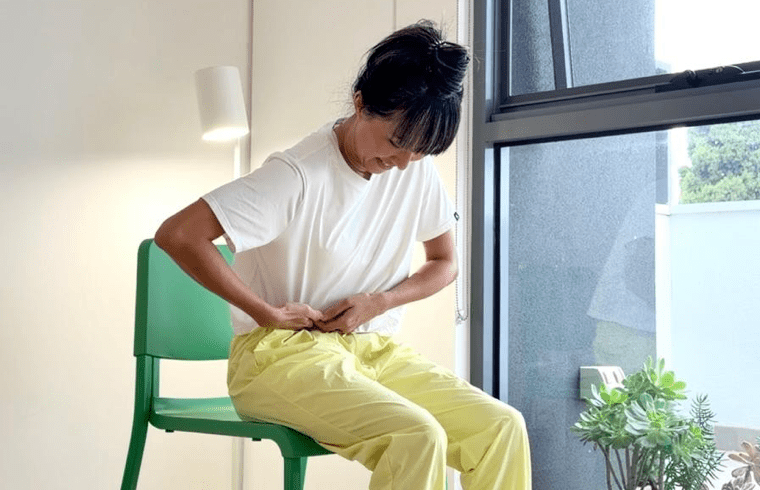
Many people think stretching is just about moving the limbs, but overlook the most crucial element—the state of the abdomen. When the abdomen truly relaxes, the body is truly in a relaxed state, and there is an interesting phenomenon behind this. Stretch therapy instructor Czon Wong shares 3 simple exercises to help everyone release abdominal tension and make breathing deeper and more natural.
Stretch therapy uses exhalation to help muscles relax. When the human body faces stress or feels threatened, the abdominal muscles instinctively tighten—this is a protective mechanism engraved in the genes to guard the internal organs.
You can notice this: when you feel stressed, nervous, or afraid, does your body easily contract inward, bend forward, and even your breathing become shallower? Conversely, when we consciously relax the abdomen and slow the breathing, this "fight or flight" state cannot be maintained, and the body naturally returns to a calmer state.
Here is an interesting little test you might try:
First let the abdomen completely relax and maintain natural breathing; then try to feel anger, or think about something recent that makes you want to complain. You will find that the emotion seems to have nowhere to land, feels unreal, and even maintaining the original anger or tension is not as easy as you imagined.
After understanding the interaction between breathing, body tension, and emotions, the following three exercises can help us relax the abdomen and make breathing more natural. These exercises can be combined with the previously introduced "exhalation relaxation" for better results.
If the area around the ribs is chronically tight, the movement of the chest during breathing will also be restricted. This exercise can help relax around the ribs and give breathing more space.
Steps:
Find a comfortable seated or lying position and breathe naturally a few times first.
Place your fingers on the lower edge of the ribs, starting below the chest, and gently press inward and upward.
When you find a relatively tight or sensitive spot, stop—no need to press hard.
Maintain the finger pressure, slowly inhale, and then slowly exhale.
With each exhalation, try to relax the abdomen and feel whether the area under your fingers gradually softens.
After staying for a few deep breaths, slowly move to the next position along the lower edge of the ribs.
The scalenus muscles are located on both sides of the neck and are also accessory muscles for inhalation. When these areas are chronically tight, breathing easily becomes shallow and even feels more labored.
Steps:
Sit or stand—either is fine—and first let the shoulders relax naturally.
Place one hand at your side and gently sink the shoulder downward.
Slowly tilt the head to the other side until you feel a gentle stretch on the side of the neck.
If you want to explore different positions, slightly rotate the head to find the tightest direction.
Maintain this position and slowly inhale.
On exhalation, relax the shoulders, neck, and abdomen, and see whether the body is willing to open up a little more.
Hold for a few slow breaths, and then switch to the other side.
When we sit for long periods, bend forward, or are in a tense state, the body easily habitually contracts inward. This exercise reopens the chest and abdomen through a gentle backbend.
Steps:
Find a comfortable position—you can stand, kneel, or use the support of a chair back or yoga mat.
First extend the body upward rather than immediately bending backward.
Slowly open the chest and let the front of the body gradually lengthen.
Only go to a position where you can still breathe naturally and the abdomen does not need to tighten.
Slowly inhale and feel the expansion of the chest and abdomen.
On exhalation, relax the abdomen.
Hold for a few deep breaths and see whether, after each exhalation, the body can open up a little more.
You do not need to control your breathing very forcefully. Sometimes, what really needs practice is simply to stop gripping and let breathing happen naturally. In the next article, I will share how to connect heartbeat and emotions through breathing.
Written by: Stretch Therapy Instructor Czon Wong