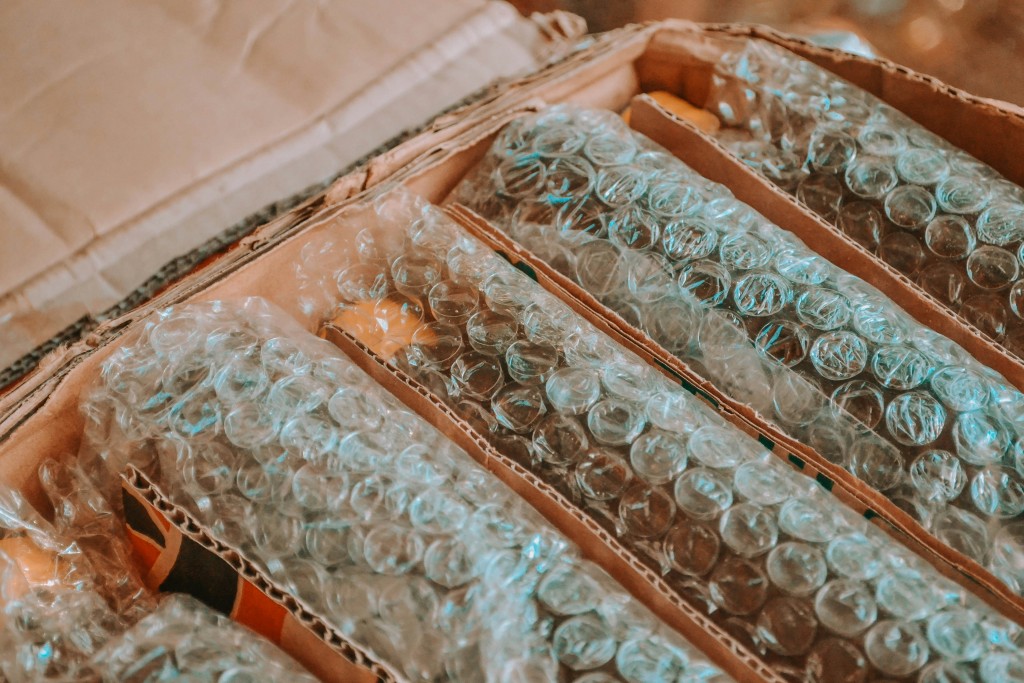
Bubble wrap after unboxing online orders is often thrown away as trash. A Japanese bubble wrap manufacturer lists 7 hidden uses of bubble wrap. Besides basic shock-proof packaging, it turns out it can also come in handy for winter warmth, preventing pipes from freezing, and even during emergencies.
Don't Throw Away Bubble Wrap After Opening Packages
Common packaging material bubble wrap has one side lined with raised air-filled bubbles, while the other side is smooth and glossy. Which side is actually the front? According to a report by the Japanese media outlet grape, Japanese bubble wrap manufacturer Kawakami Sangyo Co., Ltd. states that bubble wrap has the following hidden uses:
7 Hidden Uses
1. Winter warmth: According to the bubble wrap company, an employee once, when trapped in a severe traffic jam on a highway in winter, wrapped the spare bubble wrap in the car around himself like a sleeping bag, effectively reducing heat loss and achieving warmth and cold protection. Bubble wrap can also be laid on cold ground or stuck on windows to block cold air.
2. Preventing pipes from freezing: In severe cold, wrapping bubble wrap around water pipes can exert a good anti-freezing effect and block cold air.
3. Preventing rain from seeping into shoes: When going out in the rain, runners can place bubble wrap at the shoelace area to reduce rain seeping in from the shoe upper.
4. Expanding flashlight illumination range: Wrapping bubble wrap around the outside of a flashlight can make light spread evenly outward and expand the illumination range.
5. Support and filling: When displaying clothing, bubble wrap can be filled inside mannequins to make the clothing look fuller and more three-dimensional.
6. Plant warmth: Can be used to keep plant roots warm.
7. Cushion: Use its cushioning property as a temporary seat cushion.
Bubble Wrap Front and Back Have the Same Function—Do Not Place in High Temperatures
The manufacturer adds that bubble wrap actually has no defined so-called front or back. Whether the bubble side faces inward or outward, the cushioning performance of both is exactly the same, and users can decide according to actual needs and preferences.
Bubble side facing outward: When putting items into the bag, they are less likely to get stuck on the bubbles and can be loaded more smoothly.
Bubble side facing inward: If a label needs to be attached to the outside of the bag, keeping the smooth side on the outside can increase the adhesive area and prevent the label from falling off due to insufficient stickiness.
Special note - because bubble wrap is made of polyethylene material, its heat resistance temperature is about 50 to 60°C, and it is combustible. Therefore, it is strictly forbidden to store or use it near fire sources, and never place it in high-temperature or direct sunlight environments for long periods, to avoid danger.
Source: Grape