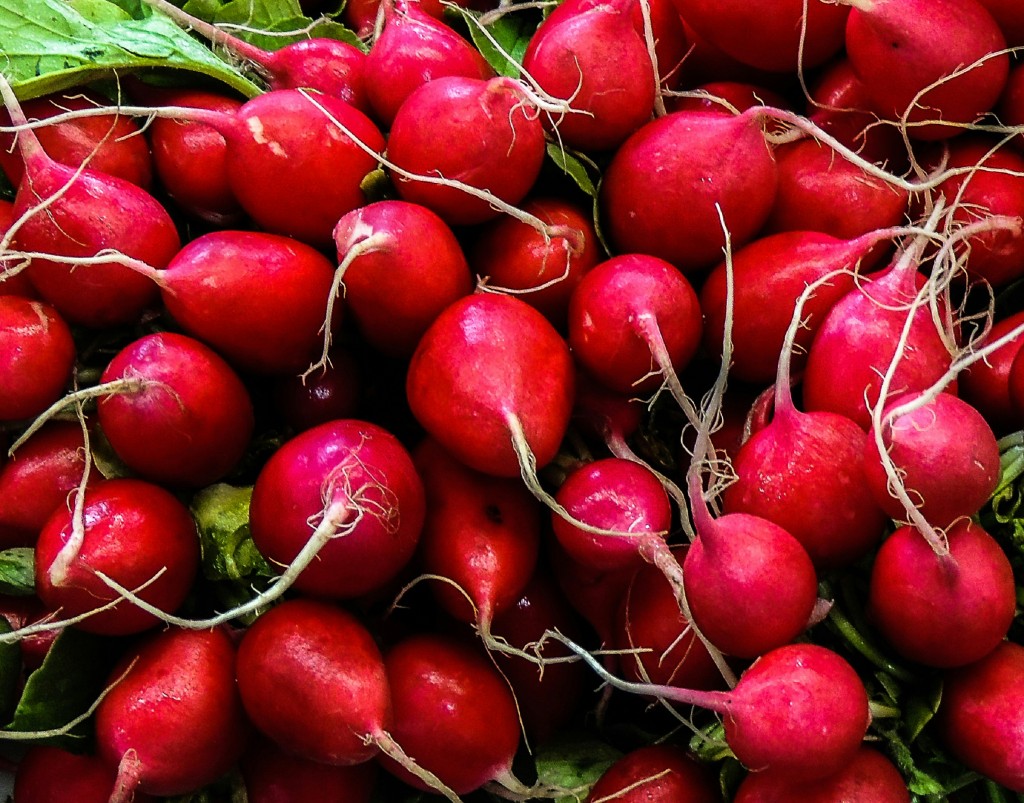
After buying radishes with leaves, many people put them directly into the fridge, thinking that green leaves mean freshness. However, experts point out that storing them with the leaves actually makes the radish soften faster and lose its crisp texture. To extend the radish's freshness, you must master the correct storage method. The nutritional value of radish leaves far exceeds the white root, so it is a pity to cut them off and throw them away—why not make more use of them.
Do Not Put Radishes Straight into the Fridge—3 Correct Storage Steps
Radish leaves continue to evaporate moisture after harvest. If stored together with the leaves, the leaves will draw moisture from the root, causing the radish to gradually lose water, become soft, and lose freshness. Therefore, after buying radishes with leaves, the leaves and root should be separated and stored separately as soon as possible.
After cutting off the leaves, the key to storage is "preventing dryness." Radishes have high water content, and if put directly into the fridge, the surface easily loses moisture and becomes soft. It is recommended to handle them as follows:
-
Cut off the leaves: Use a knife to cut the leaves off at the connection point with the root, avoiding tearing that damages the root.
-
Wrap the cut surface: Wrap the radish root tightly in plastic wrap, especially the cut surface, to prevent moisture from evaporating from the cut.
-
Put in the vegetable crisper: Place the wrapped radish in the vegetable crisper of the fridge. If the radish is large, it can be cut into two or three sections, but the cut surfaces must be well wrapped in plastic wrap.
Even with proper storage, radishes should still be eaten as soon as possible to taste the best flavor. In winter, in places with lower room temperature and no heating, they can also be stored briefly in a cool place, but in other seasons refrigeration is recommended.
Radishes Are Highly Nutritious—2 Ways to Choose White Radishes
Radishes are low in calories and high in water, contain vitamin C, and are also not low in potassium and dietary fiber. Every 100 g of white radish contains about 230 mg of potassium and about 1.4 g of dietary fiber. White radish is a non-starchy vegetable that helps with blood sugar management, and is therefore recommended by the American Diabetes Association.
White radish is a cruciferous vegetable containing myrosinase, which can produce isothiocyanates. These components may have certain effects in helping prevent cancer, diabetes, and other diseases. However, myrosinase is not heat-resistant. Even slight heating or stir-frying will reduce the myrosinase content, and prolonged boiling will also cause it to lose activity.
When choosing white radishes at the market, do not just look at appearance and size. You can choose using the following 2 methods:
-
Tap lightly with a finger: A crisp, solid sound indicates sufficient moisture; if the sound is hollow, the inside may be hollow.
-
Weigh it in your hand: For white radishes of the same size, the heavier one means fuller moisture and a texture less likely to be dry and tough.
Radish Leaves Cut Off and Discarded? More Nutritious Than the Root
Food safety expert Wayne once posted on social media that many people usually cut off the radish leaves after buying radishes, but in fact the nutrients in radish leaves overwhelmingly surpass the white part (radish root). Radish leaves have the following nutritional value (compared with the white root):
-
Protein: about 5 times
-
Dietary fiber: 2 times
-
Potassium: about 1.5 times
-
Calcium: about 7 times
-
Magnesium: about 2.5 times
-
Iron: about 7 times
-
Folic acid: about 4 times
-
Vitamin C: about 4 times
-
Beta-carotene (vitamin A): more than 2,300 times
Although radish leaves are coarser, after a little processing they can also become delicious.
How to Eat Radish Leaves
Next time you buy radishes with leaves, remember to first cut the leaves, wrap the cut surface, and put them in the fridge. As for the radish leaves, they are rich in nutrients, and it is truly a pity to throw them away. Why not try cooking with them and adding healthy new ideas to the dining table:
Source: Papuchan