Walking can tone the body and promote health and longevity, but if you push yourself too hard, it can instead cause foot and lower back pain. After turning 60, as long as you persist in just one minute of "super walking" practice every day, you can gradually build legs that "can still walk at 100"; stand tall, relax, walk slowly, and let your feet lead you toward a longer life.
What Is Super Walking? Adjusting Your Center of Gravity Matters More
Japanese acupuncturist Takashi Inamura points out that super walking is not difficult. The movement is simply repeatedly lifting the knee straight up and putting it down, but the key lies in adjusting the center of gravity. Before practicing, you should first master the correct standing posture and center of gravity. Many people think that sticking out the chest, arching the lower back, and extending the knees straight is a good posture, but this causes excessive forward curvature of the lumbar spine (commonly known as "swayback"), shifts the center of gravity forward, leads to pain and body misalignment, and also prevents the effects of super walking from being realized.
Inamura recommends the basic standing posture:
-
Open the feet gently, do not stick out the chest, and slightly bend the hip joints and knees (only to the degree of relaxation).
-
At this time, the center of gravity will fall near the outer side of the heels. In this posture, gently lift the big toes to experience the correct center of gravity, and let the body remember it.
-
From the perspective of skeletal structure, the ideal center of gravity is directly above the "talus," where the tibia and foot bones connect. Standing with this center of gravity, when viewed from the side, the ears, shoulders, hip joints, and ankles will form a straight line. The body is supported evenly by the entire skeleton, and no single part is burdened.
One Minute a Day: Marching in Place to Strengthen Physical Fitness
Inamura points out that being able to stand with the correct center of gravity means you have already completed 90% of walking. To avoid developing personal habitual deviations, it is advisable to practice walking at home, and then march in place. The method for marching in place is as follows:
-
First confirm the correct standing posture and center of gravity.
-
Lift one knee straight up and then put it down, then do the same on the other side, repeating.
-
The knee only needs to be lifted gently; do not fully straighten it, keep it slightly bent.
-
Kicking the ground or landing with a "thud" are both incorrect.
-
30 times a day (about 1 minute), alternating left and right.
-
While stepping, feel the difference between landing on the heel and landing on the whole foot.
Those with insufficient muscle strength may find it difficult, but by continuing for 1 minute every day, the feet will gradually become easier to lift. Consciously land with the whole foot and proceed slowly. If the body is in pain, do not force it; wait until the pain disappears before doing it again.
Four Minutes of Arm Swinging to Adjust the Body's Axis
The "arm swinging" introduced next is a Chinese health exercise for adjusting the body's axis. Method:
-
Open the feet shoulder-width apart and stand with relaxed shoulders.
-
Place both hands on the waist, keep the face facing forward, and use the pelvis as the axis to twist the body left and right. Be careful not to turn using the shoulders.
-
Once accustomed, add swinging of the left and right arms. Do not use force in the arms; be aware that the rotation is centered on the pelvis (the arms merely follow). Continue for 4 minutes.
"Although simple, it can relax muscles and adjust the body's axis, making it a recommended exercise. The less force and the more relaxation in the body, the better the effect. Doing it when you wake up or after bathing will make the body feel very refreshed. Swinging the arms also stimulates kidney acupoints, so it is also suitable for people troubled by nocturia or cold hands and feet," Mr. Inamura adds. "People whose bodies sway left and right when walking and who often trip will find their walking posture stabilizes after doing this movement."
Super Walking Method: Sway Like a Baby
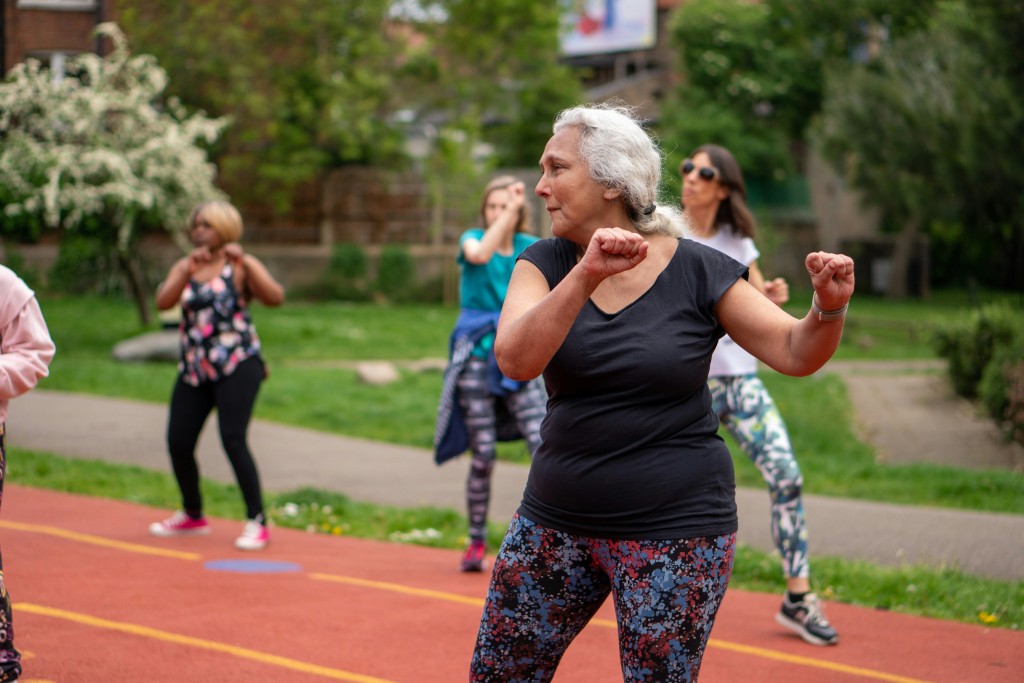
After learning the center of gravity, posture, and stepping, all that is left is to step forward and walk. Let the arms hang naturally. "Landing gently with the whole foot, and as the pelvis moves, the foot naturally pulls back—this is ideal walking. The trick is to be conscious of relaxing the hip joints and knees. Then, imagine walking on two lines, and be careful not to twist the body. This way of walking is the same as a baby's 'wobbly walking,' and is precisely the model for super walking."
At first, you will walk somewhat clumsily, but once accustomed, you will be able to walk naturally. Please do not carry luggage; walk while being conscious of the hip joints, knees, and center of gravity.
One minute a day, starting from the correct standing posture, combined with marching in place and arm swinging, then moving forward with a wobbly gait. This "super walking" does not pursue speed or distance, but emphasizes relaxation and center of gravity.
Source: Japanese acupuncturist Takashi Inamura