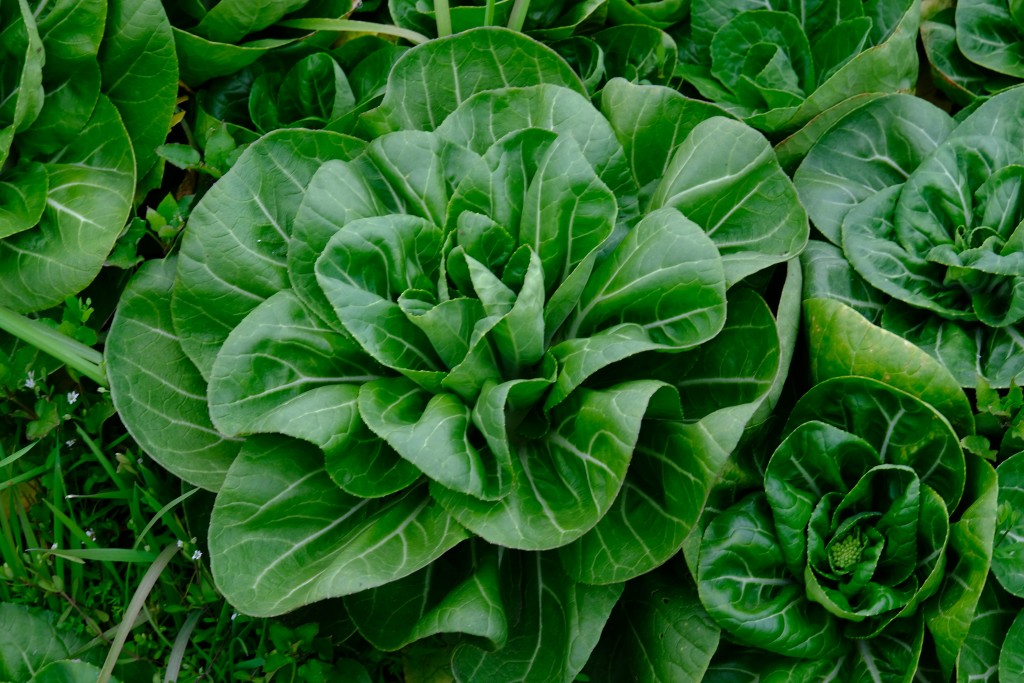
A food safety scandal has emerged in Yuzhong County, Gansu Province, where farmers allegedly used industrial dyes to colour lettuce, masking yellowing and skin damage with synthetic colourants. Soaked in artificial dyes, the vegetables were given an unnaturally bright green appearance before being shipped to major cities across the country. After the exposure, local authorities conducted inspections and found 6 companies illegally using colourants banned for fresh vegetables. Cases have been filed for investigation.
Gansu Lettuce Found with "Brilliant Blue" and "Lemon Yellow" – Banned for Fresh Vegetables
Mainland blogger "Da Lei's Food Science Daily" visited 13 vegetable warehouses in Yuzhong County and found that over half used unknown liquids to soak lettuce. On site, they discovered a bottle labelled "Compound Food Additive – Compound Colourant" with a bright green colour, leading to suspicion that additives were being used illegally. The blogger, Mr. Zhang, took samples from soaking solutions at three different warehouses. Testing revealed that two samples contained "Brilliant Blue" and "Lemon Yellow," which are explicitly prohibited for use in fresh vegetable processing.
Soaking at Night to Avoid Inspection – Workers Mix Chemicals by Instinct
Zhang's investigation found that the soaking solutions were mixed based on workers' experience, with no measuring tools—posing a safety risk. Some operations were carried out in open areas, leaving green chemical residue on the ground. After colouring, the lettuce was stored in cold storage. To avoid detection, some operators used a "shift-based" approach—handling only sorting and trimming during the day, and soaking vegetables at night. After processing, packaging was destroyed and residues washed away to hide evidence. The treated lettuce was then shipped nationwide, rendering regulatory oversight ineffective.
Experts Warn: Overuse of Additives Can Cause Allergies and Even Cancer
Under China's National Food Safety Standard for the Use of Food Additives, Brilliant Blue and Lemon Yellow are permitted in jams, pickled vegetables, flavoured syrups, and carbonated drinks—but are not allowed in fresh vegetable processing. Different categories also have strict dosage limits. Liu Shaowei, an expert at the Shanghai Food Safety Research Association, noted that this incident clearly involves "overuse beyond permitted scope." While use within limits is considered safe, long-term consumption of vegetables treated with such additives could lead to cumulative allergic reactions and even cancer risk.
Authorities in Yuzhong County conducted inspections on 53 vegetable purchasing and storage operators, finding that 6 companies had illegally used "fruit green" food colourants during lettuce procurement. Cases have been filed and other operators have been given collective warnings. Officials said they would conduct a comprehensive review of vegetable cultivation, procurement, transport, and sales to strictly punish violations.
2 Ways to Spot Dyed Vegetables
Whether shopping at local wet markets or in mainland China, how can consumers protect themselves? Associate Professor Zhu Yi from the College of Food Science and Nutritional Engineering at China Agricultural University offers these tips:
1. Soak in Water and Observe Colour
The natural colour of green vegetables comes from chlorophyll (fat-soluble), which doesn't dissolve easily in water. If the water turns noticeably green, it may have been dyed. For dried vegetables like kelp, a dry brownish colour is normal—excessively bright green should raise suspicion.
2. Test with Vinegar
Chlorophyll fades to pale olive green when exposed to acid. If you suspect a vegetable has been dyed, add vinegar while cooking—if it changes colour, the green may have been artificially added.
Source: "Da Lei's Food Science Daily" (大雷的食品科普日常)