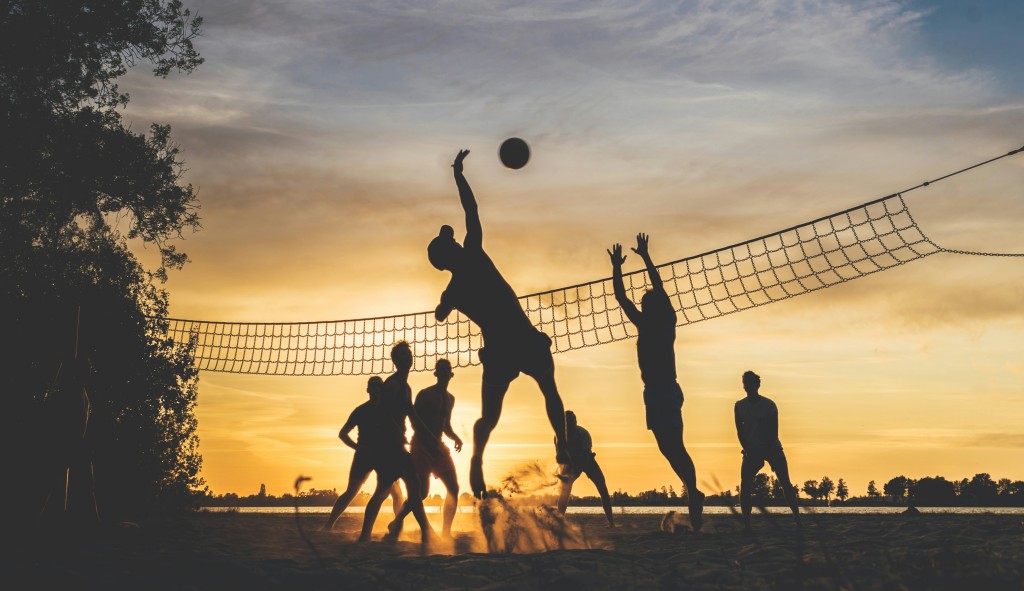
When it comes to Hong Kong's most popular ball sports, football, basketball, and volleyball always top the list. The sharp sound of a powerful spike and the tense net play are highlights of school and district competitions. Physiotherapist Dr. Zhong Hui-wen points out that although volleyball appears to involve less physical contact, it actually has a high rate of "overuse" injuries caused by repetitive movements.
Zhong explains that volleyball involves frequent jumping and repetitive upper-limb swinging. The injury pattern differs slightly from football and basketball—acute sprains are common, but "overuse" chronic injuries from repetitive motions are even more prevalent.
According to multiple international sports medicine studies, volleyball players' injuries are mainly concentrated in the shoulders, knees, and ankles, with jump-related injuries accounting for a significant proportion. Research indicates that elite volleyball players can perform hundreds of jumps per week on average, placing significant long-term stress on the patellar tendon and ankle ligaments.
5 Common Volleyball Injuries
1. Rotator Cuff Tendinopathy (Shoulder)
Spiking and serving involve high-speed external and internal rotation of the shoulder. Studies show that outside hitters and middle blockers have a significantly higher incidence of shoulder pain compared to other positions. Repeated arm swinging can lead to rotator cuff tendinitis, shoulder impingement syndrome, and in severe cases, partial tears. Dr. Zhong notes that many players neglect scapular stabiliser training, concentrating force on the front of the shoulder joint, increasing wear and inflammation risk.
2. Patellar Tendinopathy (Jumper's Knee)
Jumper's knee is one of the most representative chronic injuries in volleyball. Medical literature indicates that the incidence of patellar tendinopathy in high-level volleyball players can reach 20–40%. Repeated jumping and landing subject the patellar tendon to prolonged tension; insufficient recovery time can lead to chronic inflammation.
Early symptoms are often anterior knee pain after exercise. Over time, it may affect explosive power and jumping height, ultimately impacting performance.
3. Ankle Sprains
Commonly caused by landing on a teammate's foot during blocking or landing. Research shows that ankle sprains account for a significant proportion of acute volleyball injuries. If the initial injury is not fully rehabilitated, the risk of re-sprain increases significantly, potentially leading to chronic ankle instability.
4. Lower Back Pain
Spiking involves rapid lumbar extension and rotation, placing greater load on outside hitters and opposite hitters. When core stability is insufficient or compensatory movements occur, stress concentrates on the lower back muscles, leading to chronic pain over time.
5. Finger Joint Injuries
The fingers are often the most overlooked injury site. During blocking or receiving, fingers directly absorb the impact of the ball, easily leading to sprains, contusions, or ligament strains. Often dismissed as "minor injuries," many players fail to immobilise or treat them promptly, potentially affecting joint alignment and stability long-term.
Volleyball Injuries: Risk Varies by Position
Injury risk varies by position, and prevention strategies should be tailored accordingly:
-
Outside/Middle Hitters: Most jumps and spikes; shoulders and knees bear the greatest stress.
-
Libero: Fewer jumps, but frequent low-posture dives; greater stress on lower back and knees.
-
Setter: Requires repeated overhead hand setting; shoulder stability and control are especially important.
Zhong reminds that training and prevention strategies should be adjusted based on positional characteristics, rather than applying a one-size-fits-all approach.
Volleyball Injuries: Taping and Bracing for Prevention
Zhong notes that taping is widely used in volleyball. Ankle taping can increase lateral support and reduce re-injury risk; patellar taping helps disperse tension and relieve jumper's knee discomfort.
Patellar Taping Steps:
-
Place a towel under the knee to keep it slightly bent. Apply tape from the inner thigh diagonally outward to the outside of the knee.
-
Apply a second strip from the outer thigh diagonally inward, forming a cross.
-
For short strips: anchor below the kneecap and apply upward in a V-shape; add another from above, wrapping downward.
Finger Taping:
-
Measure the required length with a soft tape. Apply rigid tape above and below the proximal joint, leaving a small gap in between.
-
Use a figure-eight taping pattern on the palm and back of the hand for stability, leaving the fingertip exposed to monitor circulation.
Figure-Eight Finger Taping:
-
Start with a base anchor around the base of the finger (proximal phalanx)—not too tight.
-
Bring tape diagonally from one side of the finger across the joint to the other side.
-
Wrap the tape behind the finger and return diagonally from the opposite direction, crossing the first strip to form a complete "X".
-
Leave the fingertip exposed to monitor blood circulation, skin colour, and sensation.
Zhong emphasises that taping is only a supportive tool and cannot replace strength and movement training. When the body is properly prepared, volleyball can become a long-term, healthy sport—not a source of chronic pain.