Read More

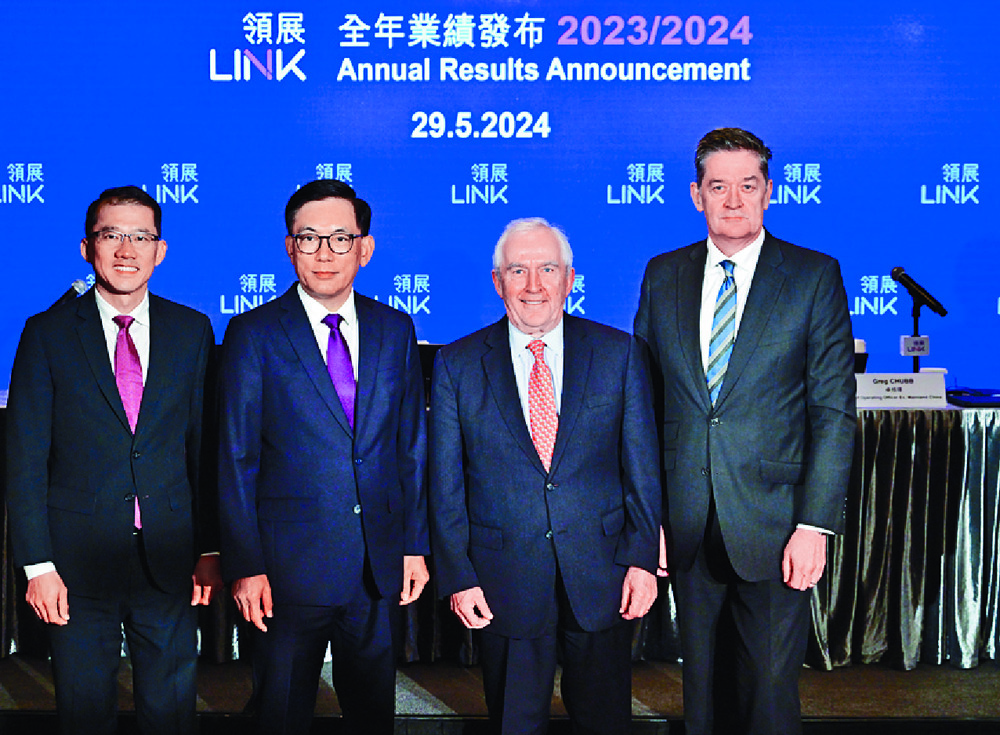
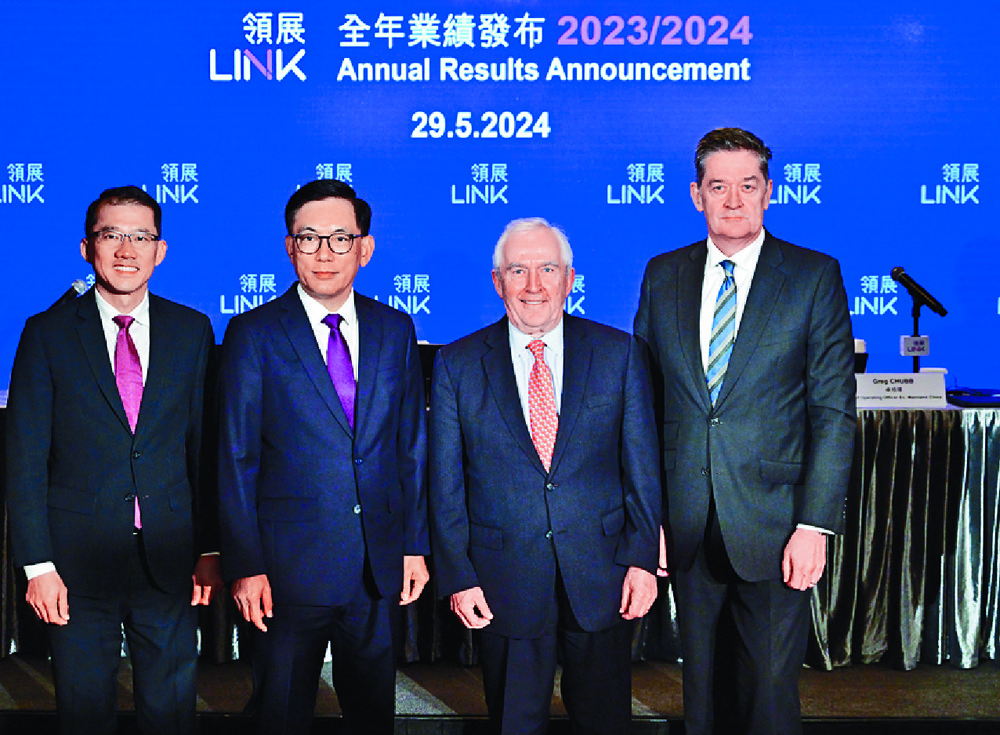
Link Real Estate Investment Trust (0823) said its total distributable amount grew 6.4 percent year-on-year to HK$6.7 billion last year, which ended in March, with overseas properties as a growth driver despite the sluggish Hong Kong retail business.
The distribution per unit decreased by 4.3 percent to HK$2.63 due to the increased number of units, but the final distribution of HK$1.33 per unit was 11.59 percent higher than last year.
The unit price rose 3.74 percent to HK$34.7 yesterday after the announcement. Citi projected a buy rating with a target price of HK$50 per share, saying the distribution per unit beat its estimates.
Revenue and net property income rose 11 percent and 9.5 percent year-on-year to HK$13.6 billion and HK$10.1 billion, respectively, attributable to the Singapore assets and acquisitions in Australia and the mainland.
In the SAR, its portfolio recorded a 2.2 percent growth in revenue and 0.1 percent in net property income over a year earlier, with "the improved performance in Hong Kong car parks partially offset by weaker office performance."
Retail properties showed "resilience" amid increased cross-border consumption in the mainland. It maintained an occupancy rate of 98 percent, but the average reversion rate for the whole year of 7.9 percent was lower than 8.7 percent for the first half.
Chief executive George Hongchoy Kwok-lung said that one in two consumers at Link CentralWalk mall in Shenzhen was from Hong Kong over weekends, but he remained confident in Link's Hong Kong retail properties which focused on day-to-day shopping necessities.
On the mainland, Link held six retail assets, one office asset, and five logistics assets in tier-one cities and the surrounding river delta areas. Total revenue and net property income saw year-on-year increases of 6.3 percent and 10.6 percent respectively.
Out of China, its overseas properties showed robust growth, with the revenue and net property income increasing 1.69 times and 2.05 times to HK$1.7 billion and HK$1.2 billion respectively, with Singapore assets contributing the most.
Regarding financing costs pressured by high interest rates, Hongchoy said the trust would reduce its debt by increasing the proportion of fixed-rate debts, using the funds from rights issues, and selling projects.
Its gearing ratio decreased slightly from 24.2 percent to 23.5 percent last year.