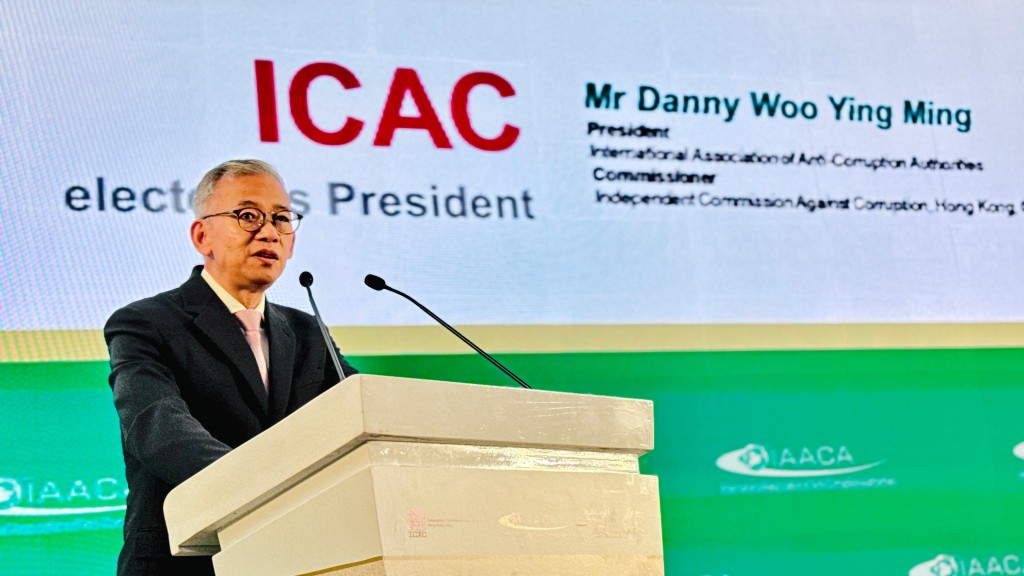
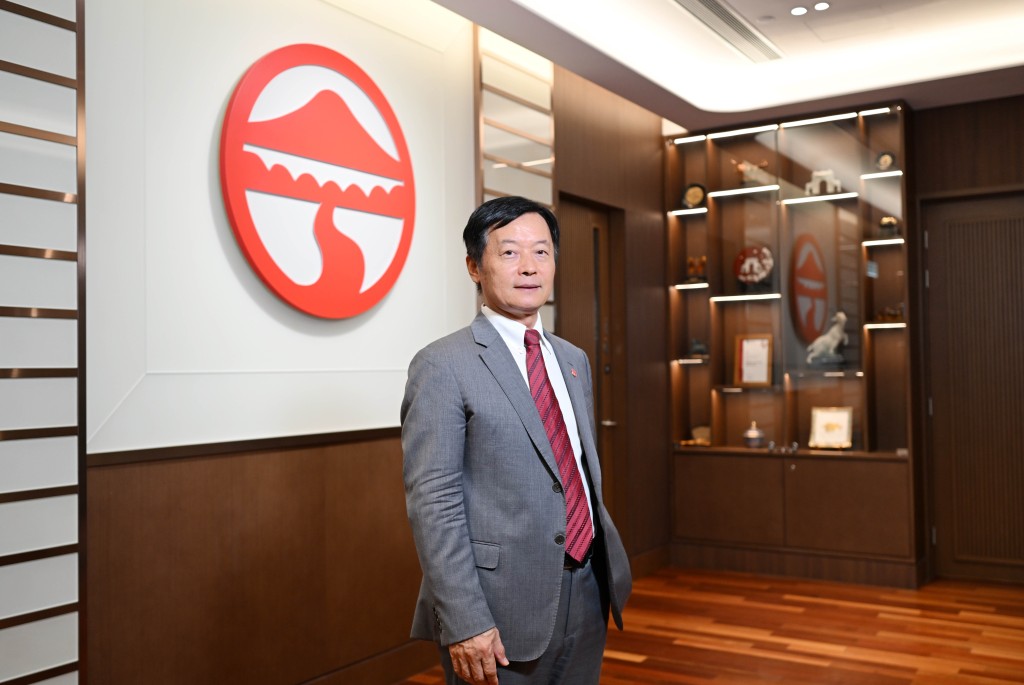
ICAC Commissioner Mr Woo Ying-ming, representing the Independent Commission Against Corruption (ICAC) of Hong Kong, China, chaired the 16th General Meeting of the International Association of Anti-Corruption Authorities (IAACA) in Marrakech, Morocco. Upon receiving nomination from the Executive Committee and obtaining unanimous support from participating members, he was successfully re-elected as President of the IAACA. He pledged that the IAACA would continue to lead international counterparts in safeguarding integrity worldwide.
Speaking at the meeting, Mr Woo noted that he was deeply honoured to represent the ICAC to contribute further to the IAACA, and specifically thanked the Central People’s Government and the Government of the Hong Kong Special Administrative Region for their staunch support of the ICAC’s candidacy and participation in the international anti-corruption cause. The ICAC’s successful re-election fully demonstrates the high recognition from global members regarding the ICAC’s effectiveness in leading the IAACA.
Rapid Development Under ICAC’s Leadership; IAACA Membership Grew by 50% in Three Years
Reviewing the ICAC’s past three-year term, Mr Woo remarked that IAACA’s membership achieved a remarkable breakthrough, increasing by 50 percent to nearly 200 organisations spanning all continents, reflecting the Association's increasingly significant influence. In recent years, the IAACA has also organised numerous large-scale regional anti-corruption training programmes and conferences around the world, benefiting hundreds of anti-corruption and law enforcement agencies globally.
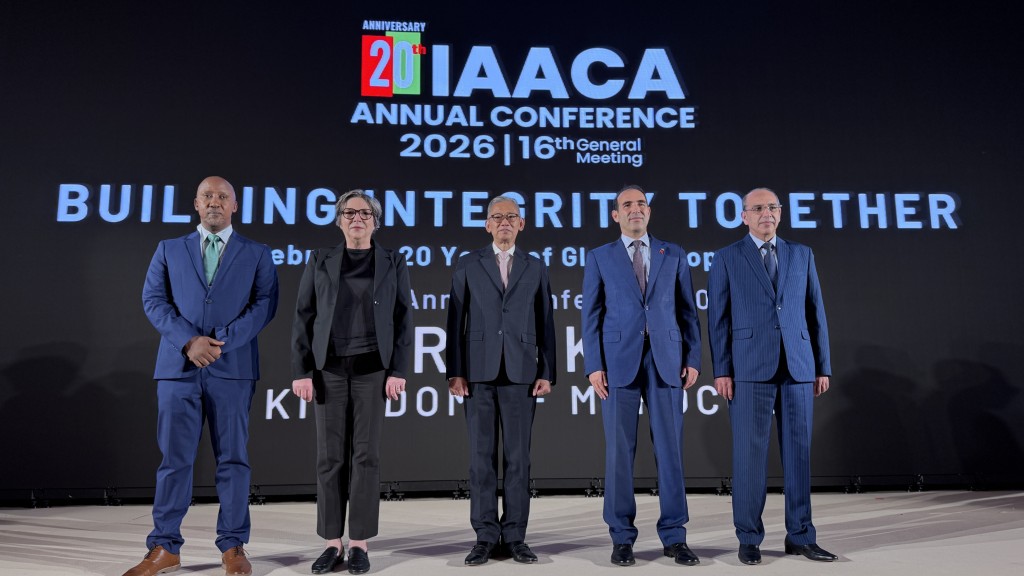
ICAC Commissioner Woo Ying-ming (centre) chairs IAACA Annual Conference held in Marrakech, Morocco.
Following its successful re-election, the ICAC received congratulations from heads of anti-corruption agencies from various countries and representatives of international organisations. Mr Woo pledged that in the next three years, the IAACA will continue to serve as a beacon in the global graft fight, expand the international anti-corruption network and enhance its effectiveness, continuously connect regional cooperation platforms, share digital anti-corruption experiences, and promote multilateral actions to provide the strongest support to international counterparts. "We look forward to working in concert with all members to build a stronger IAACA, forge a more robust membership, and promote a stronger fight against corruption," Mr Woo added. As this year marks the 20th anniversary of the IAACA, Mr Woo urged participants to build on the two-decade anti-corruption experience and work together to create an upright future.
During the trip, the ICAC also actively exchanged anti-corruption insights and deepened future cooperation. Anti-corruption agencies from Chile, Hungary, Kazakhstan, Morocco, Republic of Uzbekistan, Saudi Arabia and Uganda also seized this opportunity and requested bilateral meetings with the IAACA President to explore future anti-corruption cooperation in South America, Europe, Central Asia and Africa. During the visit, the ICAC also took the opportunity to enter into a Memorandum of Understanding with the Anti-Corruption Agency of the Republic of Uzbekistan to enhance experience exchange and conduct training and capacity-building programmes.
300 Global Experts Delve into Strategies and Discuss Leveraging AI to Combat Corruption
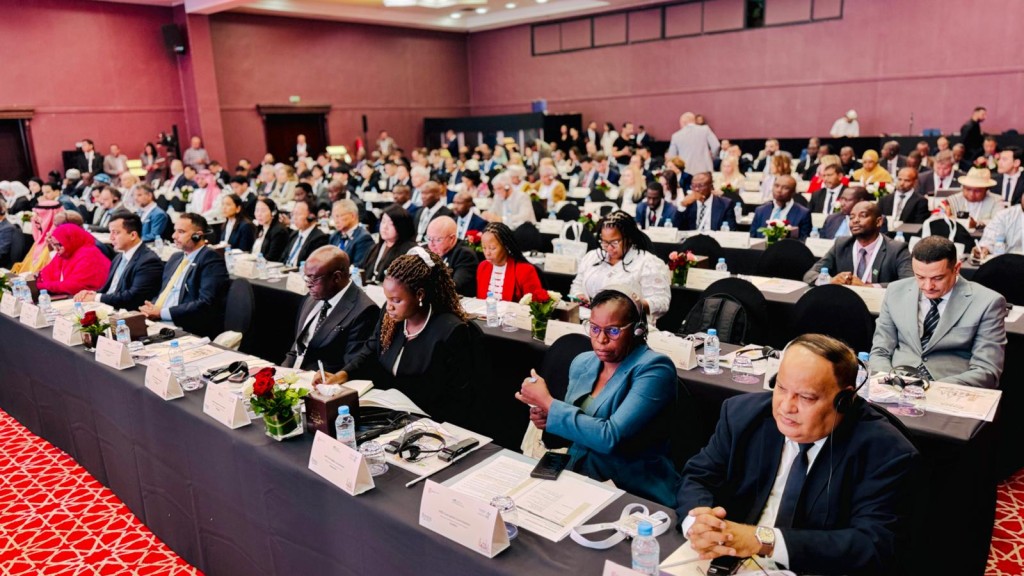
Over 300 global anti-corruption experts, government officials, representatives from international organisations and academics highly appraise the conference and seminar.
Jointly organised by the IAACA, the ICAC, and the National Authority for Probity, Prevention and the Fight Against Corruption of Morocco, the Annual Conference attracted over 300 global anti-corruption experts, government officials, representatives from international organisations, and seasoned academics from about 100 organisations—recording the highest participation in recent years.
For the first time, the Hong Kong Judiciary joined at the IAACA’s invitation, with District Judge Clement Lee Hing-nin expounded to the international community on how Hong Kong’s institutional framework combats corruption effectively under "One Country, Two Systems" and highlighted the key role played by the judicial system in anti-corruption work.
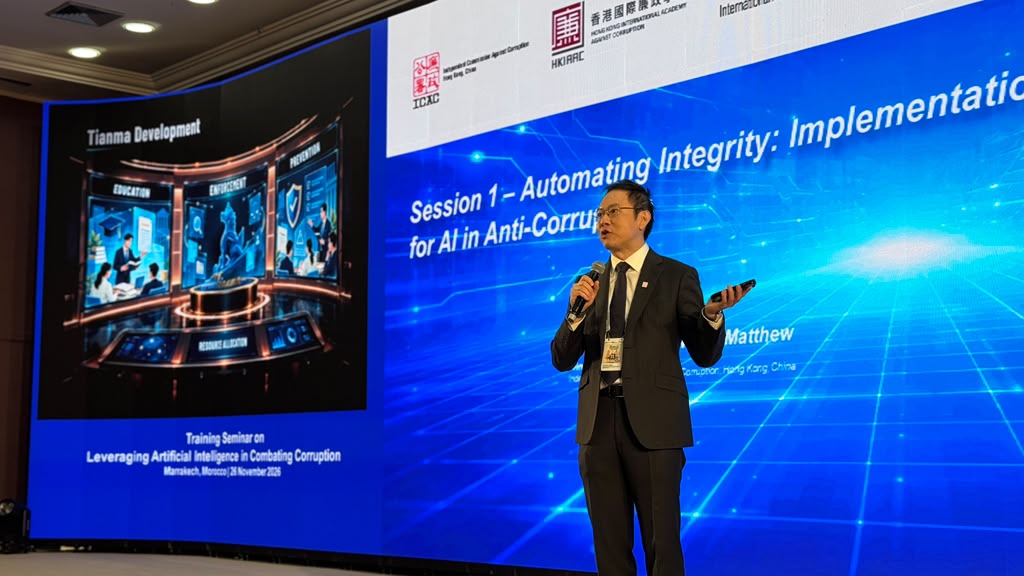
Meanwhile, international expert speakers from the United Nations Office on Drugs and Crime, the Organisation for Economic Co-operation and Development, the Basel Institute on Governance in Switzerland, and the International Anti-Corruption Academy of Austria attended the event to explore topics such as measuring the effectiveness of anti-corruption agencies and tackling corruption related to environmental crime and natural resources. Seasoned ICAC officers also shared the latest strategies on leveraging artificial intelligence to combat corruption.
ICAC Officers share insights on leveraging technology for corruption prevention and law enforcement.