
Read More
The Hong Kong International Academy of Policing will be established on November 11 as the Police Force steps up international training and cooperation with law enforcement agencies worldwide.
ADVERTISEMENT
SCROLL TO CONTINUE WITH CONTENT
The academy will offer 21 professional training programs and three flagship events, bringing overseas law enforcement officers to Hong Kong to exchange expertise and strengthen cross-jurisdictional cooperation. It will also seek to capitalize on Hong Kong’s role as a global “super-connector.”
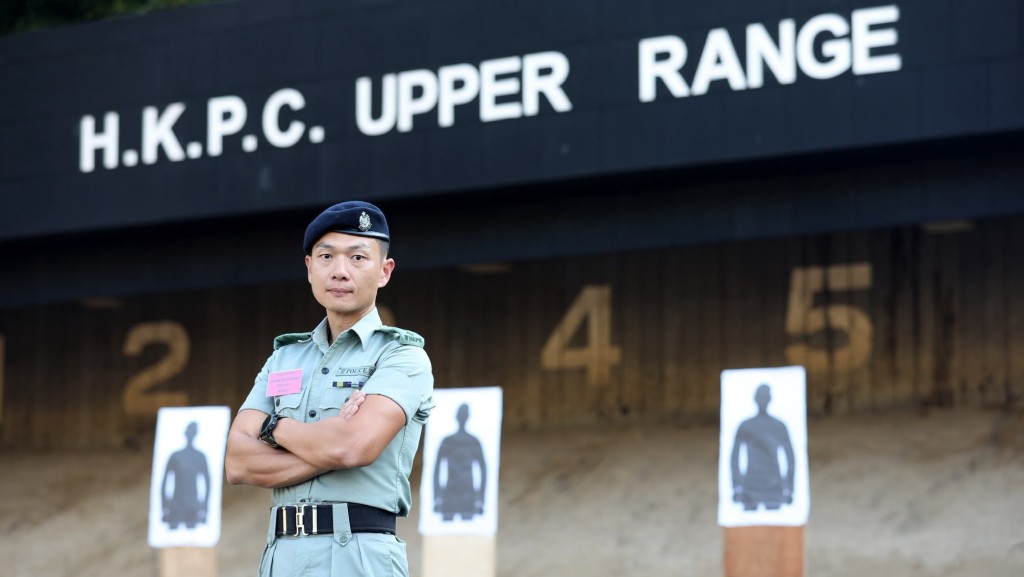
Among its programs is the Advanced Tactics Application Course, led by Chief Inspector Leung Chun-sang of the Police Force’s Weapons Training Division.
Leung said he hoped sharing professional knowledge and operational experience would help build stronger links among law enforcement professionals and contribute to public safety.
Leung previously served in the VIP Protection Unit and Airport Security Unit and was also the first inspector of the Railway Response Team.
He said his responsibilities increased when he moved from frontline operations into instructor training, where he and his team are responsible for ensuring instructors have an accurate and comprehensive understanding of firearms handling and use-of-force procedures.
The role, he said, also involves passing professional standards and safety principles from one generation of officers to the next.
The Police Force has long maintained exchanges with law enforcement agencies in mainland China and overseas, regularly sending officers on study visits and professional exchanges.
Leung has joined Weapons Training Division delegations to Chongqing, Hubei and other mainland cities and provinces, where officers exchanged views on different tactical approaches and training methods.
He said such exchanges allowed officers to understand how their counterparts handled different operational situations and identify practices that could be adapted for use in Hong Kong.
The Weapons Training Division will draw on experience gained from exchanges with mainland authorities, together with local operational knowledge, to further refine its training and keep its methods up to date, he said.
The Advanced Tactics Application Course is designed for use-of-force instructors from law enforcement agencies around the world. It will cover the Hong Kong Police Force’s experience in tactical applications, use of force and modern firing-range management.
Leung said the force had spent years studying international practices and developing a systematic professional training model, which he hoped could now benefit a wider group of law enforcement personnel.
The course will also include a visit to firearms and ammunition manufacturing facilities in mainland China, aimed at giving overseas participants a better understanding of the country’s development while promoting tactical exchanges between mainland and international law enforcement officers.
The academy’s wider curriculum covers five areas: command and leadership development, control tactics application, counterterrorism and crisis management, crime investigation and intelligence, and protection and security.
“My colleagues and I, together with the teaching staff for each course, are ready. We hope to use training as a bridge to connect different regions and work together to safeguard global security,” Leung said.