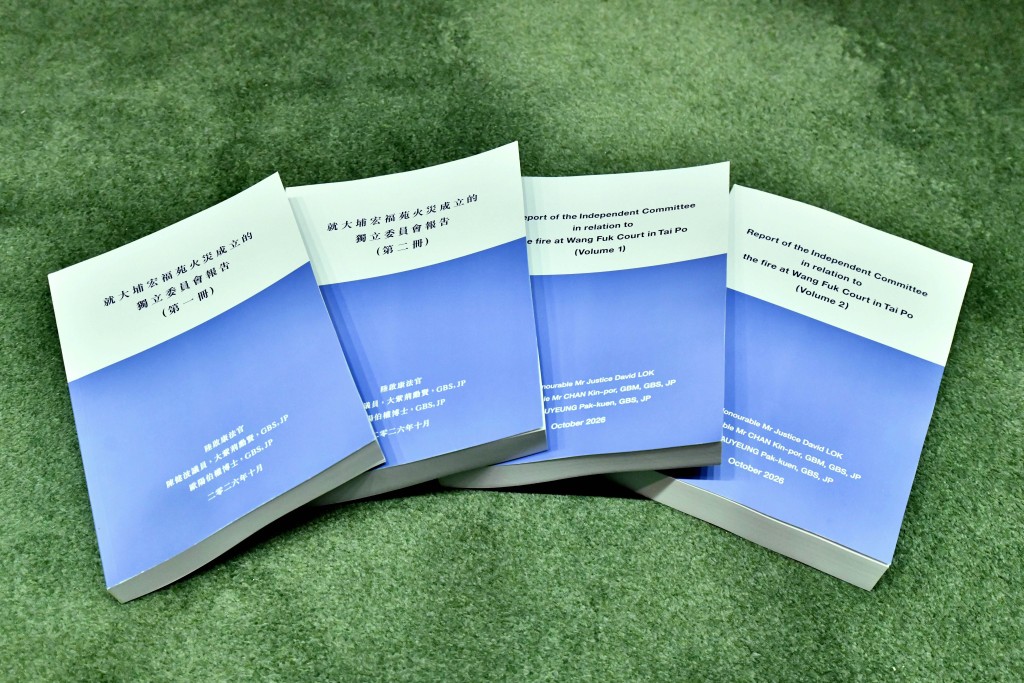
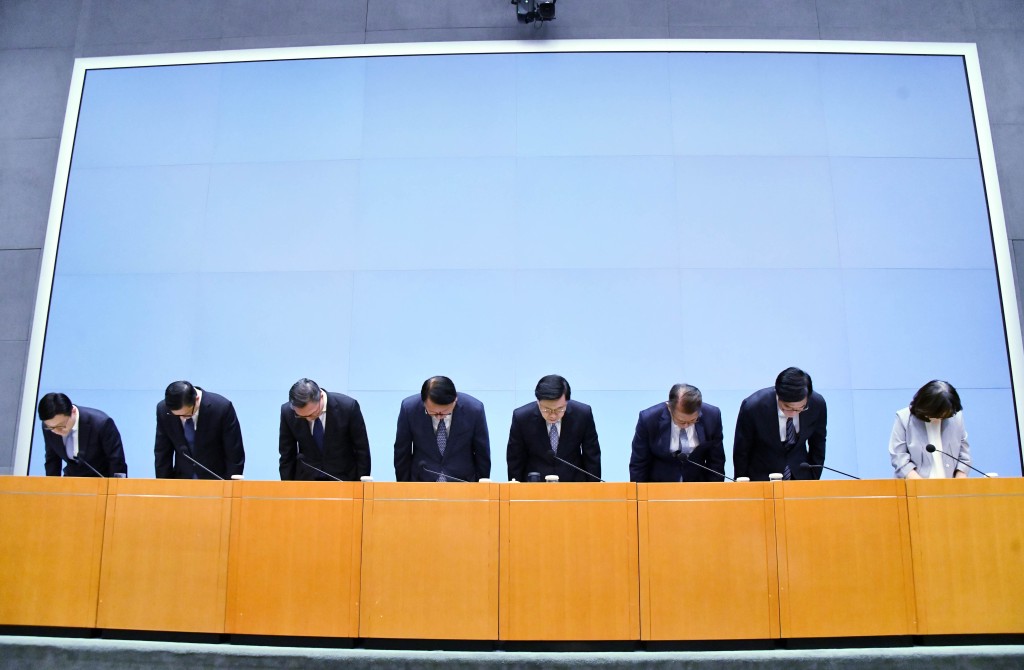
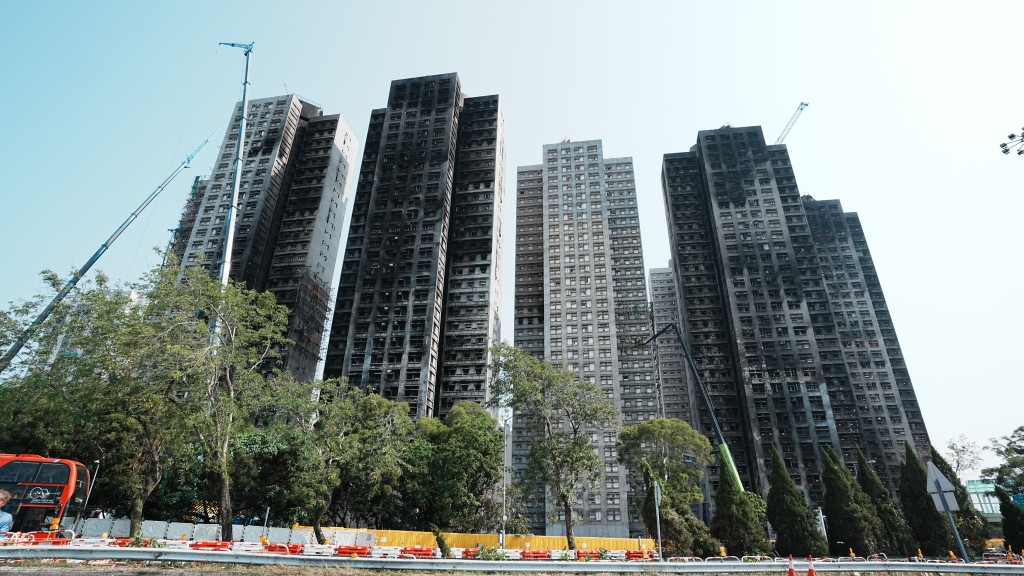
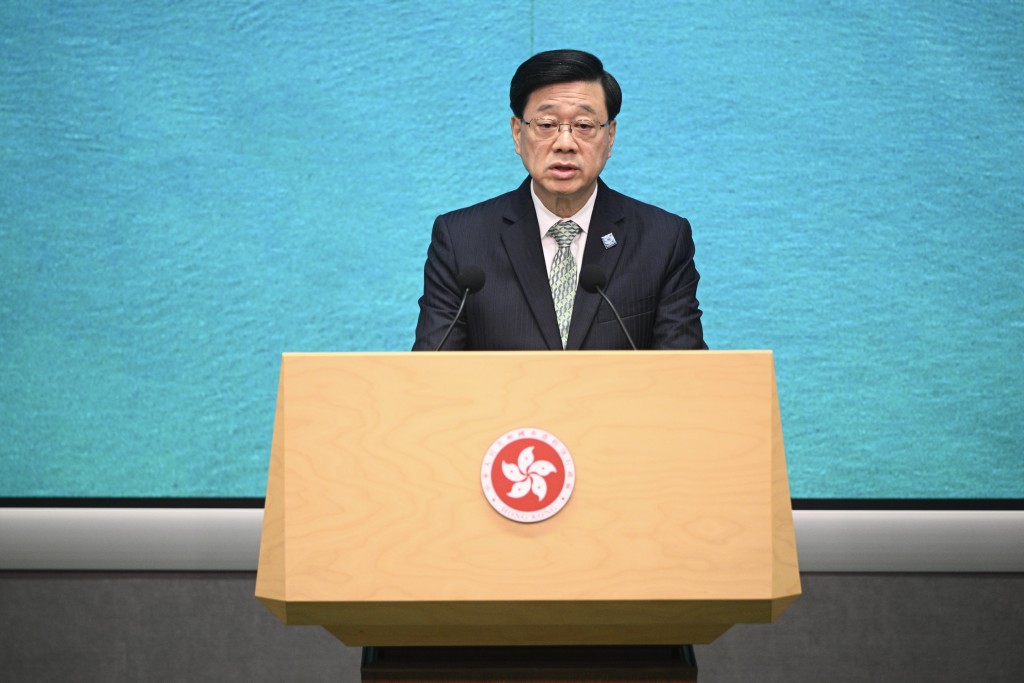
Hong Kong will implement seven systemic reforms to prevent another tragedy like the Wang Fuk Court disaster, Chief Executive John Lee Ka-chiu announced Thursday as the government released an independent committee’s investigative report.
The announcement comes a week after the Independent Committee submitted its findings on the fire that claimed 168 lives last November.
Speaking at a press conference Thursday afternoon, Lee said the overhaul builds directly on the committee’s recommendations and spans the building maintenance process across seven key areas.
Cross-departmental task force, bid-rigging ban
Among the primary issues identified were pervasive bid-rigging in residential building maintenance projects, regulatory blind spots in the mandatory inspection system, and property owners' lack of engineering expertise, which leaves them susceptible to fraud and manipulation.
Citing committee findings that triad members and other suspicious figures rigged tenders and colluded with consultants and contractors, Lee said the government will introduce legislation to outlaw and aggressively penalize bid-rigging.
A specialized interdepartmental task force comprising officers from the Hong Kong Police Force, the Independent Commission Against Corruption (ICAC), and the Competition Commission will be established to pool investigative powers, share intelligence, and enhance deterrence.
Additionally, bid-rigging will be added to the Organized and Serious Crimes Ordinance's list of designated crimes, strengthening investigation and asset-freezing powers and enabling courts.
The reformed law, he believed, would enable courts to impose heavier penalties based on the severity of the offense.
The Competition Ordinance will also be amended to criminalize bid-rigging and enable both criminal and civil investigations.
Overhauling mandatory inspections to boost resident support
The Mandatory Building Inspection Scheme—introduced in 2012 to place responsibility for structural safety primarily on registered professionals and contractors—will also undergo a comprehensive review.
Lee stressed that the revamped framework will strictly hold professionals and contractors accountable to their statutory duties, while government agencies step up field supervision, spot checks, and enforcement.
To protect homeowners from deceptive practices, the government will establish a dedicated building maintenance support office to provide the public with transparent information and impartial professional counsel.
Reform in Buildings Department
The Buildings Department will be restructured to strengthen executive leadership and operational oversight. Its workflow will be reorganized, and the Independent Checking Unit under the Housing Bureau will be realigned to ensure seamless inter-agency coordination.
Meanwhile, the Fire Services Department and Labour Department will also step up inspections.
Lee added that a cross-departmental data system will be set up to share information on maintenance, construction safety, convictions and conduct records.
The public complaints mechanism will also be modernized using artificial intelligence to screen submissions, cross-reference data, and automatically flag recurring complaints concerning specific sites, individuals, contractors, or consulting firms.
To guarantee thorough execution, a high-level steering committee chaired by the Chief Secretary for Administration will review each of the independent committee’s recommendations sequentially.