





Read More


Morning Recap - October 16, 2026
3 hours ago




Transport chief takes a back seat on fining transit nuisance behavior
14-10-2026 18:09 HKT


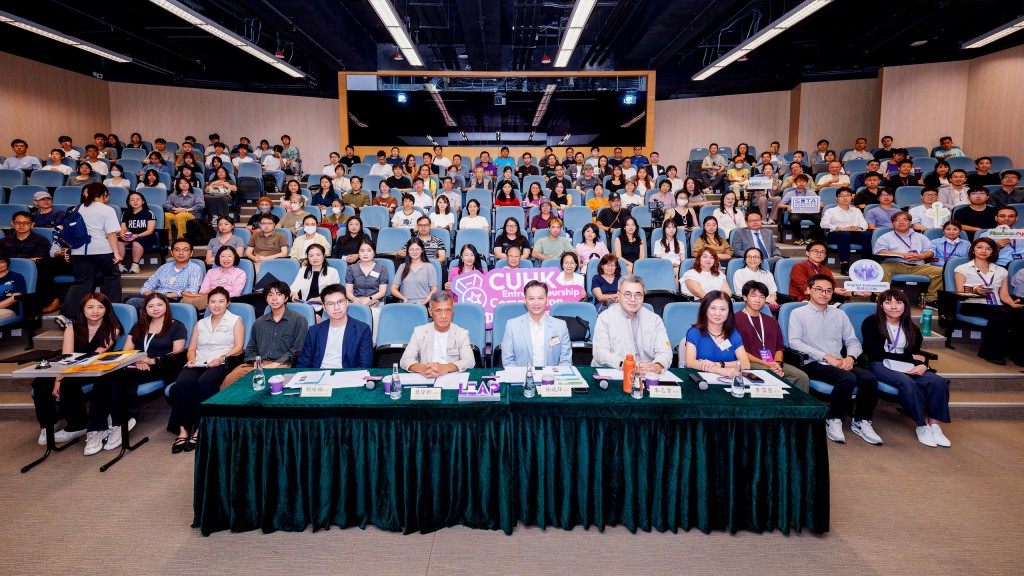
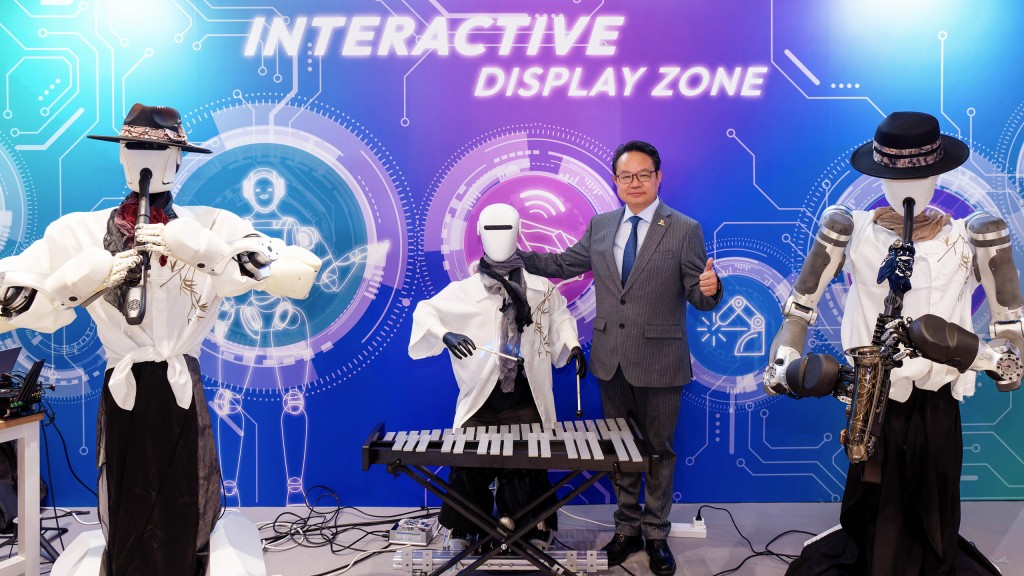
Driven by the HKSAR Government’s Innovation and Technology Development Blueprint, flagship initiatives such as the Research, Academic and Industry Sectors One-Plus Scheme (RAISe+ Scheme) and the Technology Start-up Support Scheme for Universities (TSSSU) continue to gain momentum. These programmes aim to bridge upstream academic breakthroughs with downstream commercialisation. Seizing this momentum, The Chinese University of Hong Kong (CUHK) has overhauled its enterprise initiatives by launching its inaugural flagship innovation and entrepreneurship event, CUHK LEAP, on 9 and 10 October 2026 at the Yasumoto International Academic Park. Encapsulating the University’s commitment to LEAD research, EMPOWER innovation, AMPLIFY value for society and PROPEL progress, the platform aligns comprehensive knowledge transfer support with the support, of the Alumni Affairs Office, to establish an integrated ecosystem to nurture local ventures.
Held under the theme “Innovation to Impact”, the two-day event united CUHK’s two longstanding annual gatherings, CUHK Entrepreneur Day and CUHK Innovation Day, drawing more than 1,500 industry leaders, investors, academics, students and visitors. The exhibition showcased 45 CUHK entrepreneurial teams across artificial intelligence, healthcare, advanced manufacturing, and green energy.
The unification of Entrepreneur Day and Innovation Day reflects a broader structural evolution. Kelvin Wong Ka-tat, Director of the Knowledge Transfer Office of CUHK, stressed that commercialisation cannot be accomplished by academia alone.
“Innovation and entrepreneurship form an ecosystem,” Wong explained. “It is not something a university can achieve in isolation. By bringing every stakeholder into this collective effort, we can advance the translation of scientific research far more effectively, reducing failure rates and elevating success.”
Wong noted that while CUHK consistently ranks first among local tertiary institutions in patent filings, patents granted and licensing income, moving laboratory breakthroughs into industrial application requires crossing the notorious ‘valley of death’. In deep-tech and biomedical fields, where capital-intensive clinical trials present high attrition risks, early-stage industry partners are often reluctant to invest.
“Deep-tech development demands extended timeframes. To traverse the ‘valley of death’, patient capital is indispensable,” Wong observed. “Rather than completing research in a silo before seeking funds, we engage with external partners across the early, intermediate and late stages. We continuously iterate our projects against genuine market demands.” This market-led discipline is reflected in CUHK’s performance under the government’s RAISe+ Scheme, which mandates matching private investment, with CUHK having secured 10 funded projects across its initial rounds. Looking further afield, Wong highlighted CUHK’s strategic infrastructure across the Greater Bay Area, including facilities in Nansha, Qianhai, and the CUHK Shenzhen Research Institute, which enable ventures to utilise Hong Kong’s ‘super-connector’ role to scale abroad.
Parallel to knowledge transfer mechanisms, the CUHK Alumni Affairs Office has expanded its remit from community engagement to acting as an essential conduit for commercial resources. Eleanor Hui, Director of the Alumni Affairs Office of CUHK, explained that the office actively mobilised senior alumni across venture capital, industry and corporate leadership to serve as speakers, judges and prospective investors.
Engaging a vibrant alumni community of more than 330,000 graduates across 133 alumni associations in 31 cities, the largest network among local universities, the Alumni Affairs Office works closely with the Knowledge Transfer Office to provide sustained backing. “CUHK LEAP is not merely a two-day gathering; its impact is designed to endure, fostering the long-term vitality of our innovation ecosystem,” Hui stated. “When junior founders look to expand into the Greater Bay Area or Mainland China, experienced alumni readily provide guidance on regulatory, legal and operational realities, opening doors that save early-stage teams from costly missteps.”
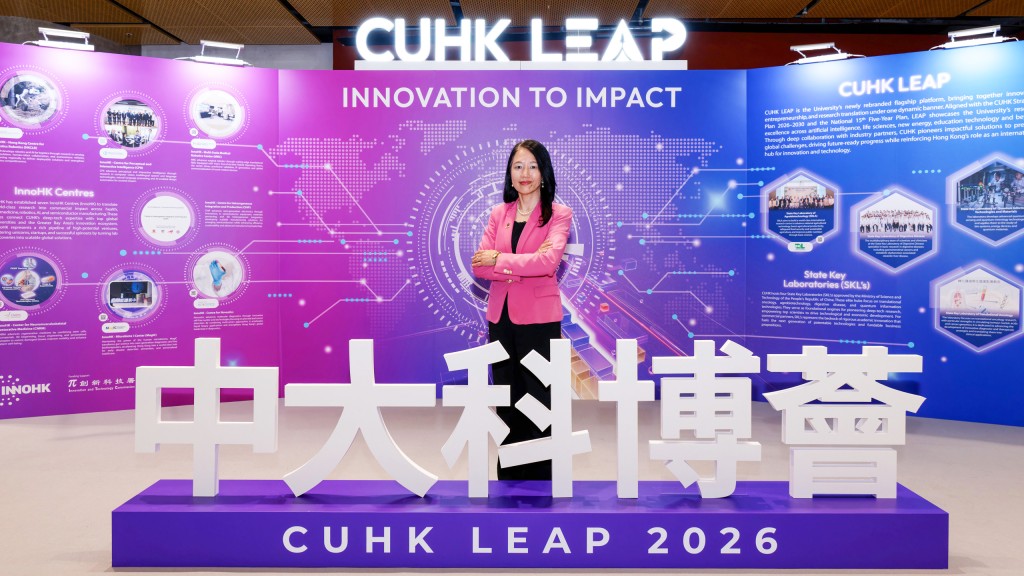
This intergenerational commitment was on display at the 10th CUHK Entrepreneurship Competition, a centrepiece of CUHK LEAP. Originally founded a decade ago as the ‘Entrepreneurship Arena’, the competition has come full circle. Early keynote speakers, such as seasoned entrepreneur and angel investor Alan Lam, returned this year as judges for the Competition.“The greatest value of this milestone lies in its virtuous cycle,” Hui remarked. “Past contestants who have built successful enterprises return to mentor the next cohort, creating an enduring framework of mutual support.”
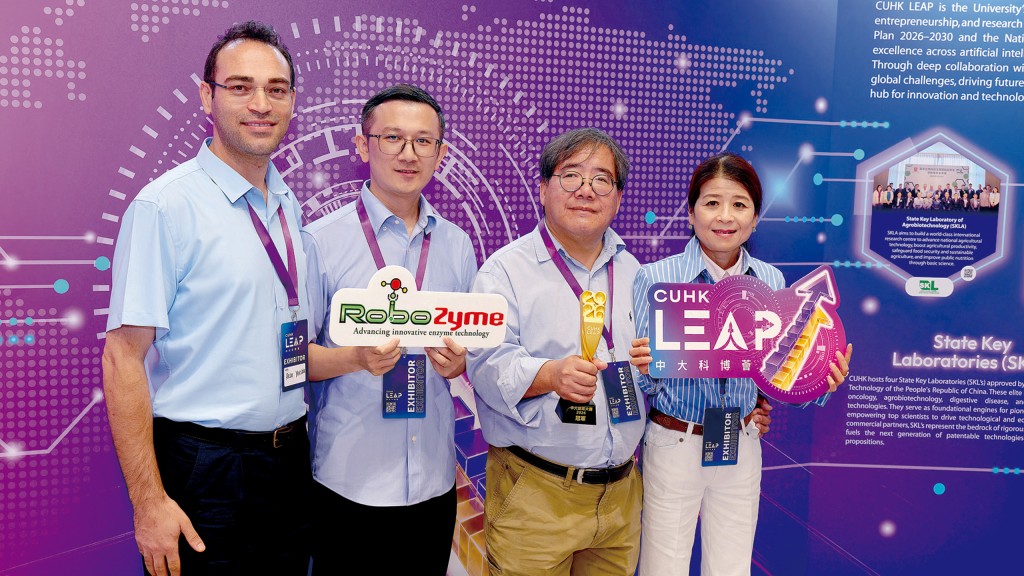
The finalists at the 10th CUHK Entrepreneurship Competition demonstrated how university support translates into commercial viability. Robozyme Limited, this year’s champion, distinguished itself by using bacterium-driven immobilised enzyme technology to manufacture cost-effective, bio-based chemicals. Co-founder Marianne Lee recalled that the team initially focused purely on technical complexity, yet direct exchanges with chemical conglomerates and incubation programmes facilitated by the Hong Kong Science and Technology Parks Corporation (HKSTP) prompted an essential shift from being product-oriented to customer-oriented. Supported by TSSSU grants and institutional referrals to national contests in Guangzhou, the venture – mentored by Professor Michael Chan - has opened direct dialogues with major industry partners and is now working to validate catalyst production at an industrial scale of 30 tonnes per day over the coming months.
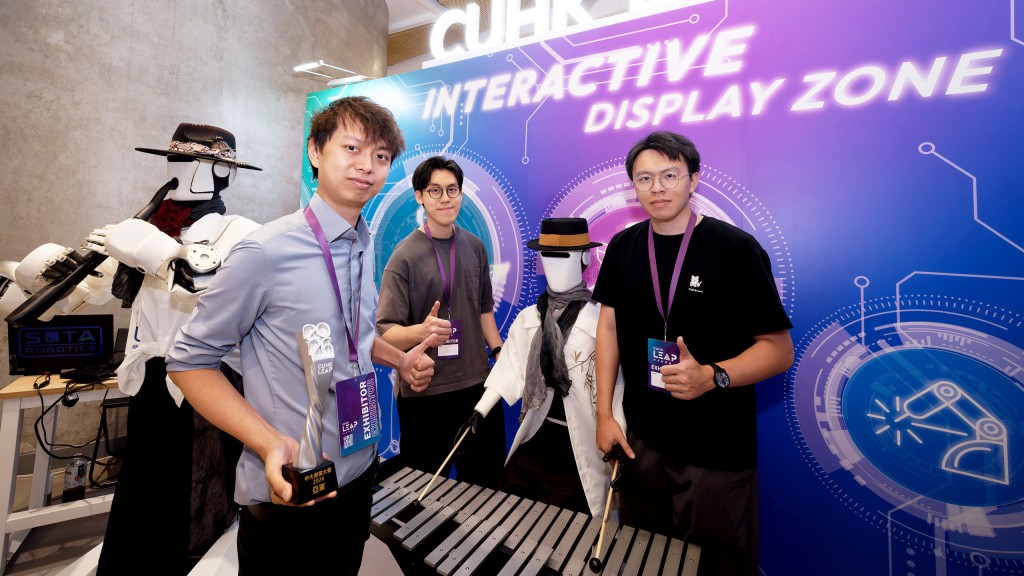
First runner-up SOTA Robotics (HK) Limited demonstrated a parallel trajectory in robotics engineering, developing advanced systems with human-like dexterity. Incubated through the Hong Kong Centre for Logistics Robotics (HKCLR) under InnoHK and supported by TSSSU+, the enterprise draws upon two decades of research led by Professor Chen Fei from the Department of Mechanical and Automation Engineering. Director Jacky Fan highlighted that the team pursues a dual-track deployment strategy to match market requirements, implementing cultural and educational applications in Hong Kong while deploying intelligent sorting and handling solutions across industrial manufacturing lines in Shenzhen.
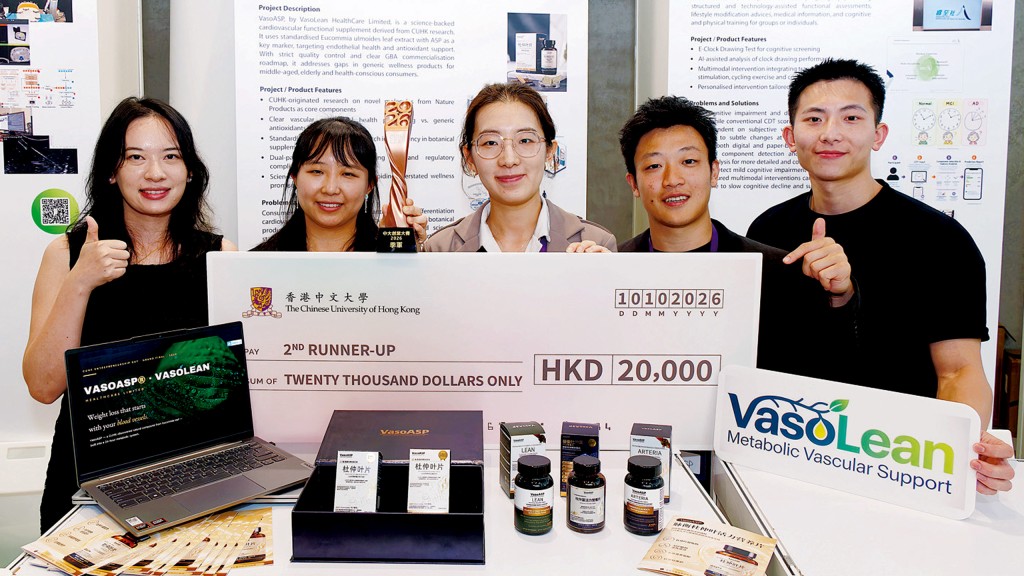
Meanwhile, second runner-up VasoLean HealthCare Limited converted doctoral research into practical preventive wellness formulations, targeting cardiovascular and metabolic health to offer science-backed alternatives to pharmaceutical interventions. Mentored by Professor Jack Wong and aided by CUHK patent subsidies alongside HKSTP Ideation funding, co-founders Maple Zuo and Cathy Liu are carrying out small-scale pilot runs to refine their formulations based on empirical feedback, ensuring their products combine commercial readiness with research integrity.