
Read More
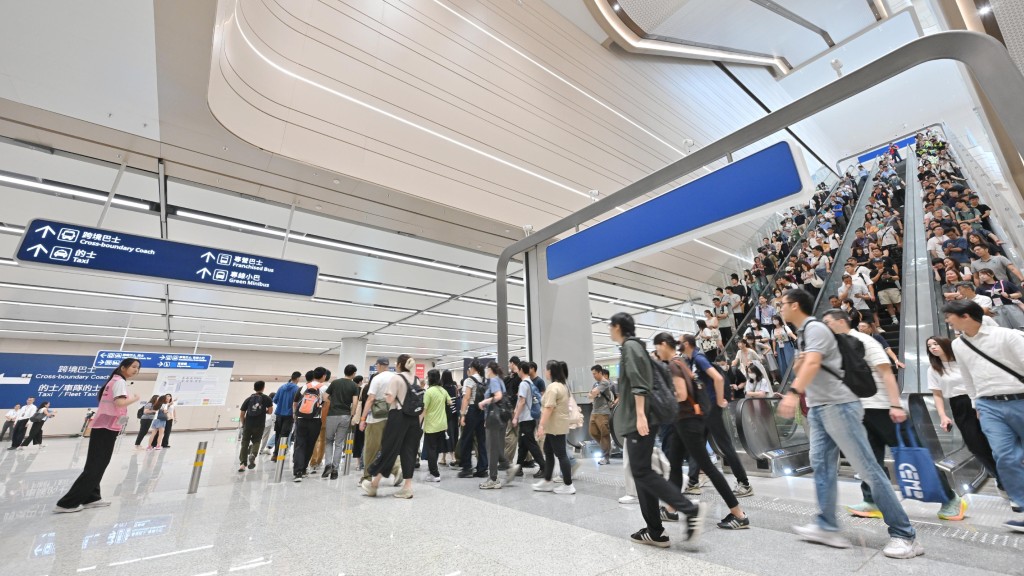
The newly redeveloped Huanggang Port will officially begin operations at 6:30am on October 12, introducing an upgraded co-location border clearance model designed to significantly streamline passenger and vehicular transit between Hong Kong and Shenzhen.
ADVERTISEMENT
SCROLL TO CONTINUE WITH CONTENT
Operating under a joint inspection and collaborative clearance framework, the redesigned boundary control point allows travelers and motorists to complete departure and arrival formalities for both jurisdictions in a single consolidated process.
The port facility is equipped with 134 automated joint clearance channels alongside 68 conventional staffed counters.
Under the collaborative mechanism, registered commuters can complete both Hong Kong exit procedures and mainland entry inspections through a unified queue, substantially reducing border-crossing times.
Three-gate automated passenger channels support document scanning and facial recognition
The automated passenger channels operate through an integrated three-gate progression. At the first gate, registered travelers can either scan a physical travel document or use contactless facial recognition without presenting physical credentials.
The second gate collects facial biometric data and fingerprint scans, while the final gate releases travelers once mainland immigration authorities complete identity verification and grant admission.
Eligibility for the automated system is structured by age, document type, and crossing mode. Travelers aged seven and above can utilize the document-scanning channels if they hold an eligible Hong Kong identity card paired with a mainland travel permit—including non-Chinese nationality permits—and have enrolled in the mainland automated clearance system.
Mainland visitors holding an Exit-Entry Permit with a valid endorsement for Hong Kong are also eligible. The contactless facial recognition mode is open to eligible travelers aged 14 and above, though mainland visitors must hold multiple-entry endorsements to qualify.
Residents can enroll through multiple avenues, including the Contactless e-Channel mobile application, self-service kiosks, the dedicated enrolment office at Huanggang Port, or directly at the automated lanes for adult travelers aged 18 and above.
Authorities emphasized that despite the automation, all travelers must continue to carry valid physical travel documents that satisfy the statutory entry requirements of both jurisdictions.
Joint one-stop vehicular lanes integrate five-agency inspections for drivers
Cross-boundary motorists will experience a parallel upgrade through dedicated joint one-stop vehicular lanes. The system consolidates regulatory inspections across five frontline agencies from both sides of the boundary, comprising Hong Kong Customs, the Department of Health, and the Immigration Department, alongside Shenzhen Border Inspection and Shenzhen Customs.
Upon entering the inspection lane past an advance customs booth, drivers stop at an integrated information kiosk located before the second gate.
The terminal simultaneously conducts thermal body temperature screening, processes travel documents, and captures biometric data, transmitting the information in real time to all five departments.
Vehicles requiring secondary examination are directed to an adjacent inspection zone, while cleared vehicles advance through the final barrier gate directly into Shenzhen without stopping for separate, successive border checks.