Read More


Hong Kong Police College first to gain degree-granting status
12-09-2026 17:04 HKT

Morning Recap - October 9, 2026
37 mins ago





Typhoon season winds down as HK faces low October risk
07-10-2026 17:02 HKT


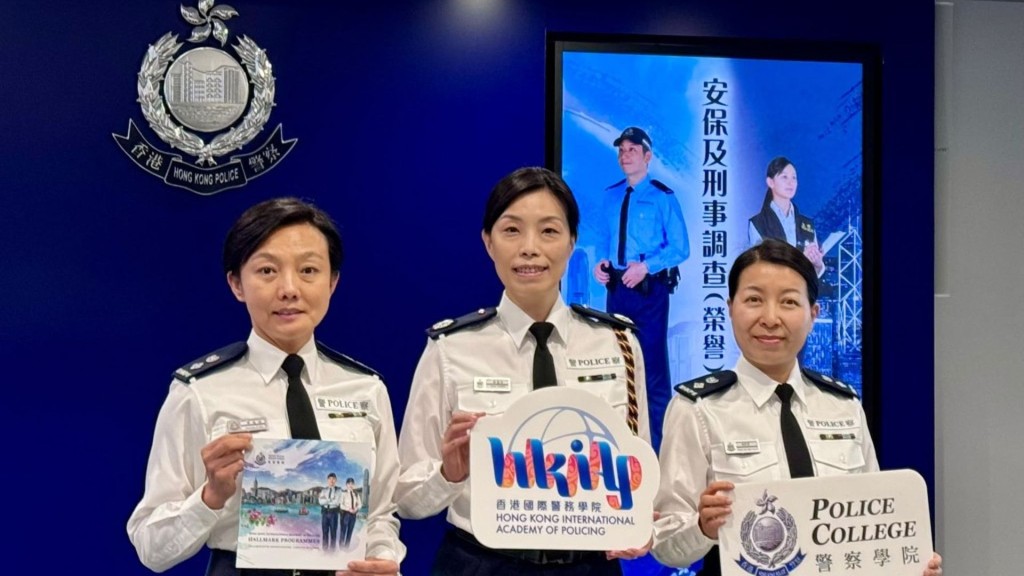
The Hong Kong Police College is marking its 20th anniversary with two major initiatives: the establishment of the Hong Kong International Academy of Policing on November 11, and a new bachelor's degree programme to be offered next year.
The International Academy of Policing aims to build an international professional policing exchange platform, promote mutual learning and experience sharing, and consolidate the Force's brand as "Asia's finest."
The college received accreditation from the Hong Kong Council for Accreditation of Academic and Vocational Qualifications in August to offer a Bachelor of Policing (Honours) (Security and Criminal Investigation) programme, making it the first government department approved to award a bachelor's degree.
College director Cheng Lai-ki said the programme targets rank-and-file officers without a bachelor's degree. About 40 per cent of new recruits in recent years hold a bachelor's degree or above. She said the programme would help enhance officers' organisational and analytical skills, improve service quality, provide a promotion ladder and attract more applicants.
Cheung Hoi-yan, principal of the School of Specialised Learning, said the programme will recruit at the end of the year and start in March next year, with junior and senior entry routes admitting over 80 and 40 students respectively each year. It is at Level 5 of the Hong Kong Qualifications Framework, comprises 488 credits, is taught bilingually, and covers policing theory, criminal investigation, practical training and academic language, plus a graduation project.
Officers admitted will be fully funded by the Force using internal training resources, with no extra government funding sought. Under the Civil Service Regulations, students must sign a service undertaking to serve at least two years after completing the course or compensate training costs. Policing courses will be taught mainly by instructors from the Foundation Training School and Standard Criminal Investigation Course, academic language courses by local tertiary institutions, and graduation projects supervised by superintendents or above with Tsinghua or Cambridge qualifications.
Cheng said the International Academy of Policing will leverage Hong Kong's connectivity to build a professional policing exchange platform, enhance the Force's effectiveness, strengthen overseas cooperation and play the role of "super-connector" and "super value-adder" for global security.
Fu Yee-ting, principal of the School of Professional Development, said the academy will coordinate more than 20 key training courses and hold policing leadership forums covering major event security and crowd management, major crime investigation, forensic science, and cyber and technology crime investigation, building a high-level professional exchange platform for law enforcement agencies.