Read More











A retired Hong Kong healthcare worker has strongly rejected claims by an Executive Council member that a public complaint about the employment market for local nursing graduates was orchestrated by union actors.
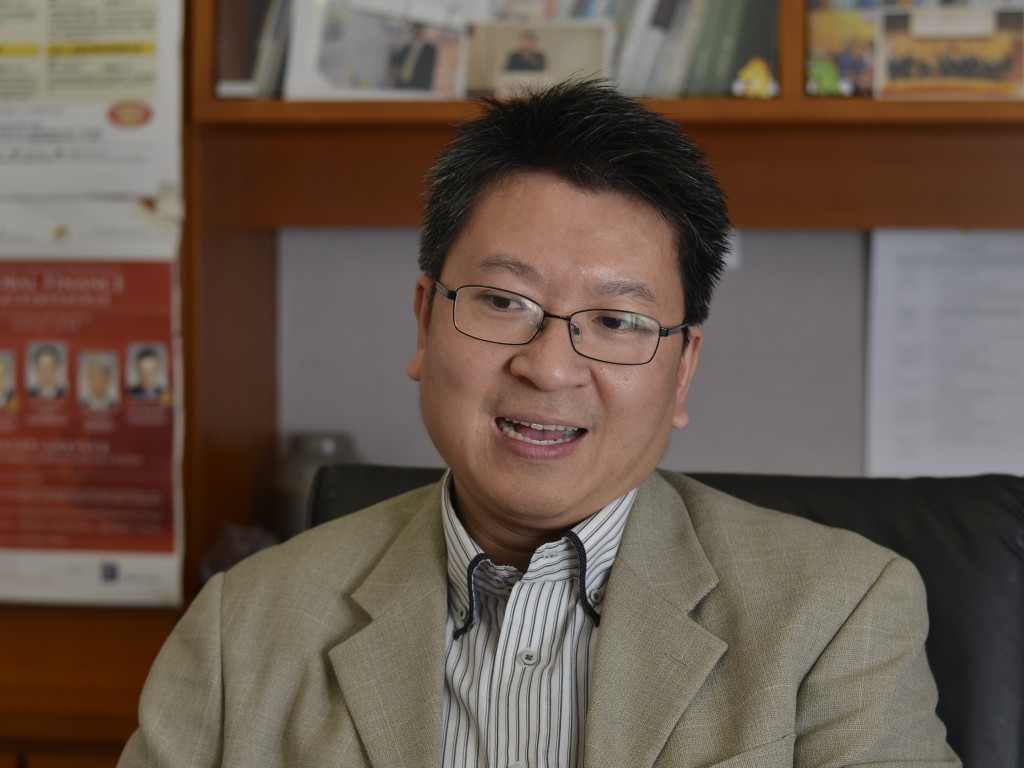
Speaking on a live radio program this morning, the resident expressed deep offense at the politician's remarks while emphasizing that his original comments were never intended to create division between Hong Kong and mainland Chinese medical professionals.
The controversy began when the caller, surnamed Kwok, voiced concerns during a radio phone-in program with the Chief Executive, questioning whether an influx of imported mainland nurses was squeezing out local graduates.
In response, Executive Council member Tommy Cheung Yu-yan told newspapers that Hong Kong's medical staff shortage remains an indisputable fact, suggesting the caller was merely "a union representative pretending to be an ordinary citizen."
During his follow-up radio interview today, Kwok clarified that he had absolutely no intention of fostering cross-border tension or criticizing mainland medical staff.
He stated that Hong Kong residents must always remember and remain deeply grateful for the mainland medical teams who came to the city's aid during the most difficult phases of the pandemic.
Describing himself as a traditional patriot who is staunchly pro-establishment, Kwok added that if his previous comments had caused any of his mainland colleagues in Hong Kong to feel insulted, he would offer his sincere and unreserved apologies.
However, Kwok expressed intense anger toward Cheung's "union puppet" accusation. Confirming that he has never been a member, officer, or representative of any healthcare union, Kwok condemned the phrasing used by the advisor, noting that implying someone is "pretending to be human" effectively treats them as a non-human object or livestock.
He went on to criticize the elite politician’s perspective, suggesting that in the minds of wealthy capitalists like Cheung, members of the working class are seemingly deemed unworthy of being treated as human.
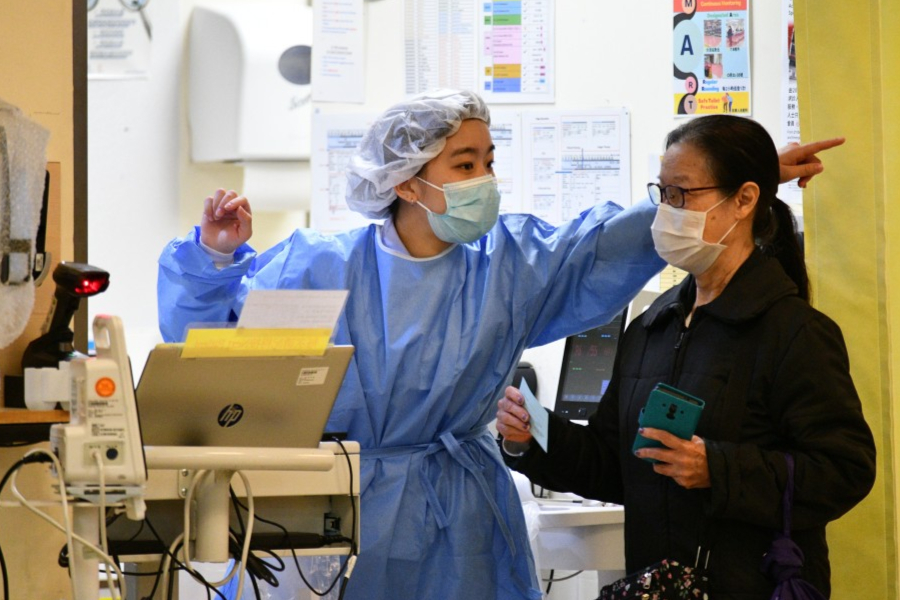
Responding to claims by the government and the Hospital Authority that 99 percent of local nursing graduates have successfully found jobs, Kwok countered that his comments had received unanimous support from working nurses across social media.
This response, he argued, indicates that employment struggles among new graduates are actually widespread and that a massive disconnect exists between official statistical reports and the actual experiences of those on the ground.
Citing figures from the Nursing Council of Hong Kong, Kwok pointed out that there are currently over 200 limited-registration nurses in the city for the 2025–2026 period.
He suggested that while the Hospital Authority may be scaling back department sizes or restructuring ward operations due to budget constraints—creating a superficial impression of adequate staffing—frontline healthcare workers remain severely overworked.
Kwok shared the personal struggles of his daughter, a recent psychiatric nursing graduate who completed a five-year program.
Despite her practical approach to career planning, her application to the Hospital Authority resulted in only a single brief video interview before going completely unanswered.
When she turned to non-governmental organizations and private care homes, she was repeatedly turned away due to her lack of prior professional experience.
He also highlighted what he described as systemic anomalies in the sector, claiming that even highly experienced registered nurses with over 30 years of experience are being offered monthly salaries as low as HK$28,000 by some non-governmental organizations. Under such market conditions, Kwok noted, institutions have little incentive to take on inexperienced fresh graduates.
While acknowledging that the Hospital Authority is under no legal obligation to hire every single graduate, Kwok criticized the complete lack of long-term manpower planning and communication between the government, health officials, and educational institutions.
He argued that allowing young people to complete publicly subsidized degrees only to find themselves unemployable represents a costly failure of the educational system, the burden of which is ultimately borne by students and their families.
In a separate radio program, Dr. Danny Tong Wah-kun, Chief Manager of Nursing at the Hospital Authority, assured the public that the authority always prioritizes local graduates during its annual recruitment drive.
He explained that the first round of applications for the current cohort of nursing graduates concluded in June, resulting in approximately 2,200 job offers made out of 3,000 applications received.
Tong added that the Hospital Authority has already initiated its second phase of recruitment. Under this second round, any graduates who may have performed poorly in their initial interviews have the opportunity to reapply.
Unlike the first phase, this second round of recruitment is also open to experienced nurses from the broader market.
Addressing criticisms regarding the authority's inability to absorb all local graduates, Tong clarified that the Hospital Authority's recruitment targets are not designed to accommodate every single graduate in the territory.
He noted that the annual graduate pool of approximately 5,000 individuals is meant to supply the city's entire healthcare ecosystem.
Since many graduates choose to pursue alternative career paths in non-governmental organizations, private rehabilitation services, or medical technology corporations, not all students apply for positions within the public hospital system.