Read More






The Hong Kong Jockey Club’s flagship philanthropy forum marked its 10th anniversary on Monday with global dialogue on social mobility, philanthropy in Asia, new approaches to capital and the role of sport in driving lasting change.
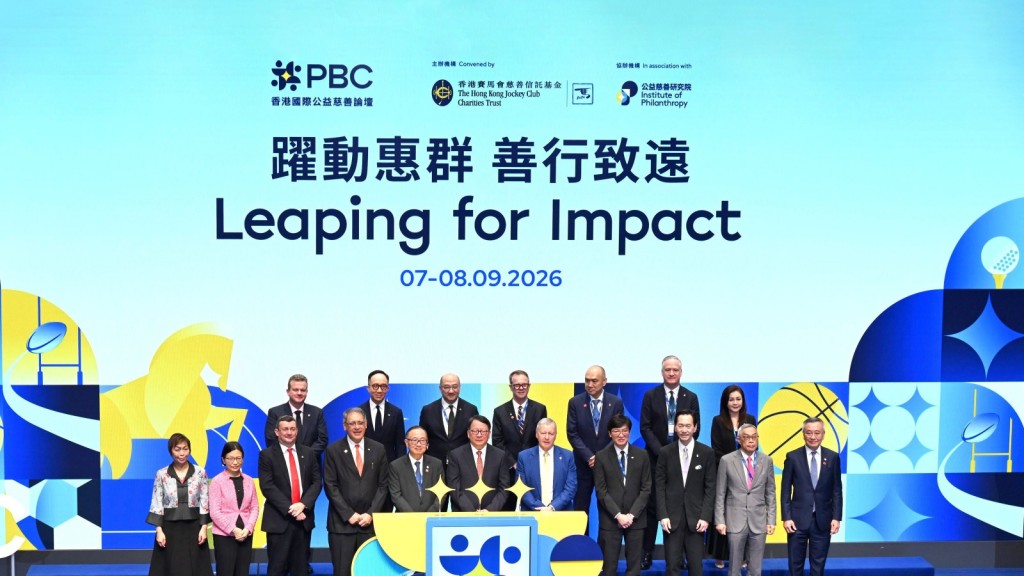
The fifth edition of PBC opened on 7 September at the West Kowloon Cultural District under the theme “Leaping for Impact”.
Convened by The Hong Kong Jockey Club Charities Trust in association with the Institute of Philanthropy (IoP), the two-day Forum brings together some 2,000 delegates and leaders from philanthropy, sport, business, government, academia and the social sector. It is also one of the highlights of the Club’s Year of the Horse campaign.
Inspired by the Olympic values of excellence, friendship and respect, and the Paralympic values of courage, determination, inspiration and equality, PBC 2026 explores what philanthropy can learn from sport — particularly discipline, focus, resilience and teamwork — and how these qualities can generate deeper and more enduring social impact.
For The Hong Kong Jockey Club, that connection is particularly relevant. The Trust has long sought to transform lives and strengthen communities through sport, an approach that also aligns with the National 15th Five-Year Plan’s emphasis on talent cultivation, youth development and advancing a strong and healthy sporting nation.
The opening ceremony at The Hong Kong Jockey Club Auditorium of the Hong Kong Palace Museum was officiated by The Hon Chan Kwok-ki, HKSAR Government Chief Secretary for Administration; The Hon Martin Liao, Chairman of The Hong Kong Jockey Club; and Winfried Engelbrecht-Bresges, Club CEO and IoP Director.
Club Chairman The Hon Martin Liao said: “PBC 2026 examines the need for systems change, new approaches to capital and the capabilities required to deliver impact. It explores how cross-sector collaboration and multi-stakeholder partnerships can drive sustainable and lasting outcomes. Together, these contributions reflect PBC’s continuing role as a platform for sharing ideas, advancing understanding and connecting leaders around the practical solutions needed to address the challenges of our time.”
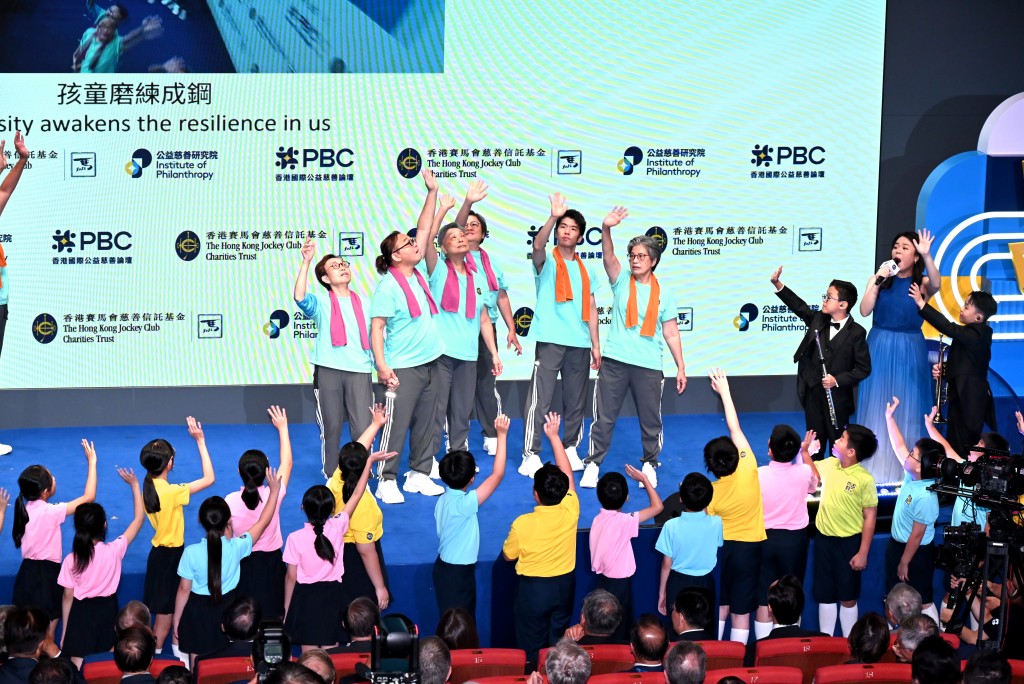
Students from JC Project MuSE, wheelchair dancers from No Limits, and dancers living with Parkinson’s disease from the JC Dance Well Project shared the stage in a collaborative performance, demonstrating how Trust-supported initiatives can foster confidence, personal growth and aspiration.
The performance brought the idea of “impact” back to where it ultimately matters — people and communities.
A major development on Day 1 was the official release of the first edition of The Hong Kong Jockey Club Charities Trust Impact Report, documenting how the Club has improved lives and strengthened communities since its earliest recorded donation in 1915.
The Club has developed a new three-tier framework to evaluate impact at project, programme and Trust levels. The report highlights the importance of targeting underserved populations, designing interventions for long-term sustainability and allowing sufficiently flexible follow-up periods to assess lasting outcomes.
The launch gave practical substance to one of the Forum’s central questions: philanthropy must consider not only what it funds, but whether the benefits endure.
The opening keynote, “A New Era for Philanthropy: Leading Through Complexity”, was delivered by Helen Clark, former Prime Minister of New Zealand and former United Nations Development Programme Administrator, with Club Steward The Hon Bernard Chan as moderator. The session explored the leadership qualities required by philanthropy in an increasingly complex world.
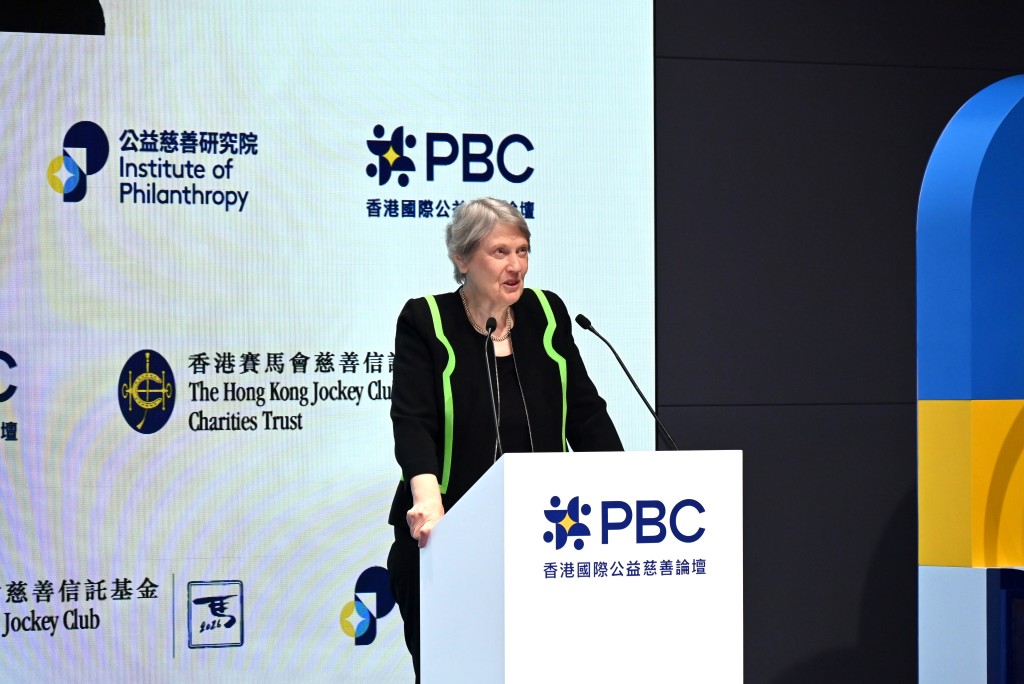
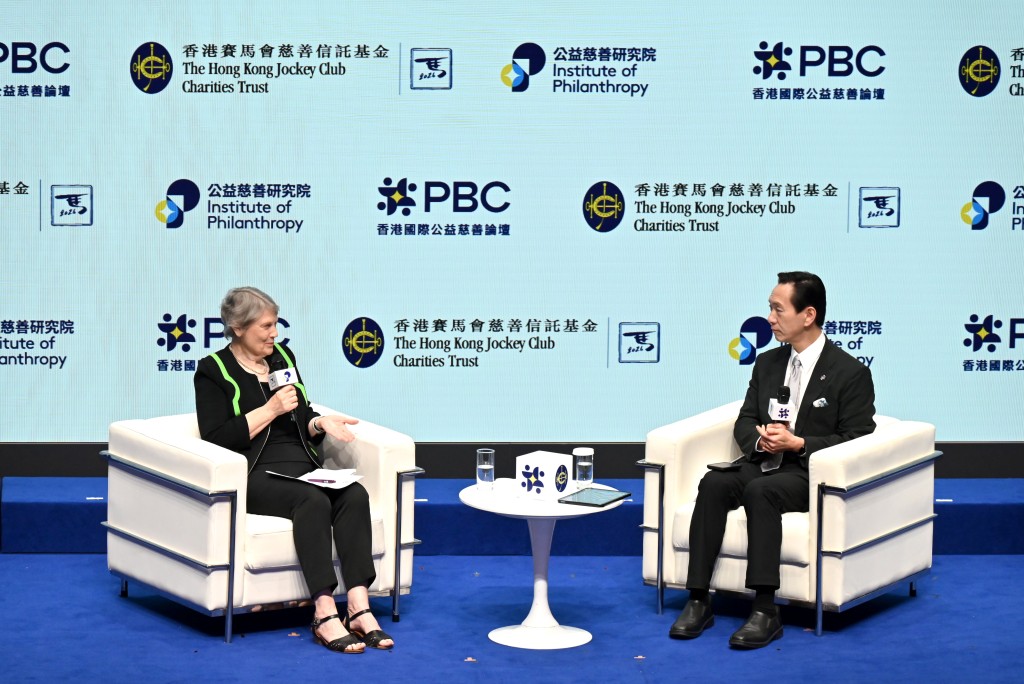
Helen Clark argued that amid geopolitical instability, weakening multilateral institutions and growing threats from climate change, pandemics and AI, philanthropy should play a more catalytic role in shaping solutions, rebuilding trust and forging partnerships for lasting systemic change. As she put it, “Philanthropy must be more than a backstop for diminishing resources from states,” stressing that the sector should not simply fill funding gaps, but help create a better future.
The Commission on Asian Philanthropy, co-convened by IoP and the Asian Philanthropy Congress, subsequently launched its Interim Report — the first comprehensive research into the scale and scope of philanthropic ecosystems across participating Asian jurisdictions.
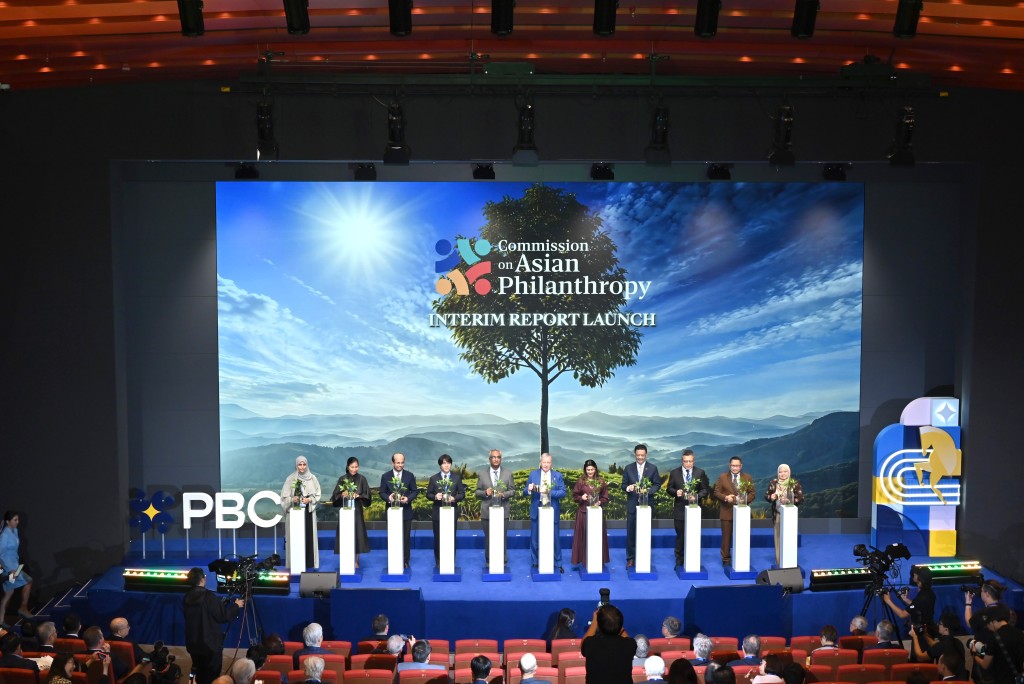
It estimates that domestic philanthropic giving across participating jurisdictions reached US$109 billion in 2024, equivalent to US$1 trillion over the next decade, highlighting the roles of everyday giving, business contributions and public investment in shaping philanthropy across Asia.
The morning programme also examined new approaches to SME financing and the evolving role of philanthropy in social services, reflecting a wider shift from conventional grant-giving towards more catalytic approaches.
Afternoon sessions moved closer to implementation, addressing ageing, housing and sustainable livelihoods, nature-based climate resilience and funding decisions. Together, they reinforced a recurring theme: lasting solutions often depend on funders, practitioners, policymakers and communities working across traditional boundaries.
Sport returned to the centre of the programme through discussions on civic infrastructure, leadership and social mobility.
In “Two Playbooks, One Goal: Navigating Social Mobility in Asia’s Twin Cities”, The Hon Chris Sun, Secretary for Labour and Welfare of the HKSAR Government, and Tan See Leng, Singapore’s Minister for Trade and Industry (Energy & Industry) and former Minister for Manpower, joined a discussion moderated by The Hon Mrs Regina Ip. The session explored how Hong Kong and Singapore can translate economic growth into greater opportunities for social mobility and create more pathways for the next generation.
Day 1 concluded with “Expanding the Arena: Philanthropy, Leadership, and Pathways Beyond Sport”, bringing together Olympic gold medallists and leading sports figures from the Chinese Mainland — Li Xiaopeng, Deng Yaping and Yang Yang— alongside 2026 international football tournament referee Ma Ning.
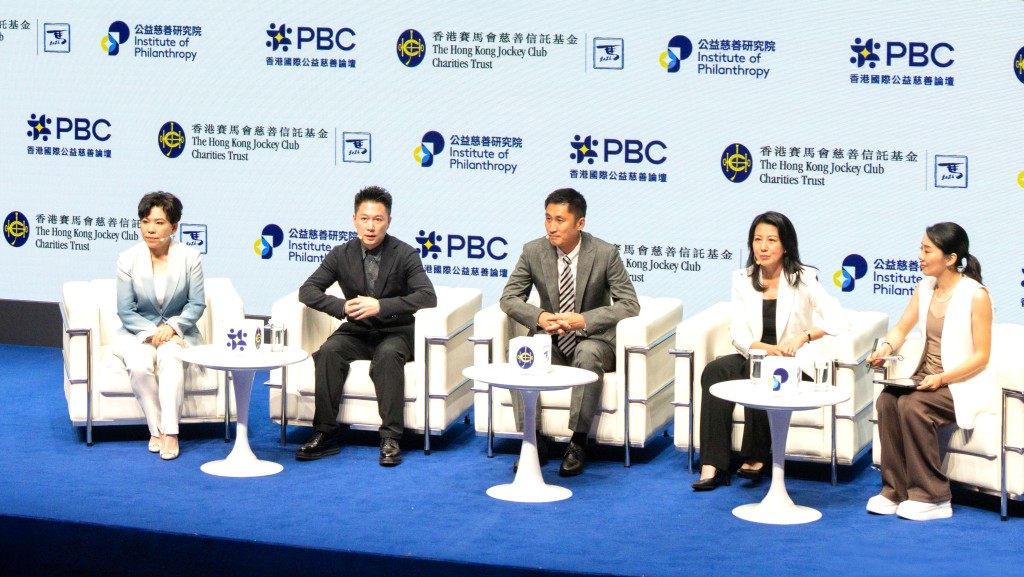
Their discussion examined how sporting excellence can extend beyond competition to shape institutions, nurture emerging talent and widen access to opportunity.
The Club’s support for PBC 2026, like its wider charity and community initiatives, is made possible by its unique value creation model, through which racing and wagering generate tax contributions, charity support and employment opportunities for the community.
In 2025/26, the Club returned HK$39.3 billion to the community, comprising HK$30.7 billion to the HKSAR Government in taxes and Lotteries Fund contributions and HK$8.6 billion in approved charity donations.
Yet the message emerging from Day 1 was that philanthropy cannot be measured by funding alone. Knowledge, partnership, institutional capability, inclusion and rigorous impact measurement all matter.
By the end of the day, “Leaping for Impact” had become less about a single leap than the work behind it — turning ambition into sustained action, and sustained action into lasting change.