Read More
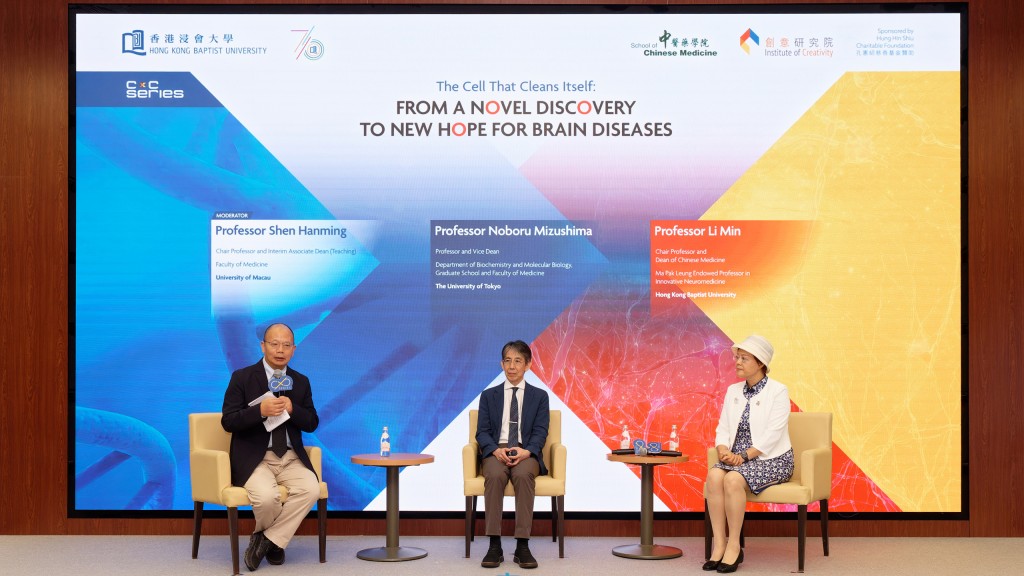
To drive global academic exchange and stimulate scientific inspiration, the Institute of Creativity at Hong Kong Baptist University (HKBU) recently launched the “CxC” Series, sponsored by the Hung Hin Shiu Charitable Foundation. Organised in partnership with the School of Chinese Medicine, the inaugural session, titled “The Cell That Cleans Itself: From a Novel Discovery to New Hope for Brain Diseases”, featured three world-class authorities: Professor Li Min, Chair Professor and Dean of the School of Chinese Medicine from HKBU; Professor Noboru Mizushima, Professor and Vice Dean of Graduate School and Faculty of Medicine from the University of Tokyo, and Professor Shen Hanming, Chair Professor and Interim Associate Dean (Teaching) of the Faculty of Medicine from the University of Macau.
ADVERTISEMENT
SCROLL TO CONTINUE WITH CONTENT
Professor Lyu Aiping, Vice-President (Research and Development) and Dean of Graduate School at HKBU, said in the opening remarks that the new series serves as a high-level, transdisciplinary forum to foster bilateral intellectual dialogues, reflecting the University’s commitment to “Systems Health” – a paradigm uniting Eastern holistic principles with modern computational and biological sciences to translate fundamental discoveries into practical public benefits.
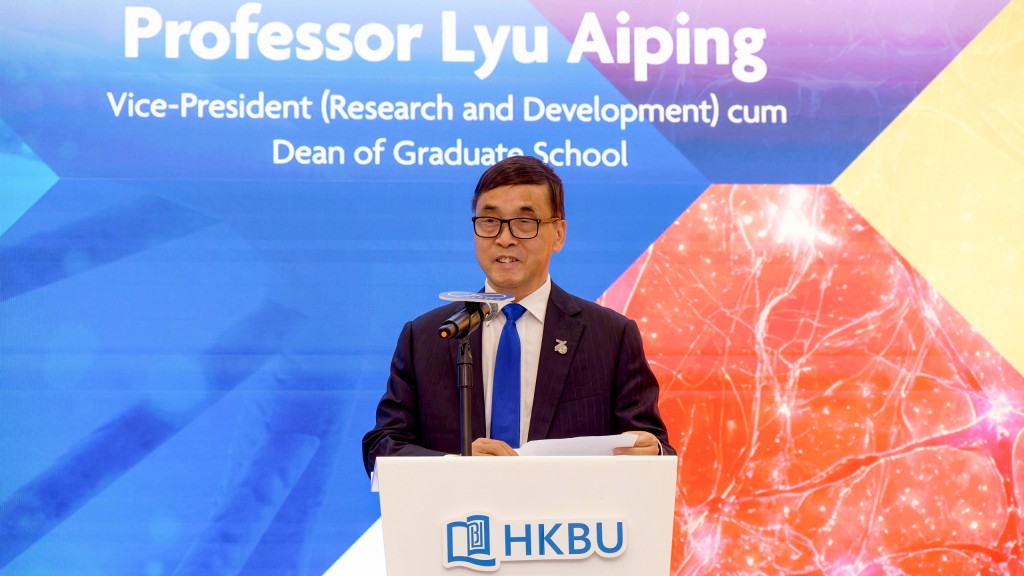
Professor Lyu Aiping delivers opening remarks.
Illuminating the core mechanisms of autophagy
A highlight of the event was the sharing of Professor Mizushima, a world-renowned authority in cell biology who has fundamentally shaped how the scientific community understands autophagy. A close mentee of Nobel laureate Professor Yoshinori Ohsumi, Professor Mizushima is globally celebrated for making the cell’s self-cleaning process visible in mammalian tissues for the first time, providing researchers with a concrete window into a biological mechanism that was previously only inferred.
Professor Mizushima presented groundbreaking research using a reversible mouse model to test turning brain autophagy off and on. When autophagy was temporarily stopped, mice accumulated toxic protein clumps and suffered severe motor and memory dysfunctions. However, the most exciting discovery was that these declines are reversible. When autophagy was restored, the brain’s waste-disposal system cleared away the harmful clumps, normalised cellular proteins, and successfully improved the mice’s movement and cognitive functions. This demonstrates that activating autophagy can rescue neurological functions as long as neurons remain alive.
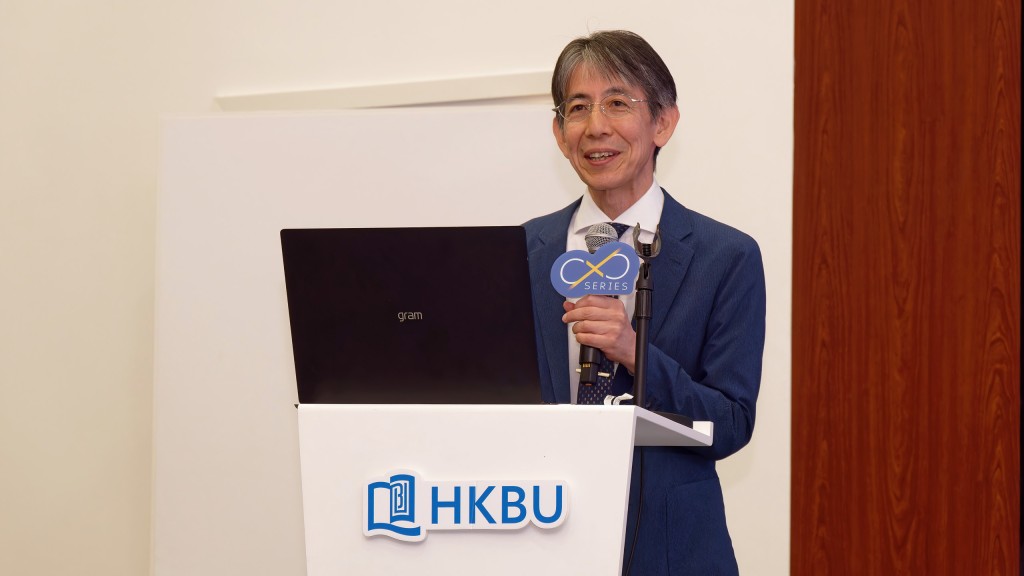
Professor Noboru Mizushima started his research on autophagy when he joined Professor Yoshinori Ohsumi’s lab in 1997.
Bridging tradition and modern innovation in autophagy research
Professor Li has dedicated her career to bridging molecular biology with traditional Chinese medicine (TCM), seeking to uncover new, effective treatments for complex conditions such as Alzheimer’s disease (AD) and Parkinson’s disease (PD). As Professor Li noted, with a growing aging population in China and across the globe, the steady rise in neurodegenerative conditions like AD and PD presents a significant health challenge that demands innovative therapeutic strategies.
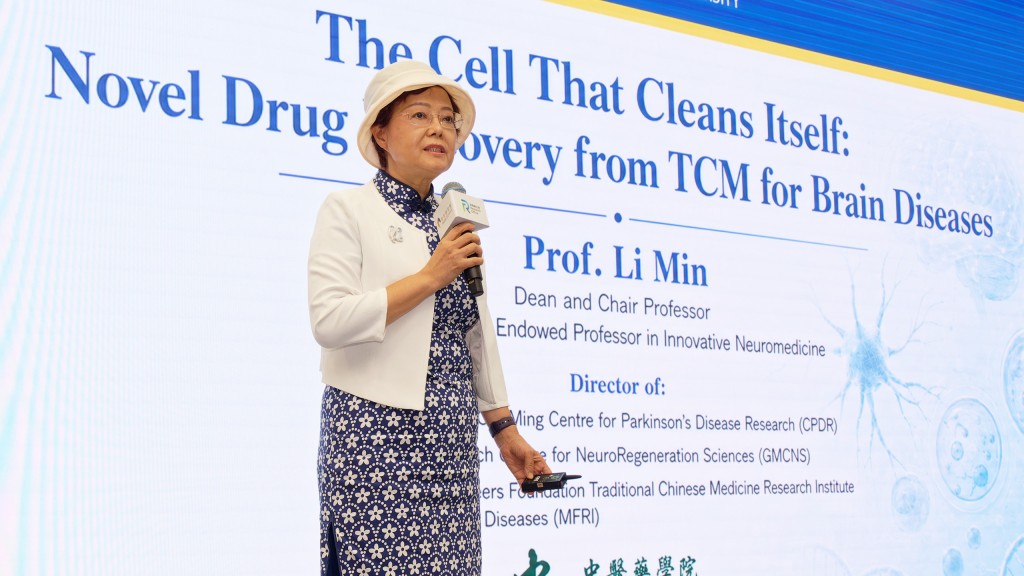
Professor Li Min is a leading figure in advancing the understanding and clinical treatments of neurodegenerative diseases through both TCM and biomedical approaches.
Taking the initiative to tackle this global challenge, Professor Li advances her interdisciplinary work through key research hubs under her leadership. The recently established HKBU Musketeers Foundation Traditional Chinese Medicine Research Institute for Age-related Diseases seeks to position Hong Kong as a leading international TCM hub. Through collaborative research, the Institute focuses on translating TCM science into clinical applications for age-related conditions, including neurodegenerative diseases, obesity, and osteoarthritis.
Working in tandem, the Mr. and Mrs. Ko Chi Ming Centre for Parkinson’s Disease Research integrates TCM wisdom with innovative research. It spans basic molecular studies, translational drug discovery, and clinical trials to evaluate treatments for PD and AD. Furthermore, the Golden Meditech Centre for NeuroRegeneration Sciences serves as a global hub focusing on cellular mechanisms and bio-imaging to develop strategies for the early diagnosis, prevention, and clinical treatment of nervous-system diseases.
“The core mission across our centres is to uncover new molecular targets and advance drug discovery rooted in traditional Chinese medicine”, said Professor Li.
Harnessing autophagy with TCM compounds
A significant portion of Professor Li’s presentation explored how these specific TCM-derived compounds practically enhance the cellular self-cleaning process. For example, her team has mapped how active components from the Chinese herb Uncaria rhynchophylla (Gou-Teng in Chinese) stimulate brain cells to clear out the harmful protein clusters that cause PD. Furthermore, the researchers developed a novel, enhanced compound based on curcumin—an active ingredient found in turmeric—that functions as a master switch to activate and boost the brain’s natural waste-disposal system. In various animal models, this newly developed compound has demonstrated significant potential in reducing brain damage and improving symptoms associated with AD and PD.
Engaging dialogue and future horizons
The symposium concluded with an interactive dialogue session moderated by Professor Shen, where audience members actively engaged with the speakers to foster vibrant academic exchange. Professor Shen highlighted Professor Mizushima’s pioneering contributions to autophagy, emphasising how his findings prove that restoring autophagy can effectively repair neuronal damage. He noted that this breakthrough provides a vital scientific foundation and theoretical support for Professor Li’s work in utilising TCM to treat neurodegenerative conditions such as PD and AD, marking a promising step forward in biomedical research.
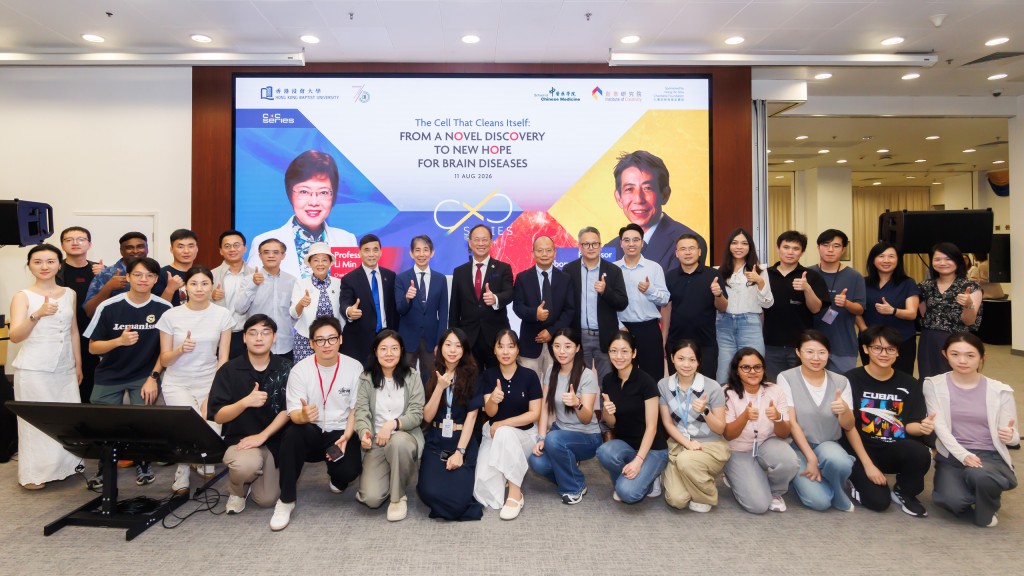
Professor Alexander Wai, President and Vice-Chancellor of HKBU (centre), is pictured with prominent scholars and researchers.