





Read More


Night Recap - November 2, 2026
5 hours ago







HK braces for cooler weather after warmest Oct on record
01-11-2026 17:53 HKT


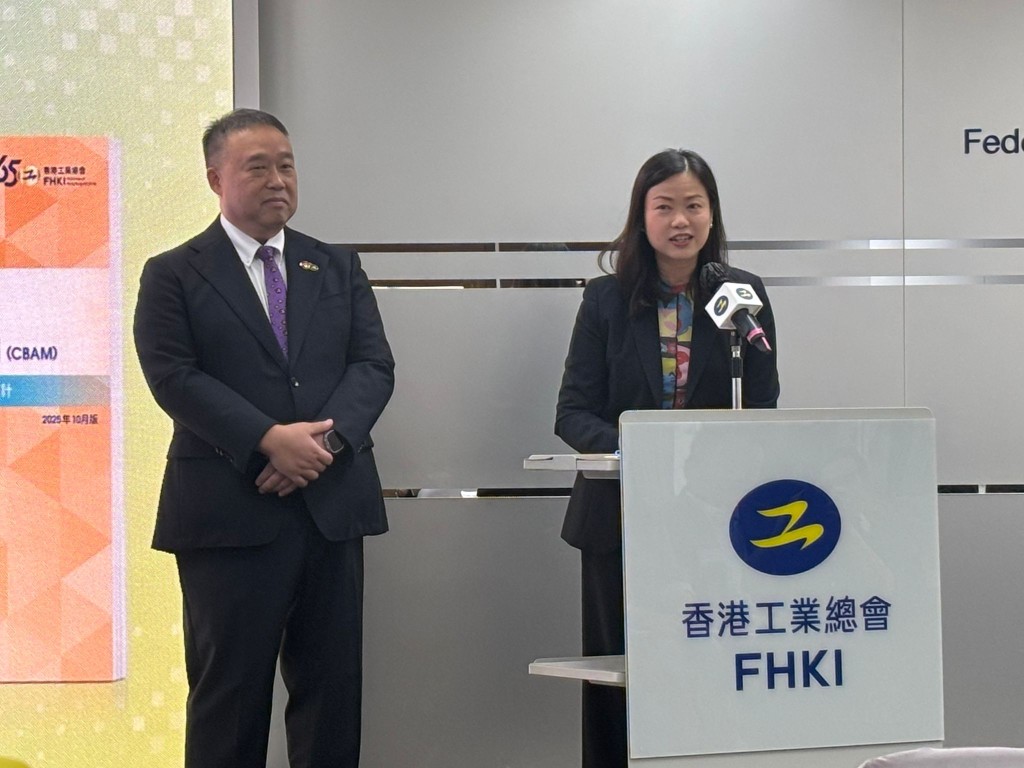
The Federation of Hong Kong Industries (FHKI) released carbon management guidelines to assist local manufacturing enterprises in response to the upcoming European Union (EU) carbon border adjustment mechanism (CBAM).
Collaborating with the University of Hong Kong’s Institute for Climate and Carbon Neutrality (ICCN), the guidelines are funded by the Trade and Industrial Organization Support Fund of the Trade and Industry Department.
Speaking at the dissemination seminar on Thursday, FHKI Chairman Anthony Lam Sai-ho highlighted that carbon management and ESG practices are crucial for enhancing business and industry competitiveness.
“Carbon management is no longer an option but a necessity for the industrial sector,” he said.
Lam acknowledged the challenges faced by small and medium enterprises in navigating regional requirements, hoping that the guidelines would simplify complex ideas into clear, step-by-step guidance.
Meanwhile, Maggie Wong Siu-chu, Permanent Secretary for Commerce and Economic Development, noted that the government recognizes the pressure on enterprises to transform and has rolled out various support measures.
She cited the Green and Sustainable Fintech Proof-of-Concept Funding Support Scheme, which enables promising green and sustainable fintech solutions to be widely adopted in Hong Kong’s business environment.
Wong hoped that guidelines would enhance enterprises' ability to manage carbon emissions in compliance with EU standards, guiding the industry to understand the trends, requirements, and challenges of green transformation.
The guidelines consist of two volumes. The first, titled “Carbon Management Guidelines for EU CBAM Compliance”, outlines the compliance requirements and practices for key industries — iron and aluminum.
The second, “Carbon Management Guidelines for Carbon Neutrality and Sustainable Development Targets of Hong Kong and mainland China”, focuses on internal corporate management and international standards to facilitate manufacturers in establishing their carbon management systems.
Richard Lin, project manager of the ICCN, explained that these guidelines help clarify some common misconceptions with CBAM, providing case studies and decision trees to assist in setting up their systems.
He emphasized that internal and external communications are crucial to determine whether the project is successful or not. Therefore, the guide also details ways to respond to pushback and convince suppliers.
CBAM is an EU policy aimed at tackling carbon leakage and promoting sustainable practices by requiring importers to pay for the carbon emissions embedded in their imports of certain goods.
Starting from 2026, importers must buy and surrender CBAM certificates each year, based on the carbon price paid in the country of origin.