


Read More
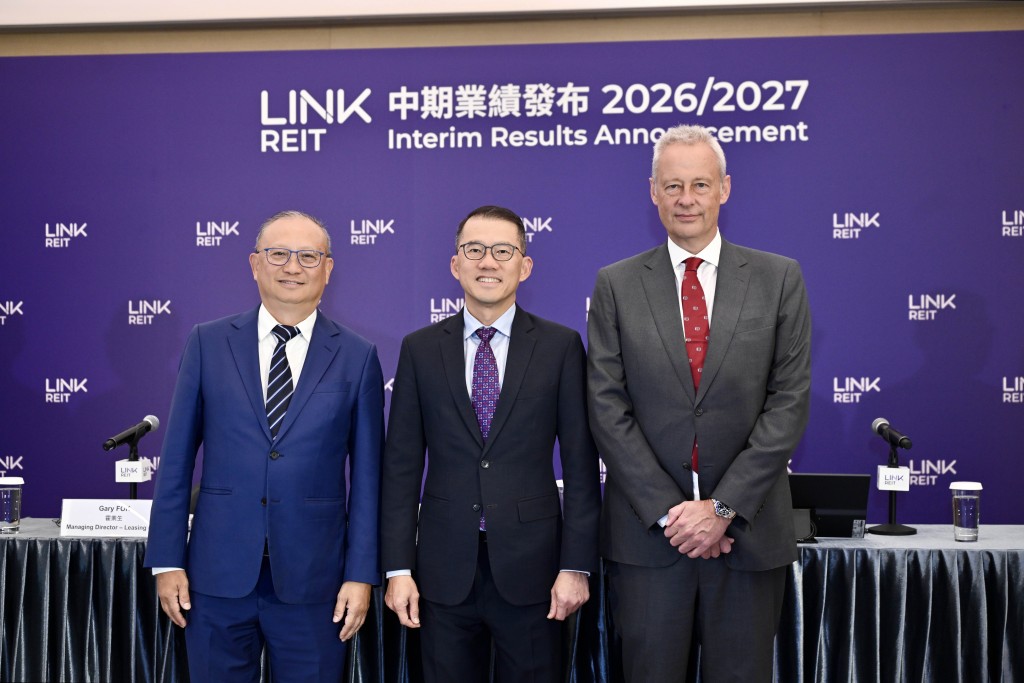
Link Real Estate Investment Trust (0823) executives stressed a stable rental outlook for next year, as it recorded a 0.4 percent year-over-year rise to HK$3.3 billion in total distributable amount for the first half of the 2026/2027 financial year, with up to HK$2 billion in unit buybacks ongoing.
ADVERTISEMENT
SCROLL TO CONTINUE WITH CONTENT
The company’s retail rental reversion was negative 7.5 percent amid competitive market dynamics, down from last year's negative 8.2 percent over the same period. It also intends to buy back HK$1 billion to HK$2 billion in units in the second half of the 2026/2027 financial year when the unit price is considered relatively attractive, and there is surplus capital from divestments.
Distribution per unit remained broadly stable at 127.25 HK cents, compared with 126.88 HK cents over the same period last year.
Total rental revenue fell 1.6 percent to HK$6.9 billion, mainly due to negative rental reversions in Hong Kong, reflecting the lagging recovery of non-discretionary retail, alongside the continued evolution of online consumption patterns.
The company noted that the fixed-rate debt ratio was 61 percent within its range of 50 to 70 percent, providing protection against continued interest rate uncertainty. The rise in interest rates and utility costs also means that it does not expect full-year earnings to exceed the prior year.
Rental Outlook Remains Soft
Link REIT’s managing director of leasing (Hong Kong), Gary Fok, said rental adjustments that began in the 2024–25 period with negative rates typically need a three-year cycle, noting that rents were relatively high at the start of that period and are still being reset lower.
He expects mid- to slightly higher mid-single-digit negative reversion next year, with rents remaining challenging and income under pressure. Positive rental growth is unlikely before the year after next.
While market rents show early signs of stabilization and retail sales are improving in places, management said it will take time for these trends to feed through to Link REIT’s earnings.
Hong Kong Portfolio Under Pressure
The Hong Kong portfolio recorded a 2.7 percent drop in revenue to HK$4.97 billion and a 2.9 percent decline in net property income. Occupancy held at 97 percent. Tenant sales were broadly stable, down just 0.2 percent, with a rent-to-sales ratio of 12.4 percent.
Link REIT's chief investment officer John Saunders said the Hong Kong retail portfolio is likely to face continued pressure even as market rents stabilize and sales in certain categories improve.
Capital Recycling and Third-Party Platform
Earlier, Link REIT sold 700 Nathan Road in Mong Kok for HK$2.3 billion, and disposed of five logistics portfolios in the mainland for 1.1 billion yuan (HK$1.29 billion). Saunders said the proceeds from the sale of these non-core assets will be used for share buybacks or investment in existing malls.
The assets under management of its third-party capital management business amount to approximately HK$13 billion.
Saunders added that the company will continue to focus on core business, striving to become Asia’s retail property manager, streamlining its portfolio, and advancing capital recycling.
On the office side, JPMorgan will not renew its lease at The Quayside in Kwun Tong after its lease expires at the end of 2028, an office building that Link REIT holds a 60 percent interest in. Fok said there are still about two years before JPMorgan moves out, and the company has already begun looking for new tenants.
Fok added that The Quayside now has 99.6 percent occupancy, which is rare in Hong Kong, and he is confident that it can maintain the rate at nearly 100 percent.
Meanwhile, one of Link REIT’s major tenants, JD.com (9618), which has over ten stores under the company, has been aggressively opening physical stores in Hong Kong since acquiring Hong Kong Kai Bo Food Supermarket. Fok said it reflects that the market still has room for physical stores amid structural changes in retail business.
Fok added that since the pandemic, Link REIT has been continuously adjusting its tenant mix, with a substantial increase in the number of 24-hour gyms, Chinese medicine clinics, elderly homes, and self-pickup points, as well as a notable rise in mainland Chinese F&B, retail, and entertainment tenants.