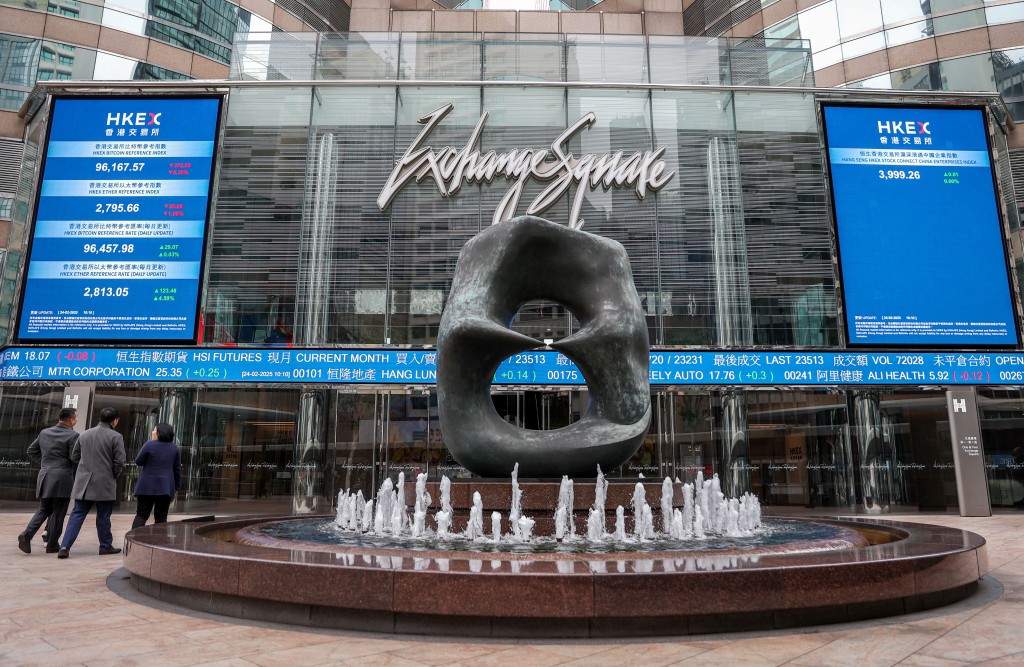
A Democratic victory in the US midterm elections is set to temper expectations for aggressive US fiscal expansion, easing inflation pressures and driving offshore capital back into Hong Kong-listed stocks and Chinese American Depositary Receipts, Citigroup strategists said in a note.
Softer US Treasury yields and a weaker dollar resulting from a more restrained fiscal outlook should particularly benefit high-valuation Chinese growth stocks, which are highly sensitive to US interest rates, the bank said.
The political shift also lowers the probability of sweeping, across-the-board US tariff hikes, reducing uncertainty for Chinese exporters and making Hong Kong-listed H-shares more sensitive to the election outcome than mainland A-shares in the near term.
SECTOR WINNERS AND LOSERS
Citi expects the midterm results to favor China's clean energy and internet sectors while weighing on semiconductor hardware and oil and gas producers:
- Clean Energy: Reduced threats to subsidies under the US Inflation Reduction Act could prompt upward revisions to medium- and long-term US green energy capacity additions, supporting sentiment and capital flows into Chinese solar, energy storage system and new energy vehicle stocks.
- Internet: As the largest weighting in Hong Kong's equity market, internet heavyweights stand to gain from improved risk appetite and liquidity, though Citi cautioned that investors should monitor potential US congressional scrutiny over platform operations and artificial intelligence data security.
- Tech Hardware: Semiconductors, advanced chips, optical modules, and server hardware face headwinds if US AI data center expansion proves less robust than previously planned.
- Oil and Gas: Energy stocks face pressure from lower global crude price expectations, as tighter US fiscal constraints could limit funding for overseas military engagements and create room for Middle East tensions to ease.
- Domestic Plays: Mainland-focused consumer staples and local banks are expected to remain largely insulated from the US vote, trading instead on China's domestic recovery, net interest margins, and property policies.
2027 OUTLOOK AND INDEX TARGETS
Beyond the immediate electoral impact, Citi maintained a cautiously optimistic outlook for Chinese equities heading into late 2026 and 2027, identifying technology development and exports as the market's primary growth engines.
With China's gross domestic product on track to meet its full-year target and consumer and producer price inflation remaining manageable, policymakers appear satisfied with the prevailing growth trajectory and are unlikely to roll out massive stimulus, despite fragile domestic consumption noted by the State Council.
Structurally, Citi favors mainland A-shares over Hong Kong-listed H-shares, citing a higher concentration of technology companies onshore and more supportive domestic liquidity. Both markets remain inexpensive, trading near their historical average price-to-earnings and price-to-book ratios.
By the end of the first half of 2027, Citi forecasts the Hang Seng Index to reach 30,500, the CSI 300 Index to hit 5,700, and the MSCI China Index to climb to 97. Hang Seng Index earnings per share are projected to grow 8.9 percent year-on-year in 2026 and accelerate to 12.9 percent in 2027.
In its sector allocations, Citi remains overweight on technology, basic materials, insurance, internet, and healthcare. The brokerage is neutral on industrials, financials, utilities, consumer, and transportation, while holding underweight ratings on telecoms, oil and gas, autos, and property.