Its pioneering approach to early childhood education has made the Yew Chung Yew Wah Education Network one of the most esteemed umbrellas of international schools in the world.
ADVERTISEMENT
SCROLL TO CONTINUE WITH CONTENT
At 7:45am, when sunlight illuminates the sky in a vibrant glow, parents and domestic helpers begin to arrive to drop off their children in the early years program at Yew Chung International School (YCIS) Hong Kong.
The day starts officially at 9am, but the pre-school, part of the Yew Chung Yew Wah Education Network (YCYW), opens around one hour earlier for teachers to set up the classrooms and overall environment, making sure they are warm and really spark curiosity for children as soon as they come in.
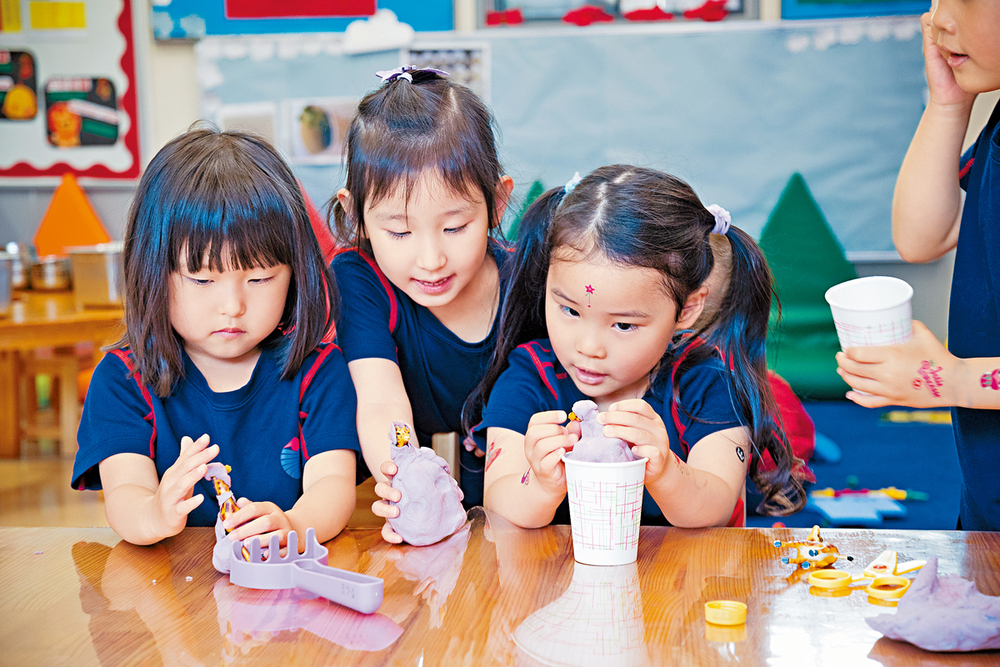
In one classroom, students doodle on a table covered with maps of the Hong Kong MTR and pictures of Octopus Cards under a plastic cover. Out in the playground some are stretching their limbs and riding the tricycles. In another class, there are music and instruments, while an ice cream cookery lesson is going on next door.
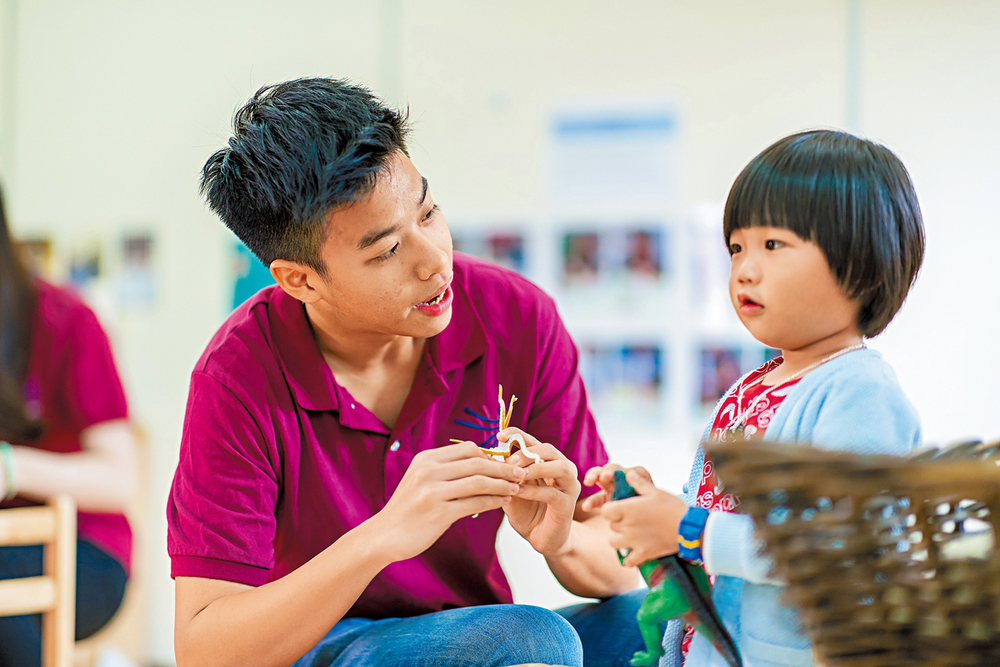
The children who attend the school are as young as six months old and each of the classrooms, spacious and well-equipped with figure grounds and learning provocations to support pupils’ ongoing and new interests, is supervised by two co-teachers (one Chinese and one English).
A progressive approach
Emergent curriculum is big in the YCYW education, so are child-led inquiry and multilingualism. And a large part of it is about teachers being proactive about responding to what children are doing, thinking and saying – whether it’s learning about languages or Mathematics equations or socio-emotional skills.
What do the children specifically question about? Why is this particular group fascinated with a certain thing? What are they understanding and misunderstanding? What do teachers need to do with the environment to support the idea that the child has? These are the key questions to ask as teachers go about the school days, planning out intentional classroom activities based on where children’s explorations take them; and if need be, offering additional support in areas a child may be lagging behind.
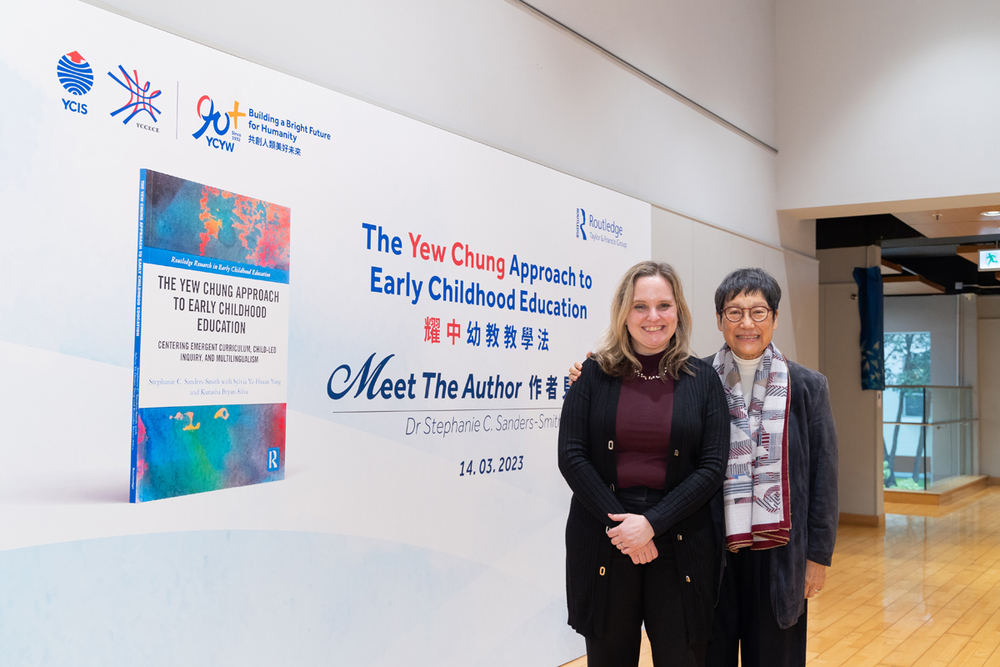
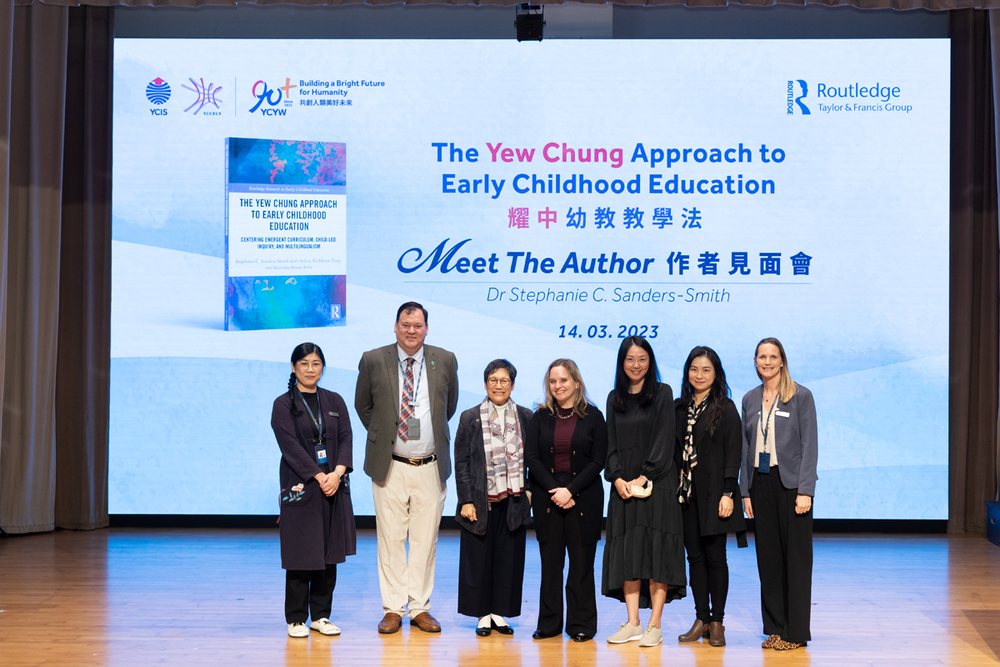
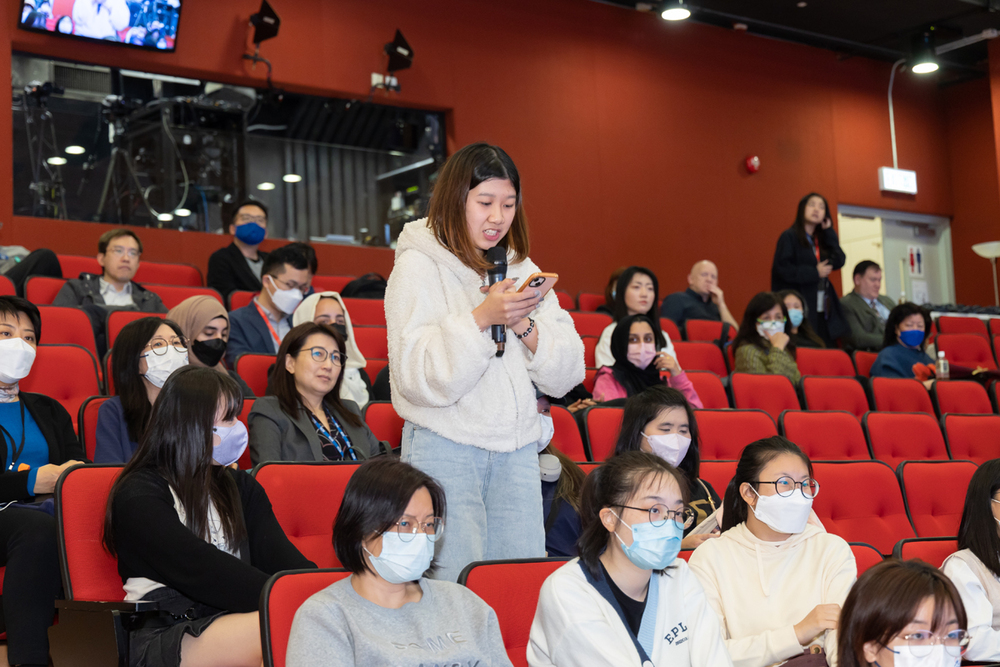
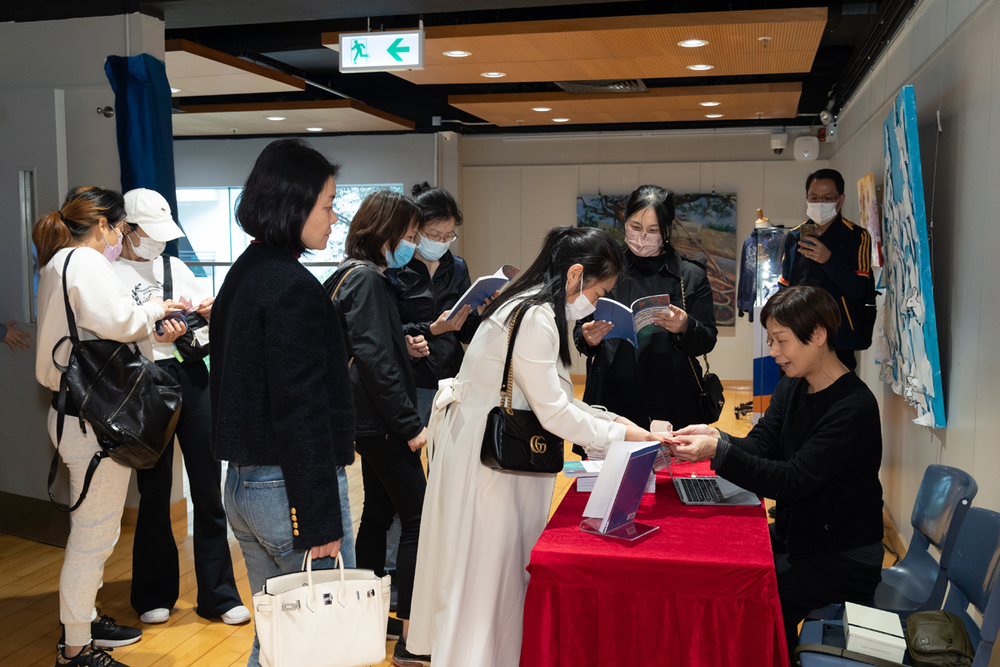
This approach has been exemplified in the 2023 research monograph and practical guide The Yew Chung Approach to Early Childhood Education: Centering Emergent Curriculum, Child-Led Inquiry, and Multilingualism. Recently published by Dr. Stephanie C. Sanders-Smith with Sylvia Ya-Hsuan Yang and Kutasha Bryan-Silva, the book is the result of Sanders-Smith’s extensive research in Hong Kong with YCIS.
Sanders-Smith, who is an associate professor at the University of Illinois’s College of Education’s Curriculum & Instruction Department, became the inaugural Yew Chung-Bernard Spodek Scholar in 2015. And it was through this relationship and endowment that she got acquainted with Dr. Betty Chan Po-king, whose mother, Madam Tsang Chor-hang, founded the first YCIS in Hong Kong in 1932.
“I was subsequently connected to Dr. Chan’s niece, Dr. Lydia Chan, and we discussed some of the work that’s happening in the YCYW,” says Sanders-Smith. “From a visit to YCIS, I realized that the administrators there recognize that their educational approach is unique, but found it difficult to communicate what the Yew Chung approach is to people outside.”
With Sanders-Smith taking on the role of an external researcher, what ensued were many years of collaborative research, giving her the opportunity to see the Yew Chung Approach in practice and witness its impacts on children and the school communities at large. She says that the YCYW – which now has a presence in Hong Kong, mainland China, the USA and the UK – has been designing its own child-led curriculum since the turn of the century, blending Chinese Confucian teaching and Western progressive education, and the effort is in line with Hong Kong’s colonial history.
An ethnographic research on the Yew Chung Approach to early childhood education is no small undertaking: Sanders-Smith and her research assistants sat in the classrooms and conducted interviews with the teachers, collecting hours and hours of data and working around the clock to transcribe and translate the massive amount of documentation. And so a research monograph detailing its findings and discoveries is only apt.
Building on children’s own explorations
Ask Sanders-Smith what an emergent curriculum is, she says that “in short, it’s a curriculum that emerges from the children and the students.” A case in point at YCIS Hong Kong: A child’s fascination with coffee shops based on his experience of visiting a Starbucks store every morning with his mother, has grown into an extensive dramatic play across the whole school. Children worked in active collaboration with each other and the teachers, together transforming the play area into “a Starbucks”.
One day saw them creating a menu with prices, or making the signature green aprons from scratch with materials teachers have sourced; the following week, students wrote to a local Starbucks staffer requesting straws, carriers, cups and whatnot. And as words spread, teachers and administrators began to stop by the said Starbucks store in the morning, there to get a coffee for use in the play experience.
The classroom no longer looked like a traditional classroom – rows of pupils, the teacher in front, students there to learn. “It’s an interest that arose from the children but also presented from the teacher, in terms of investigating what it is that children are interested in,” explains Sanders-Smith. “What’s also amazing about this Starbucks investigation is that it then led children to another interest in writing letters and getting responses.”
Nurturing student-teacher relationship
As much a child-led inquiry, it is a test of teachers’ skillfulness in coming to grips with the context and having the knowledge of what children have been learning in the early childhood program, and steering them in the right direction. It’s a far cry from the scenario where, whatever the children say or do, anything goes in the lesson. “A keyword here is teachers’ intentionality and that teachers have the academic goals and objectives designed for the children. They know where the endpoint is and they are using the emerging work as a path to get there,” says Sanders-Smith.
While Sanders-Smith agrees it’s paramount for learning to happen in all directions, both from the students and adults, as far as emergent curriculum is concerned, she notes that doing so without the deep respect for children and the recognition of their competency shouldn’t be considered a “real” Yew Chung Approach.
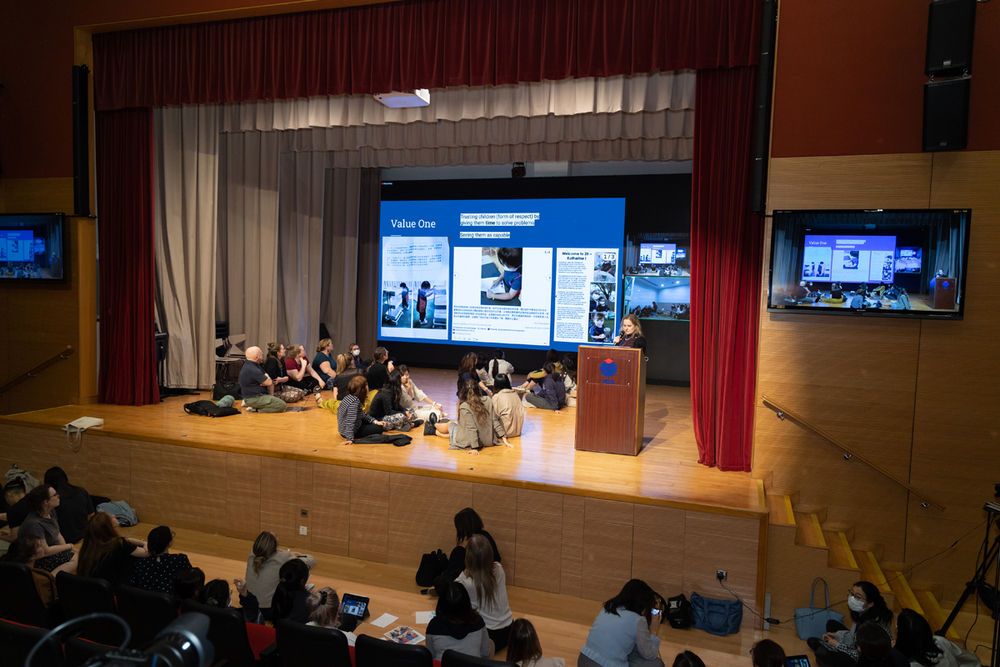
The book pinpoints the 12 values that define the work of the YCYW and the philosophy of the Yew Chung Approach to early childhood education. One of which, and perhaps the main takeaway from it, is teachers’ belief in children “as highly capable and active agents in their own learning.” Sanders-Smith says that this is a practice “that has a deep respect for children as co-learners who have equal rights to personhood and citizenship as teachers.”
Embracing a multilingual environment
This rapport between educators and pupils goes a long way towards building a solid foundation conducive to children’s learning. And with the YCYW adopting a unique bilingual co-teaching mode, students have ample opportunity to develop relationships with their peers and the two co-teachers in multiple languages, even if they don’t speak their mother tongue or the preferred language they use at home.
Merging emergent curriculum with multilingualism is a hallmark of the YCYW. That the two co-teachers are of equal status inside the classroom is at the heart of the approach. Unlike the relationship between a teacher and a teaching assistant, the book underscores that neither co-teacher is superior to the other, and that they both work together towards a common goal.
This means that whatever the topic of investigation is, the English teacher might lead or support children in a part of the inquiry, then the Cantonese teacher will step in and gather the children and venture into new paths; all the while, students are switching between multiple languages throughout the school days.
“The intention here is that the children learn the languages by using the languages. They recognize the usefulness of it and see that they need the language to be able to engage with everything that’s happening in the classroom,” explains Sanders-Smith.
Socio-emotional and academic development is key
Widening students’ personal and linguistic horizons on one hand, the benefits of this multilingual space also extend into the socio-emotional domains. Sanders-Smith tells an example of how teachers dealt with a distressed child in class: a lesson came to head when a child was furious and close to tears, because someone took his toy without asking. Instead of directly helping him resolve the conflict, the teacher came in and said, “Oh I see that you are upset, would you like to tell your friends something?”
“It’s very useful for teachers to provide the child with the linguistic tools he needs to articulate their feelings. The reason being that in developmental theory, young children often find it difficult to put words into what happens,” Sanders-Smith explains. “So the encouragement and support helps them to better respond to social problems.”
Perhaps a common misconception with the emergent curriculum is that academic skills are oftentimes overlooked. But Sanders-Smith’s research proves otherwise, given how the program at the YCYW takes in everything from language and Mathematical skills to art and music. Then, it all boils down to the fact that teachers are being very intentional in what is happening in the classrooms.
“Teachers don’t wait around for things to come up in investigations,” Sanders-Smith adds. “If a child needs to work on a particular academic skill, the teachers will provide that opportunity for them and make sure the children are addressing the range of competencies.” So by the time they graduate from the pre-school, children will have learnt the numerical and literary skills necessary for academic advancement, but in a relaxed, play-led environment.
Continuous evolution
Looking back on the research journey, Sanders-Smith is glad to have witnessed the YCYW teachers’ skillfulness and rigorous ways of thinking: “Although the emergent curriculum is a very difficult way of teaching, the teachers are very knowledgeable and up-to-date on the most recent research on early childhood development. As a researcher in the field of early childhood education, it’s really such a joy to see.”
2023 marks a special occasion for the YCYW as it celebrates its 90th anniversary; and Sanders-Smith says that “the YCYW has undergone great transformations over the decades as Dr. Chan and other leadership have researched, tweaked and updated their ways of teaching and learning with the times.”
Indeed for many educators, the Yew Chung Approach to early childhood education can be a revelation and there is much to be learned from: that a school is where young children come to learn how to learn, to ask questions, to be curious; and it’s the teachers’ roles to respond to this innate creativity and drive, and guide them on the learning journey.