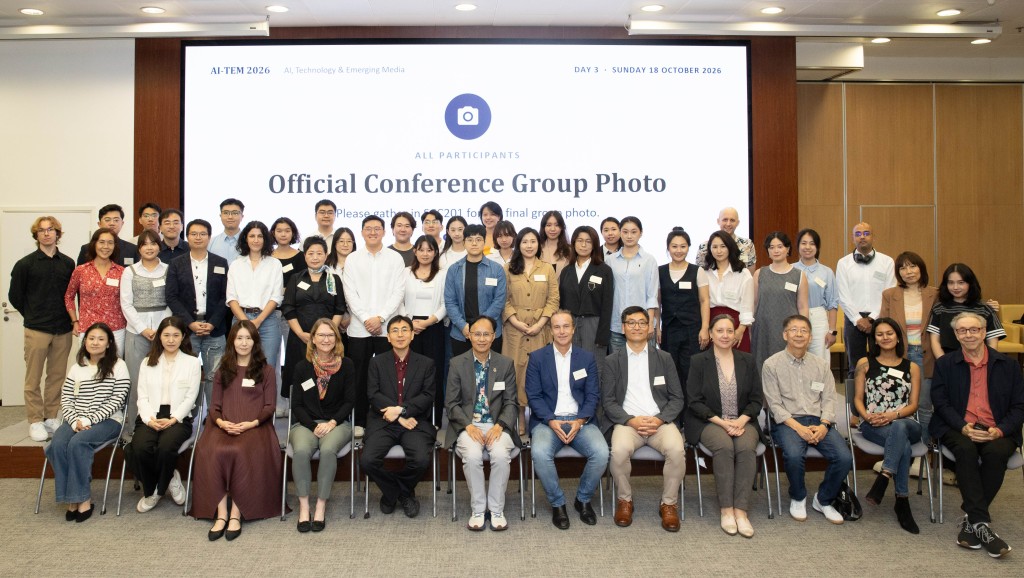
Hong Kong Baptist University (HKBU) hosted the first "AI-TEM 2026: AI, Technology & Emerging Media" international conference from October 16 to 18, featuring a diverse line-up of more than 200 international scholars, faculty, and graduate students, and provided local secondary school students with opportunities to interact with experts on AI ethics and technology.
Organized in partnership with Boston University, Korea University, and the University of Vienna, the event focused on the theme of "Extending Responsible AI Communication." Throughout the conference, speakers and participants discussed the ethical challenges posed by AI, including issues such as hidden inequalities, uneven adoption, and new forms of exclusion. Presentations and debates centered on how communication research can help build a more inclusive and socially beneficial future.
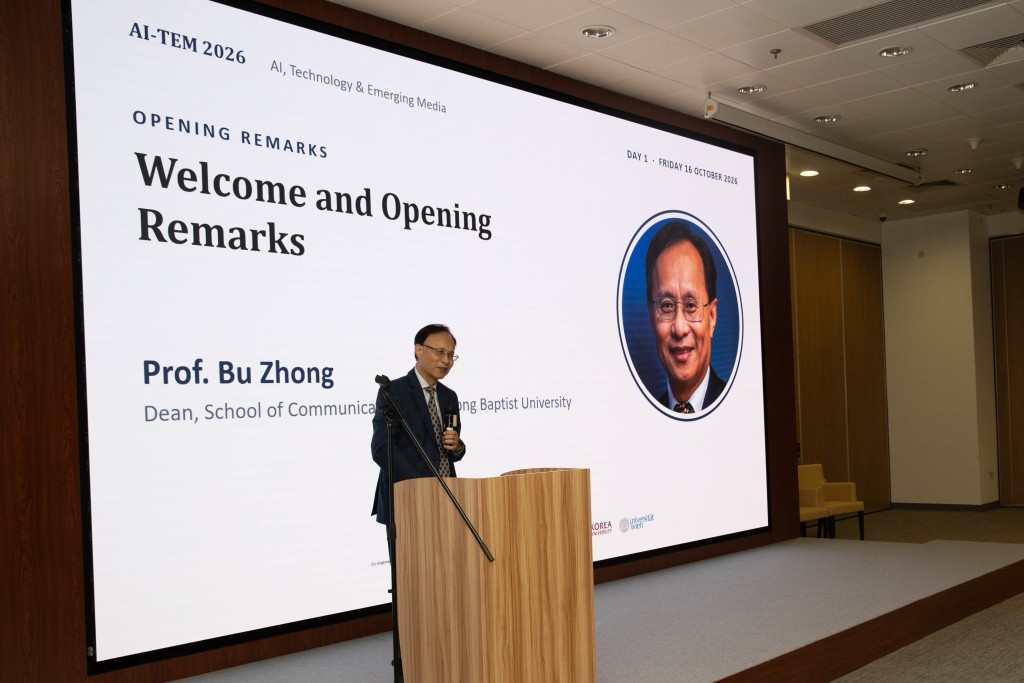
Dean of the HKBU School of Communication Zhong Bu addresses international scholars and guests.
"The future of AI isn’t just about technology, it is a human question," Dean of HKBU's School of Communication Zhong Bu opened the conference by emphasizing the importance of humanities and social sciences in the age of AI. "Engineers can tell us how efficient an algorithm can be, but only communication scholars can explain why society exists as it does."
James E. Katz of Boston University highlighted the importance of international collaboration, noting that the four universities aim to promote freedom of inquiry and independent thought in the rapidly changing field of AI and media.
The event featured keynote presentations from leading academics, including Michael Chau Chiu-lung from the University of Hong Kong, Yang Sung-Un from Boston University, Jörg Matthes from the University of Vienna, Ingrid Bachmann from the Pontifical Catholic University of Chile, and Jennifer Ihm from Korea University. Their talks offered global perspectives on the intersection of AI, communication, and emerging media.
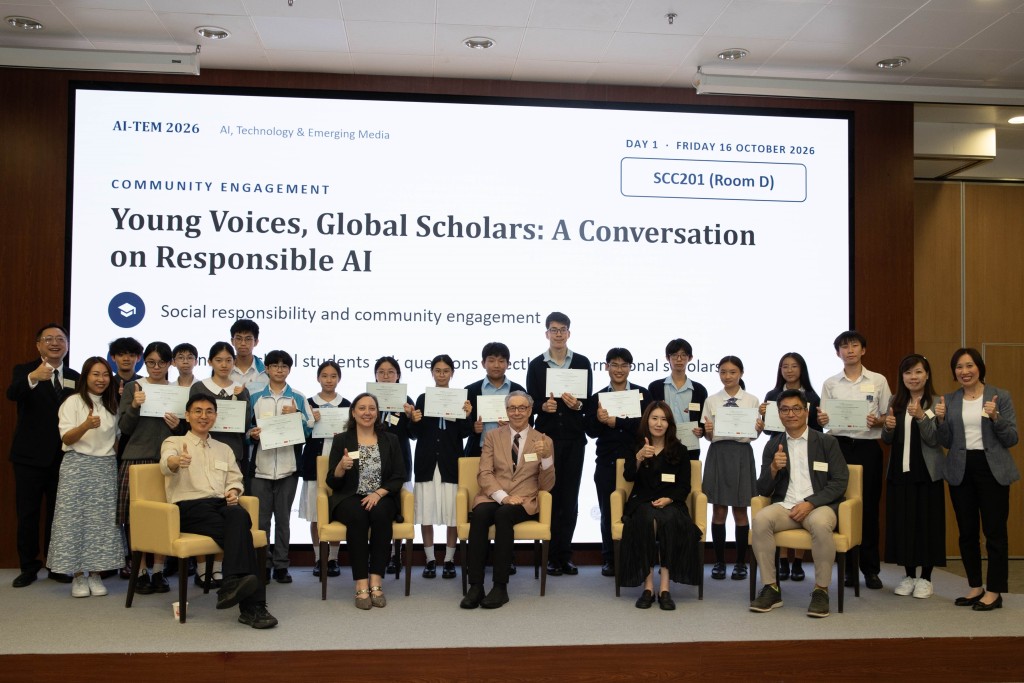
Secondary school students from CCC Rotary Secondary School, Tai Kwong Hilary College and Tseung Kwan O Government Secondary School engage directly with scholars on the opportunities and challenges of responsible AI.
A highlight was an interactive session connecting students from several local secondary schools with international scholars. Students engaged in discussions on AI’s ethical implications, its role in daily life, and future implications for the job market, bringing youth voices into the global debate on responsible AI.
The conference also included research paper presentations and three specialized panel sessions.
It concluded with HKBU, Boston University, Korea University and the University of Vienna — the four partnering universities — pledging to continue their collaboration and champion research into human-centered, socially responsible AI communication.