Read More
It is believed that with the exception of a handful, many would agree Hongkongers are less happy than they used to be.
ADVERTISEMENT
SCROLL TO CONTINUE WITH CONTENT
So when Woofoo Social Enterprises released survey findings that showed the happiness index of Hong Kong families has hit a four-year low, the findings were consistent with the perception shared by many.
Certainly, life is a cycle full of ups and downs. Tycoon Victor Li Tzar-kuoi may be stating the obvious when he said everything has its ups and downs, what matters is to know which side is more probable.
It is fine to be familiar with the principle. The greatest challenge is when it comes to weigh the probability with a high degree of accuracy.
In Woofoo's survey, over 1,300 respondents were asked online in December to give a score out of 10 to indicate how happy they were.
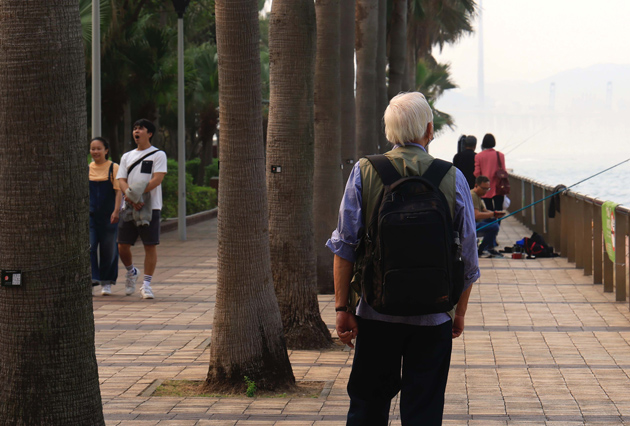
People 65-above reported a greater decline in happiness than those in other age groups. The elderly, who's score was 7.0 out of 10 the previous year, said they have become less happy - 6.5 on a family basis and 6.63 as an individual.
Separation from children and grandchildren was cited as one of the reasons.
To be fair, who would not be sad when seeing their offspring pack and emigrate to other countries and knowing they would have to face loneliness alone at home in Hong Kong? Although many know and understand why their children make the choice, separation from the most loved ones is still very tough to bear.
Hopefully, things will change for the better over time.
One silver lining in the findings is that the elderly still managed to maintain a happiness of 6.5 to 6.63 even though it was no longer in the happy region of 7.0-plus. While it is still a setback, the affected elderly are obviously trying to cope with it.
Lawmakers have been deliberating alternatives these days to downsize the HK$2 fare scheme for the elderly.
Outrageously, some lawmakers continued to blame the elderly for abusing the scheme in excessively generalized terms to justify their political rhetoric when senior citizens - or at least many of them - actually do not.
The fare scheme has enabled many elderly to go out to live a life more active than before. Were it not due to the reduced fare, many elderly people would have been forced to stay at home doing little but boring household routines.
The elderly also need their mental health cared for. Going out offers them an effective remedy, which is why it is free for seniors to travel in some major cities.
Perhaps the most effective solution to address the budgetary concern is to come up with an annual lump sum with public transport operators irrespective of rides. It will also be in the operators' interest since their vehicles would have to depart whether empty or half-full.
An agreed annual lump sum would contain the budget, guarantee incomes for operators and assure the elderly - a triple-win answer.
While happiness is subjective, it is also constituted by many objective factors. The government can help create an environment conducive to happiness.