Read More









It will be a case of better late than never if the last remaining pandemic-related border crossing hurdle - commonly known as the "black code" - is abolished from November 1, as reported.
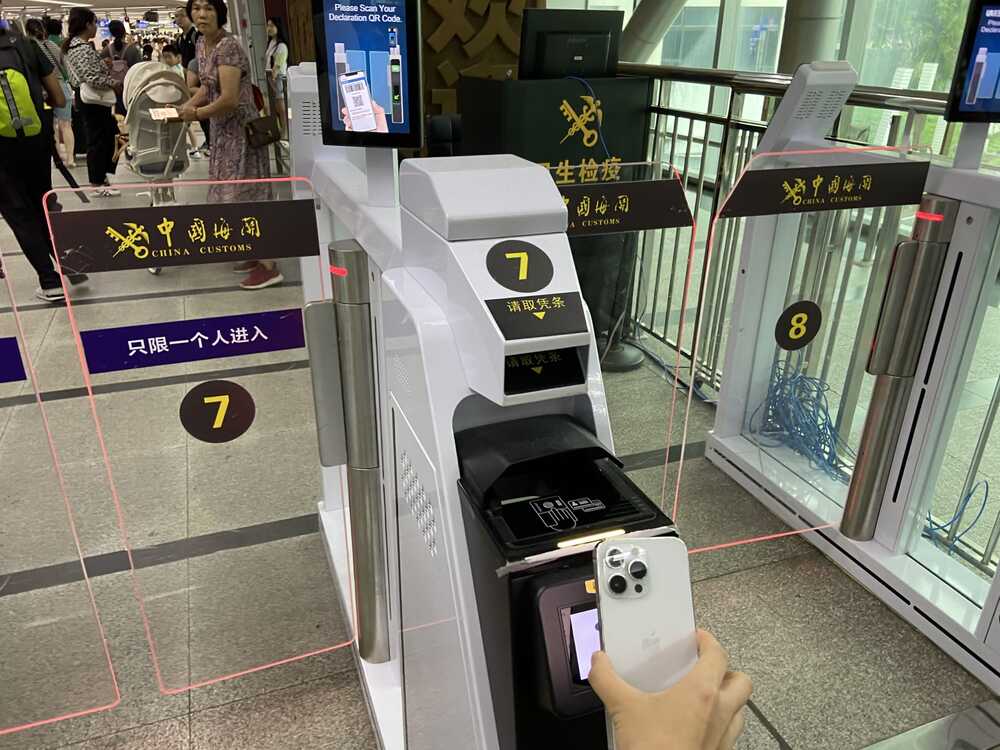
The requirement for travelers visiting or leaving the mainland to scan a QR code generated after submitting the health declaration form is outdated in light of the progress made since the end of the global Covid alert.
It is called the "black code" because the QR code generated as a result of the health form submission is black in color.
Although scanning the code only causes a negligible delay to each individual border crossing, the little extra time added to each crossing quickly accumulates to become a bottleneck when travelers arrive in large numbers to cross the border.
It would still be manageable if the number of people crossing the border remained low - to prevent crowds from forming, mainland customs could suspend scanning in order to speed up crossing to make the black-code arrangement exist in name only.
However, it has become a major concern of late as Hong Kong residents get used to living a new normal which sees them heading north for weekends to take advantage of the lower cost of living in places like Shenzhen, Dongguan and Zhongshan.
The Standard's sister newspaper Sing Tao Daily recently spoke to several Hongkongers, including a Mr Wong who had gone to Dongguan with family members and stayed in a relative's home for three days.
He estimated the holiday break had cost him HK$2,000 including meals, shopping and buying souvenirs.
That would be impossible in Hong Kong.
For frequent travelers who are increasingly getting used to a new lifestyle of earning money in Hong Kong and spending in the mainland, getting rid of the black code is long overdue.
While it is not unusual for mainland authorities to offer no explanation as to why it has been necessary to keep the black code requirement for travelers after reopening the border, it is never too late to normalize the last abnormal piece in the policy.
News about the imminent abolition came a month after the mainland's General Administration of Customs simplified the health form, with fewer details having to be declared, and this was already considered a step that paved the way to full removal.
So will the requirement to scan a black QR code be abolished on the first day of November?
NPC standing committee member Starry Lee Wai-king says it is her understanding that the mainland authorities have been reviewing the black code with a view to dropping it and that the exercise has reached the final stage.
Lee says she is confident the requirement will be formally removed on November 1. Before an official announcement is made, this is probably the most she can reveal.
Hopes have been greatly elevated. It is probable that more Hong Kong residents will cross the border later this week for the first black-code-free weekend.
Shenzhen will surely benefit directly from the lift. Restaurateurs and retailers in the SAR had better prepare themselves to cope with a code-free normal.