Read More
The Yau Tsim Mong district council is mulling to introduce a new “Night Vibes Tsim Sha Tsui” campaign during the Lunar New Year holiday, with light decorations and neon signs set up in the district. Scholars, however, said holding similar activities in different districts might not have a significant effect in stimulating the local economy.
ADVERTISEMENT
SCROLL TO CONTINUE WITH CONTENT
This came as the newly elected Yau Tsim Mong district council will hold its inaugural meeting on Tuesday afternoon, during which discussions will be held regarding initiatives to boost the district’s economy.
The Yau Tsim Mong District Office has proposed a new "Night Vibes Tsim Sha Tsui" campaign, which will feature light decorations, neon signage, and photo-worthy spots along Park Lane Shopper's Boulevard area.
The office also said it will consider setting up a "noctilucent wishing tree,” as proposed by the district councilors. In addition, the campaign will feature street performances such as busking, while nearby businesses will distribute consumption vouchers and festive snacks as gifts.
According to documents submitted by the office to the district council, authorities have proposed setting up large-scale neon signs with unique local characteristics in Yau Ma Tei Banyan Square Park and Mong Kok Road Pedestrian Bridge starting from early February.
The District Office, in its submission to the District Council, has further proposed setting up large-scale neon signage with unique local characteristics at Yau Ma Tei Community Centre Rest Garden and Mong Kok Pedestrian Footbridge starting in early February.
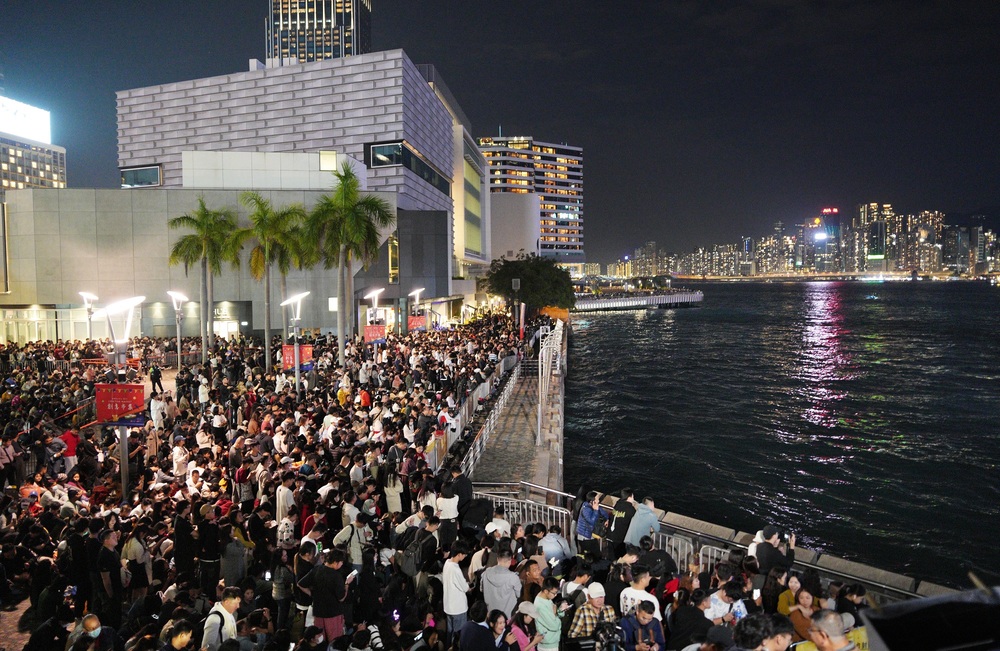
They also plan to assist foreign artists with creating heart-shaped balloon installations within the district before Valentine's Day and the Lantern Festival. Furthermore, they suggest organizing a waterfront fireworks display during the peak season of travelers.
The documents also outline medium to long-term strategies for promoting the district’s economy, including studies about Temple Street Night Market and exploring the feasibility of collaborating with West Kowloon Cultural District to organize more bazaars.
Local scholars have cast doubt over the proposal, saying the campaign would have minimal effect on stimulating district economies.
Kenneth Kwong Ka-kei, Assistant Professor in the Department of Marketing at the Hang Seng University of Hong Kong, noted that organizing similar events at district level inevitably leads to resource duplication.
He said there may not be sufficient consumption power should the activities be held simultaneously in different districts.
His views were echoed by economist Simon Lee Siu-po, an honorary fellow at the Asia-Pacific Institute of Business at Chinese University, who said the events would fail to attract overnight visitors and boost their spending if the activities were held without coordination.
He also raised concerns that some districts may lack the resources to support large-scale events, citing recent incidents of power outages at the night markets.
He stressed that event organizers should focus on details to avoid undermining the city’s impression for both residents and tourists.