Bringing an artistic twist to an airport’s function of connecting places, the Hong Kong International Airport has bridged the cultures of Hong Kong and Shanghai – two world-class metropolises where East and West converge – in the HKIA Arts and Culture Festival 2026, which runs until November 8.
Themed “Resonance of Two Cities: Hong Kong and Shanghai,” this year’s festival has decked the arrival halls with architectural installations, multimedia exhibitions and live music performances, allowing visitors a moment’s respite from the airport’s hustle and bustle.
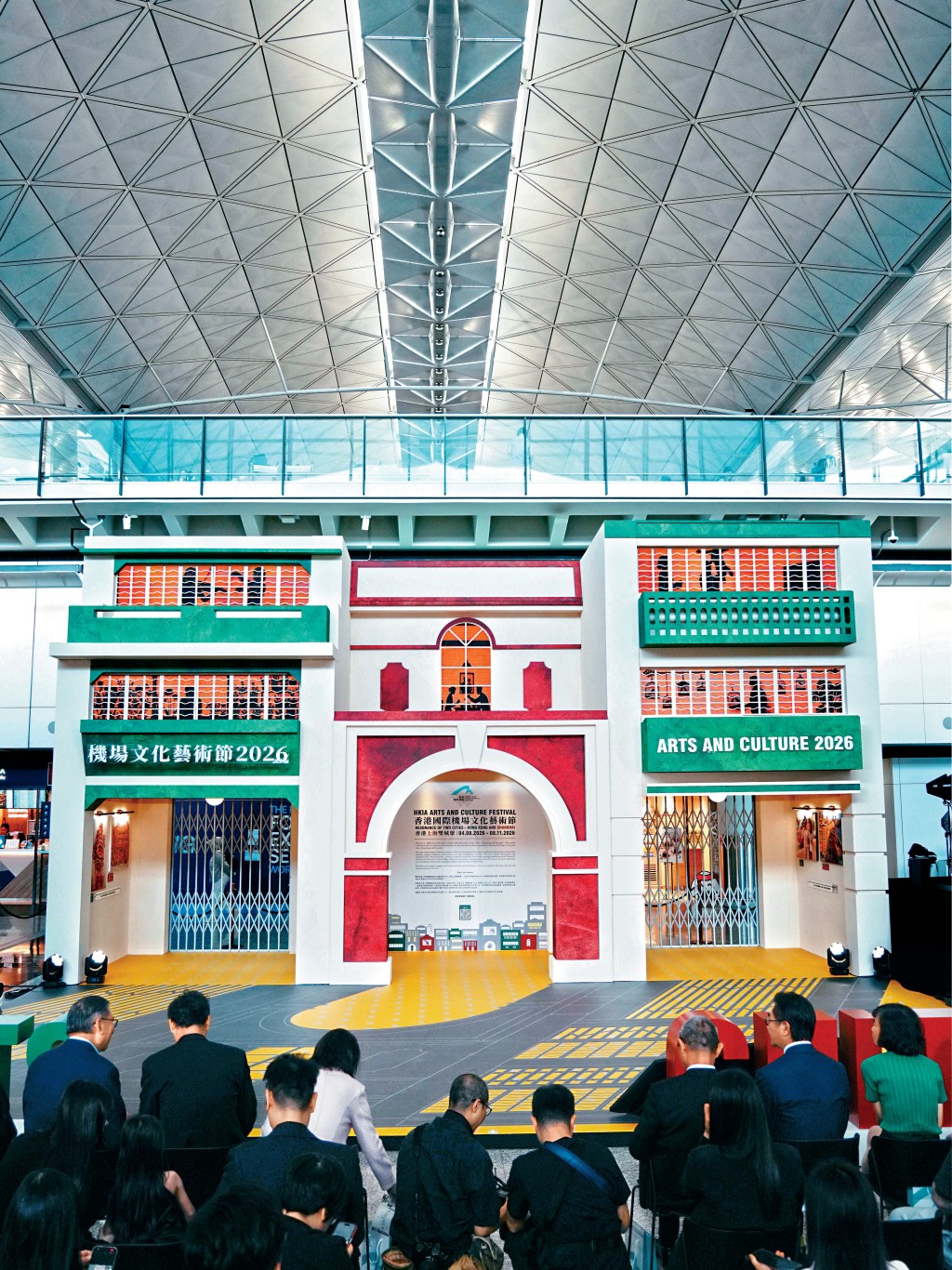
The architectural installation blends tong lau and shikumen building styles.
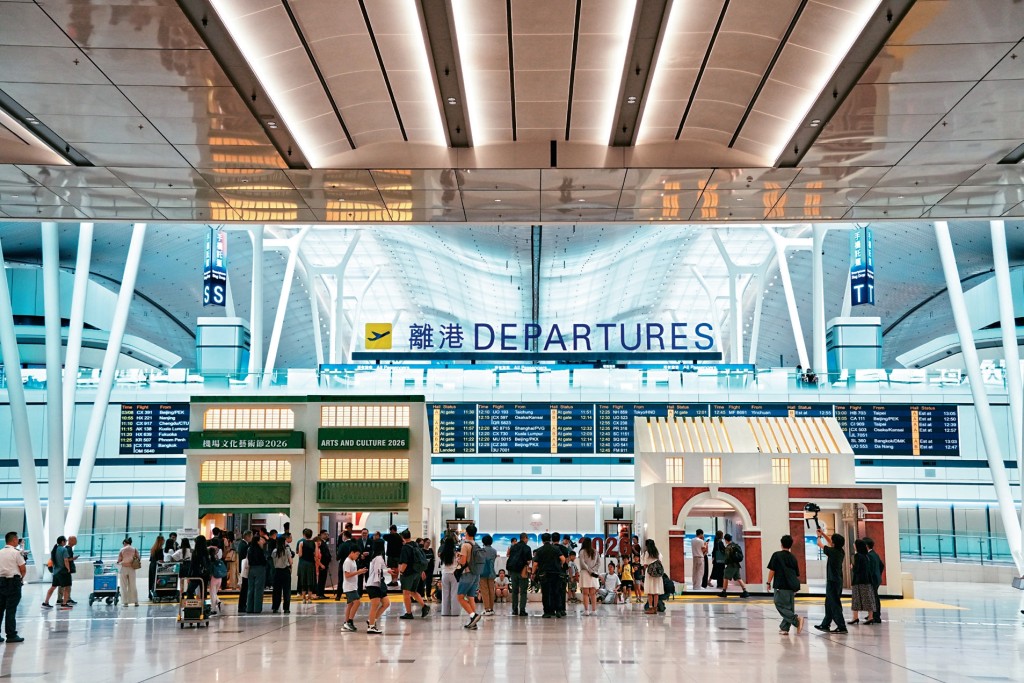
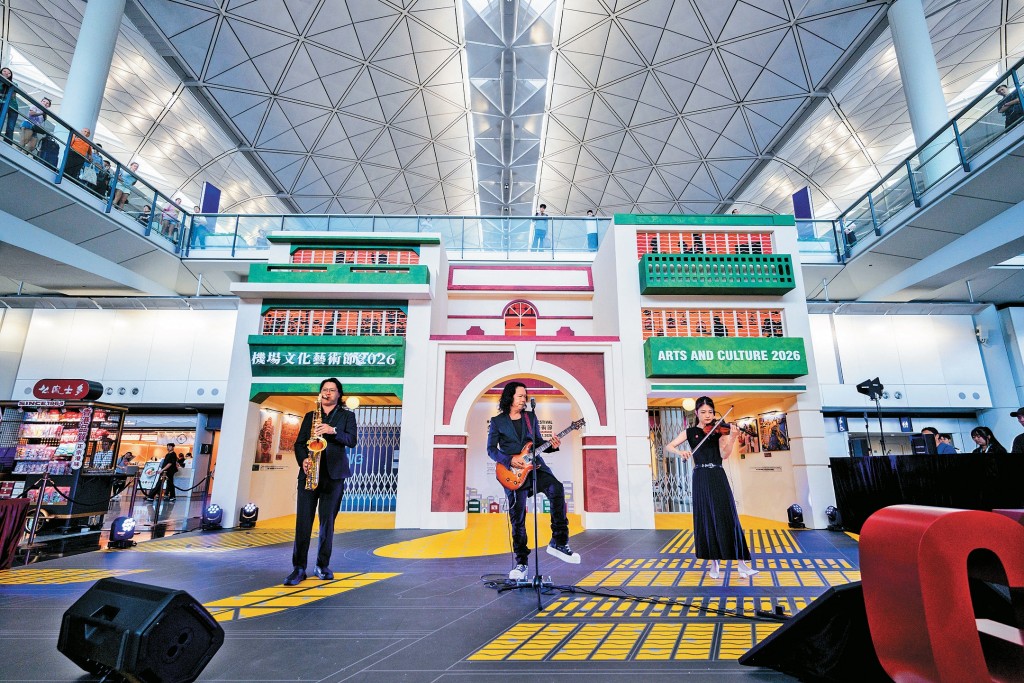
In the arrival halls of Terminal 1 and Terminal 2, an almost-life-sized architectural installation merging Hong Kong’s tong lau – tenement buildings – and Shanghai’s shikumen – stone gate houses – has been erected, conceived by architectural and interior designer Gary Chang, also founder of EDGE Design Institute.
Emerald-green balconies, perforated iron gates, and pillared arcades recreate tong lau’s classic facade; while a curved-top window stacked upon an archway with red brick walls recalls the elegance of shikumen.
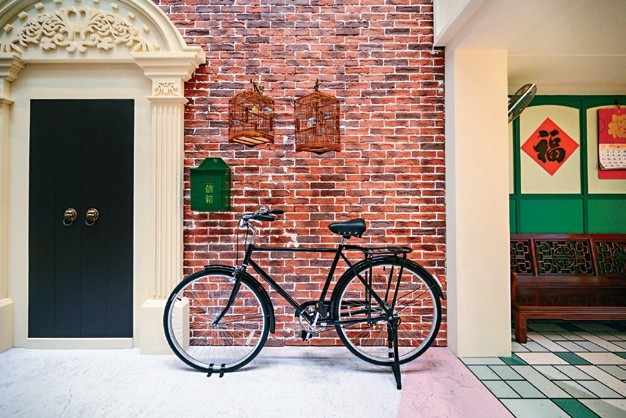
Albeit two distinct building styles, they house the same warmth of passed-down habits and memories. To enhance the buildings’ sense of being lived-in, the design team made sure to include hints of human activity: be it silhouettes of family life seen through the windows, a vintage television set before a mahogany bench, a ceramic teapot next to a green bottle, a hanging wooden birdcage, or a classic bicycle leaning against the wall.
Vivian Cheung
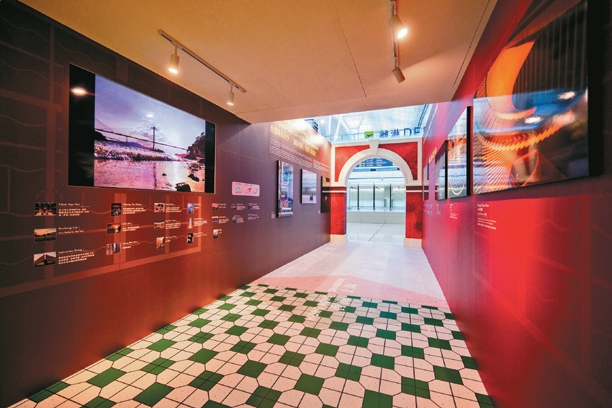
Walking in the buildings’ arcades, visitors will find tong lau’s white-and-green geometric tiles beneath their feet slowly transition into shikumen’s stone-paved floors, effectively transporting them between Hong Kong’s streetscape and Shanghai’s alleyways.
Apart from this architectural installation, travelers in Terminal 2 will find exhibitions that express the unique beauty of the two cities in different media.
First off is a joint photo exhibition. “City Quest • The Love of Being in Community” presents award-winning works from the “Smartphone Photo Contest” under the “City Quest” program, a community engagement initiative by City University. Captured by citizens using their mobile phones, the photographs provide a raw perspective into Hongkongers’ daily life in the concrete jungle, a lively ecosystem of diverse architectural styles.
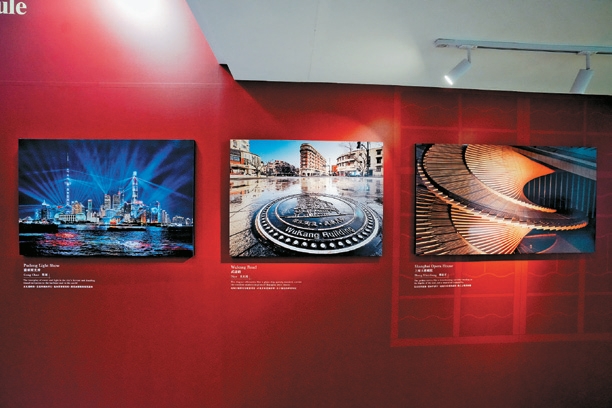
In parallel, “The City of Reflection • Shanghai’s Time Capsule” showcases works by acclaimed photographers Zheng Xianzhang, Gong Chao, and Nice, chronicling decades of Shanghai’s urban evolution through humanistic and drone photography.
A bicycle leans against the iconic red brick walls of the shikumen.
In a joint painting exhibition, “Hong Kong: Rhythms of the Living City” – curated by Peoplehood – gathers works by young local artists who portray Hong Kong’s dynamism in avant-garde styles and diverse mediums; while “City of Landscapes • Shanghai Glows,” brought by JIN Space Art founder Michelle Xu, conveys Shanghai’s multifaceted charm, lodged in famous landmarks as well as humble streetscapes.
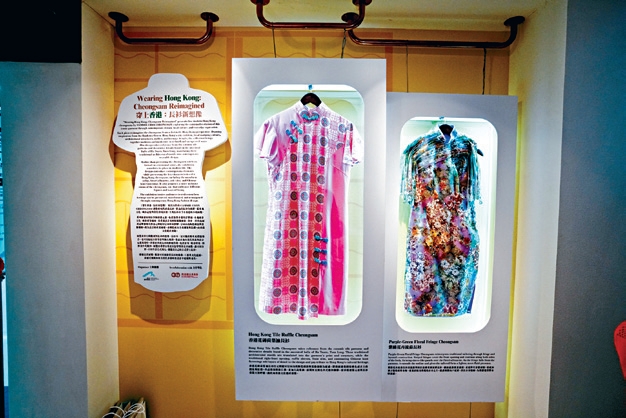
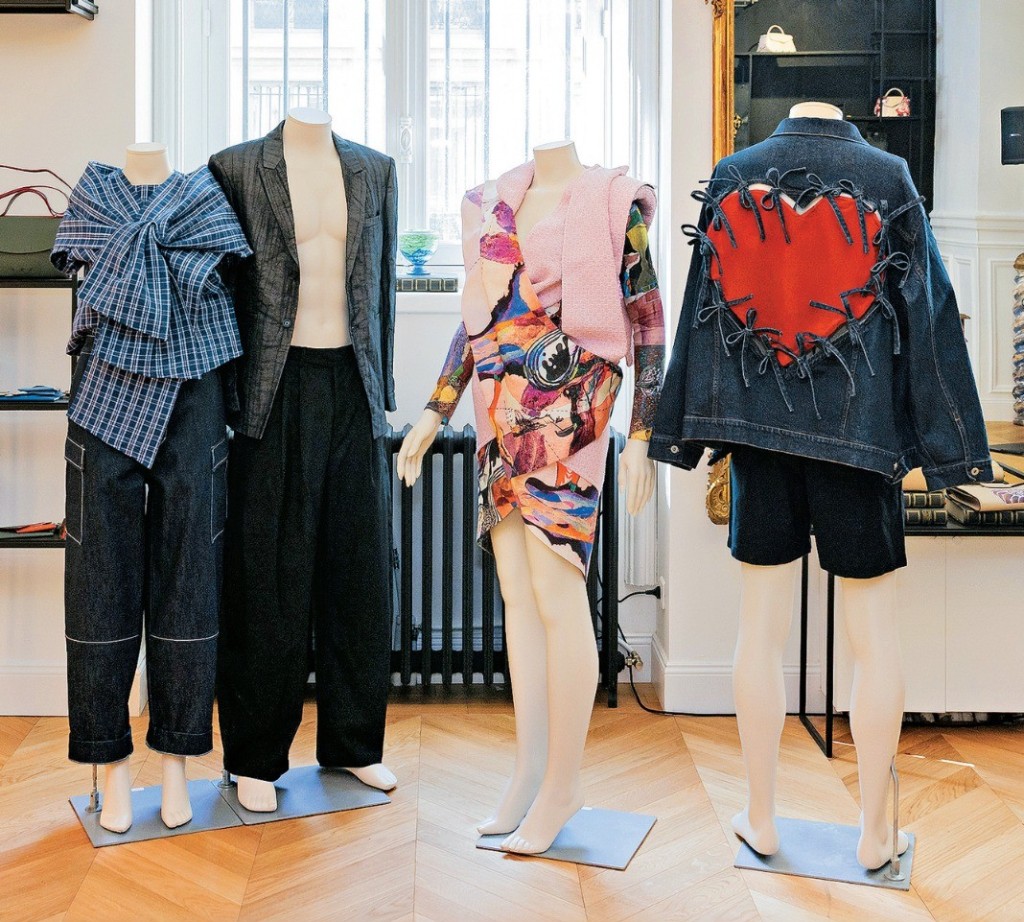
Fashion can also be a canvas for depicting a city, as demonstrated by the “Wearing Hong Kong: Cheongsam Reimagined” exhibition. Five cheongsams by CAMMIE CHAN CHEONGSAM expresses modern creativity with elements inspired by the Bauhinia flower, mahjong, and local architecture, while highlighting classic features like the mandarin collar and side slits. An interactive zone even allows visitors to slip into aprons in the shape of cheongsams, giving them a taste of wearing this elegant attire.
Cheongsams inspired by the Bauhinia flower, mahjong, and local architecture.
In Terminal 1, an artistic program no less exciting has unfolded.
The large screen at the arrival hall plays five videos across four themes: “Hong Kong Travelogue,” by artists from the non-profit Hong Chi Association; “We Learn We Draw: Children’s Joy and Innocence,” featuring sketches by primary students championing eco-awareness; “The Journey of Growth for Hong Kong Visual Arts Gifted Students,” a collection by secondary students; and “Children’s Shanghai Wonders,” a moving portrayal through the eyes of special needs children.
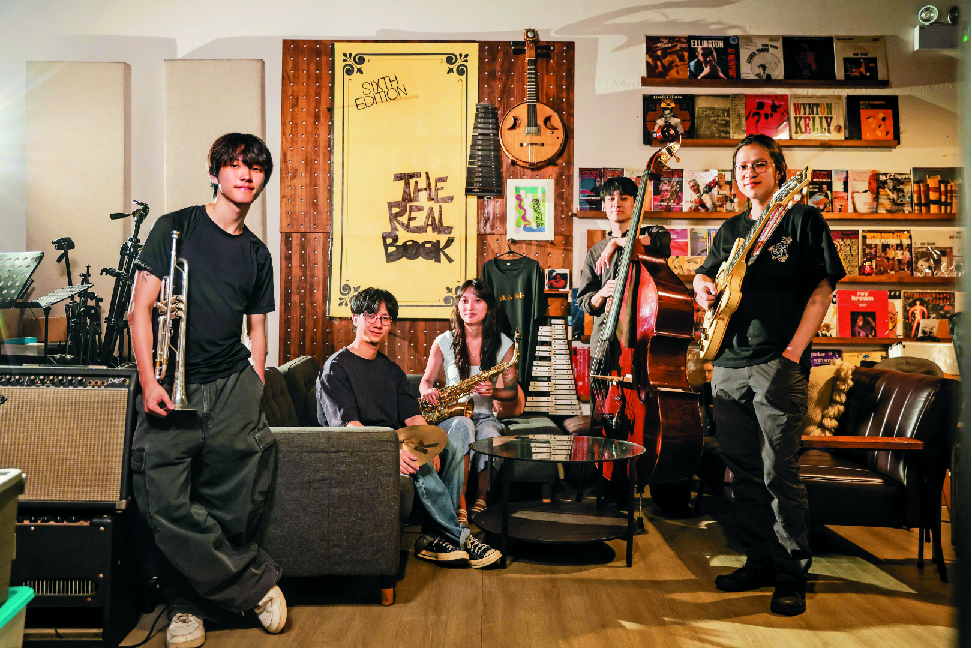
A feast for the ears also awaits visitors at Terminal 1, where both emerging and accomplished musicians from the two cities give live performances.
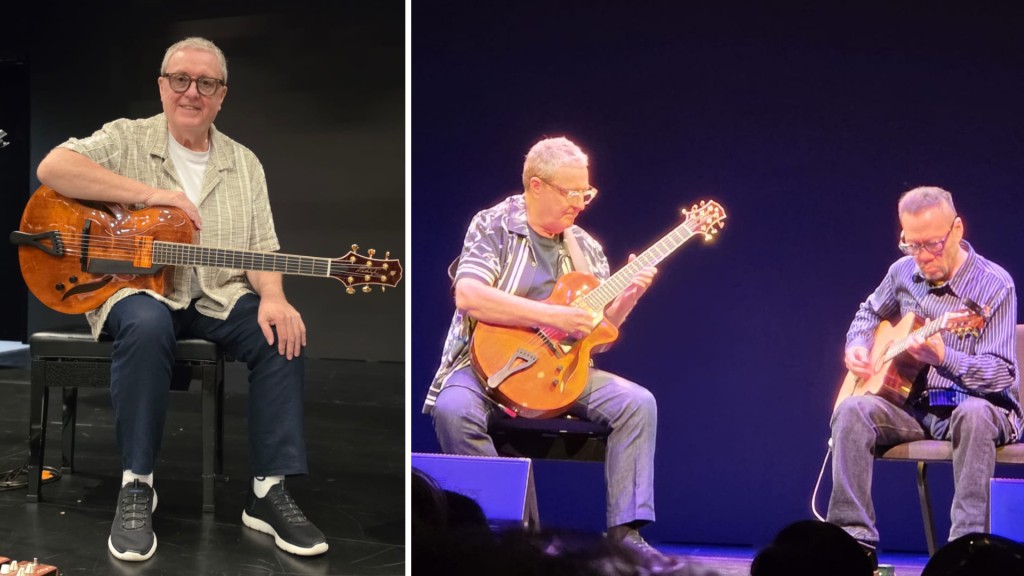
At the festival’s opening, renowned local singer Joey Tang Kin-ming, along with the In-heritage Philharmonic from Hong Kong and Music Bund City Band from Shanghai, blended rock, jazz, and classical music in a new arrangement of the legendary song The Bund, or Shanghai Tan.
Tang also performed 80s’ Cantonese classics, such as Samuel Hui Koon-kit’s Eiffel Tower Above the Clouds and The Private Eyes, Beyond’s No More Hesitation, and Tai Chi’s Red Sports Car, showcasing Hong Kong’s rock music to travelers from all over the world.
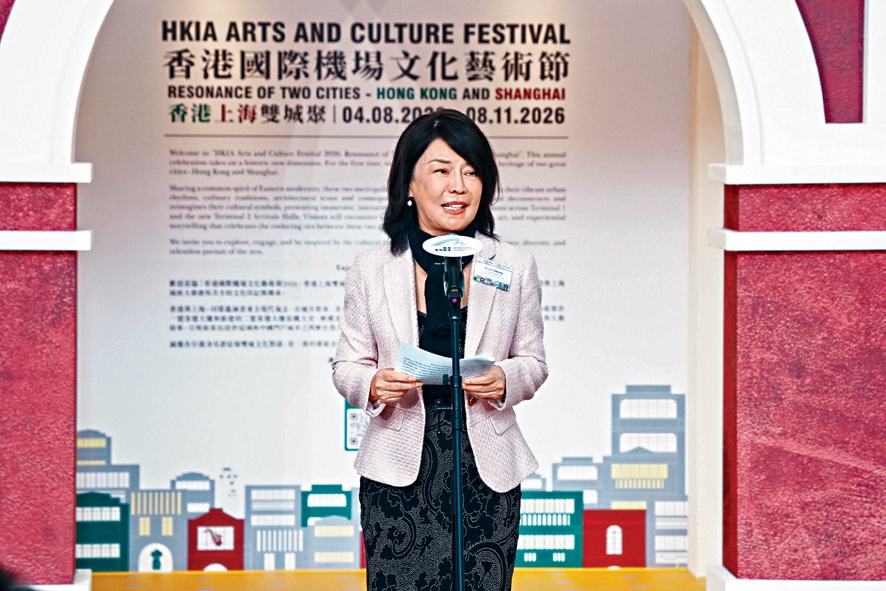
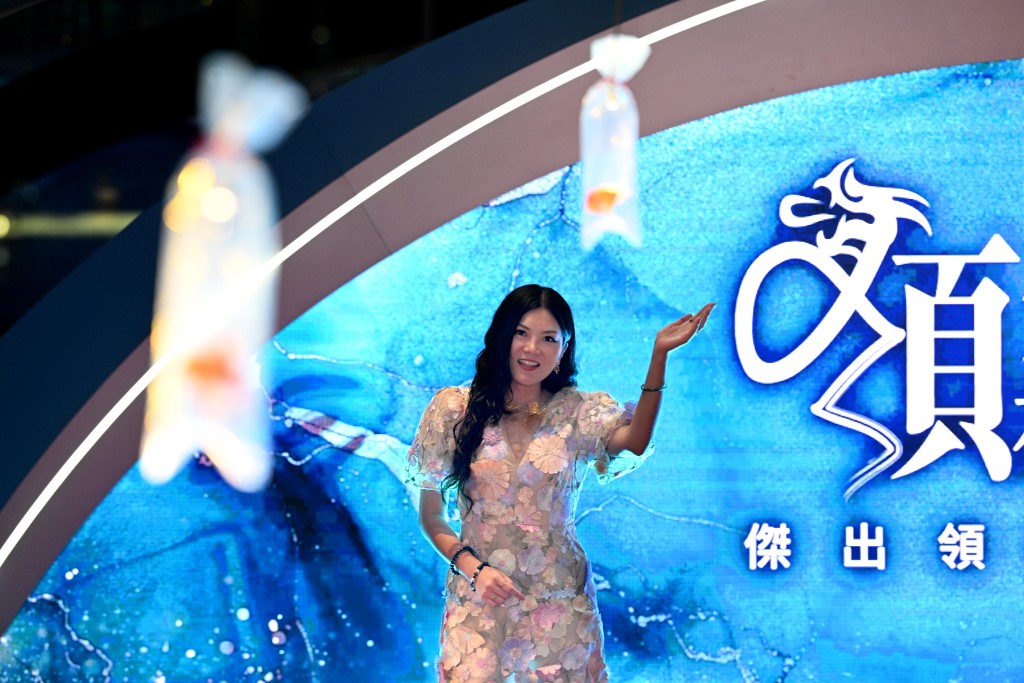
Airport Authority Hong Kong chief executive Vivian Cheung Kar-fay said a simultaneous exhibition will be held at the Shanghai Hongqiao Airport, demonstrating the close collaboration between the twin cities.
From left: Music Bund City Band founder Wang Ye, Joey Tang, and violinist Wong Pui-ying performing The Bund.