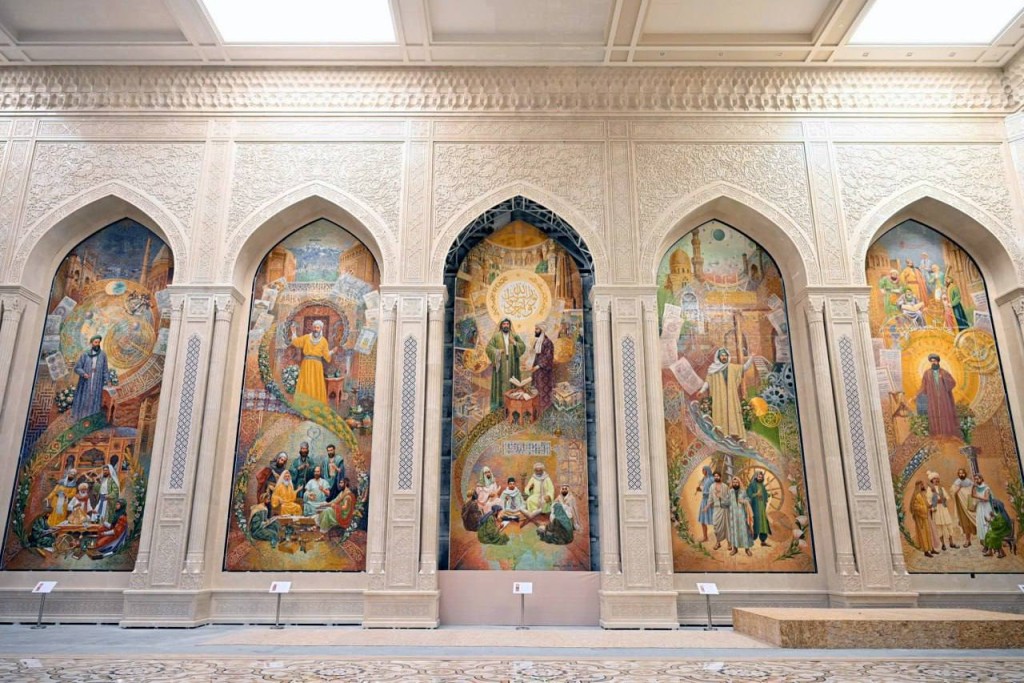
Begin your journey not in a hushed gallery of tiny paintings, but under the vast turquoise dome of Tashkent’s Islamic Civilization Center, where the grand narrative of miniature art unfolds on an epic scale. This monumental complex, the world’s largest museum of Islamic civilization, showcases the very world that gave birth to the miniature – an art form that flourished along the ancient Silk Road, binding together cultures from Persia to India, from Central Asia to the Ottoman Empire.
Miniature painting was never confined by borders. For centuries, it was a widespread visual language of the elite across a vast expanse of present-day Iran, Iraq, Syria, Afghanistan, Turkey, Uzbekistan, Tajikistan, and Northern India. The Timurids elevated it dramatically, and as cultures intertwined along the Silk Road, so did artistic styles. Bukhara in Uzbekistan developed its own lyrical and serene style, which later traveled south with Babur to seed the magnificent flowering of Mughal miniature art in Agra and Delhi. This wasn’t just painting; it was a portable universe of epic poetry, scientific treatises, and royal chronicles, created with squirrel-hair brushes on hand-burnished paper and pigments ground from lapis lazuli and malachite.
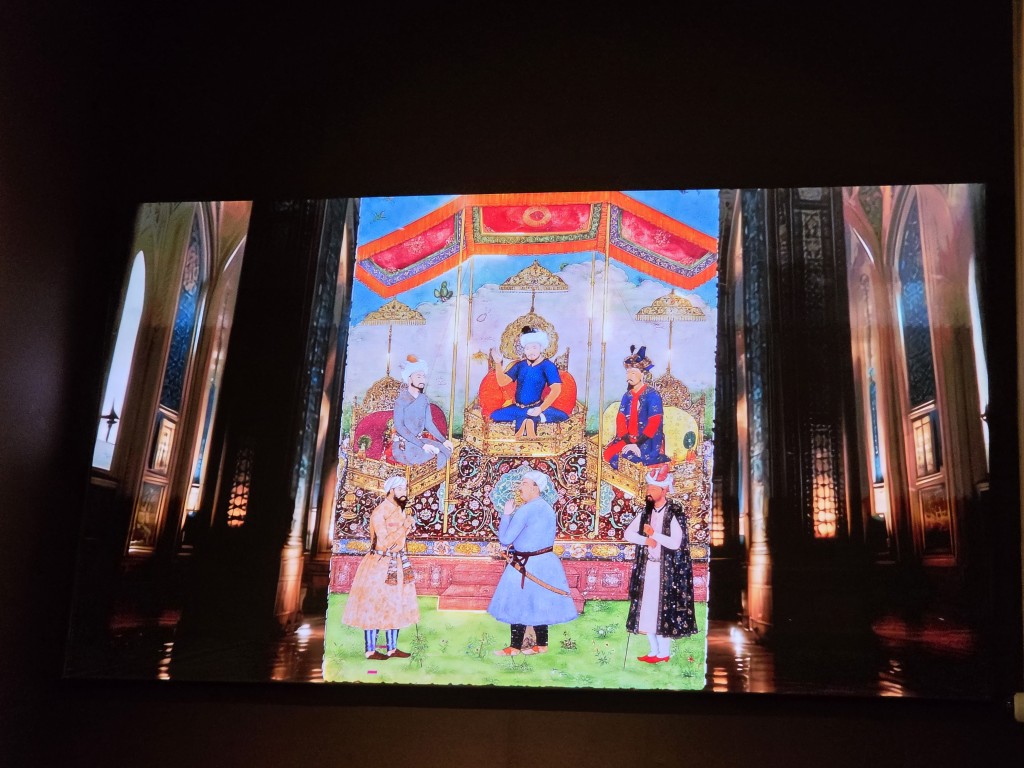
A miniature painting depicting royal lineage is projected in the Islamic Civilization Center
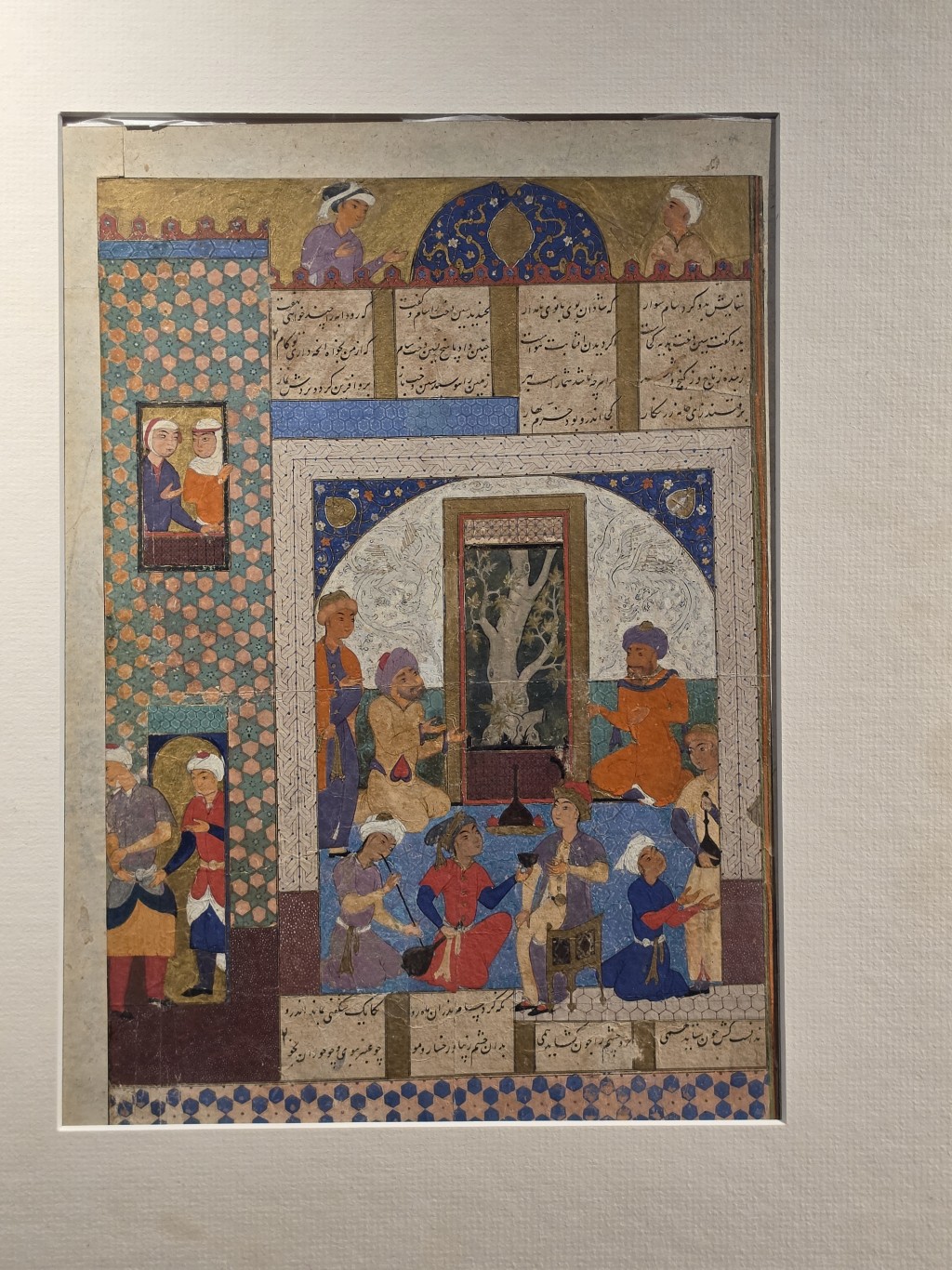
A 16thcentury miniature painting shows a typical style for depicting architecture and various scenes.
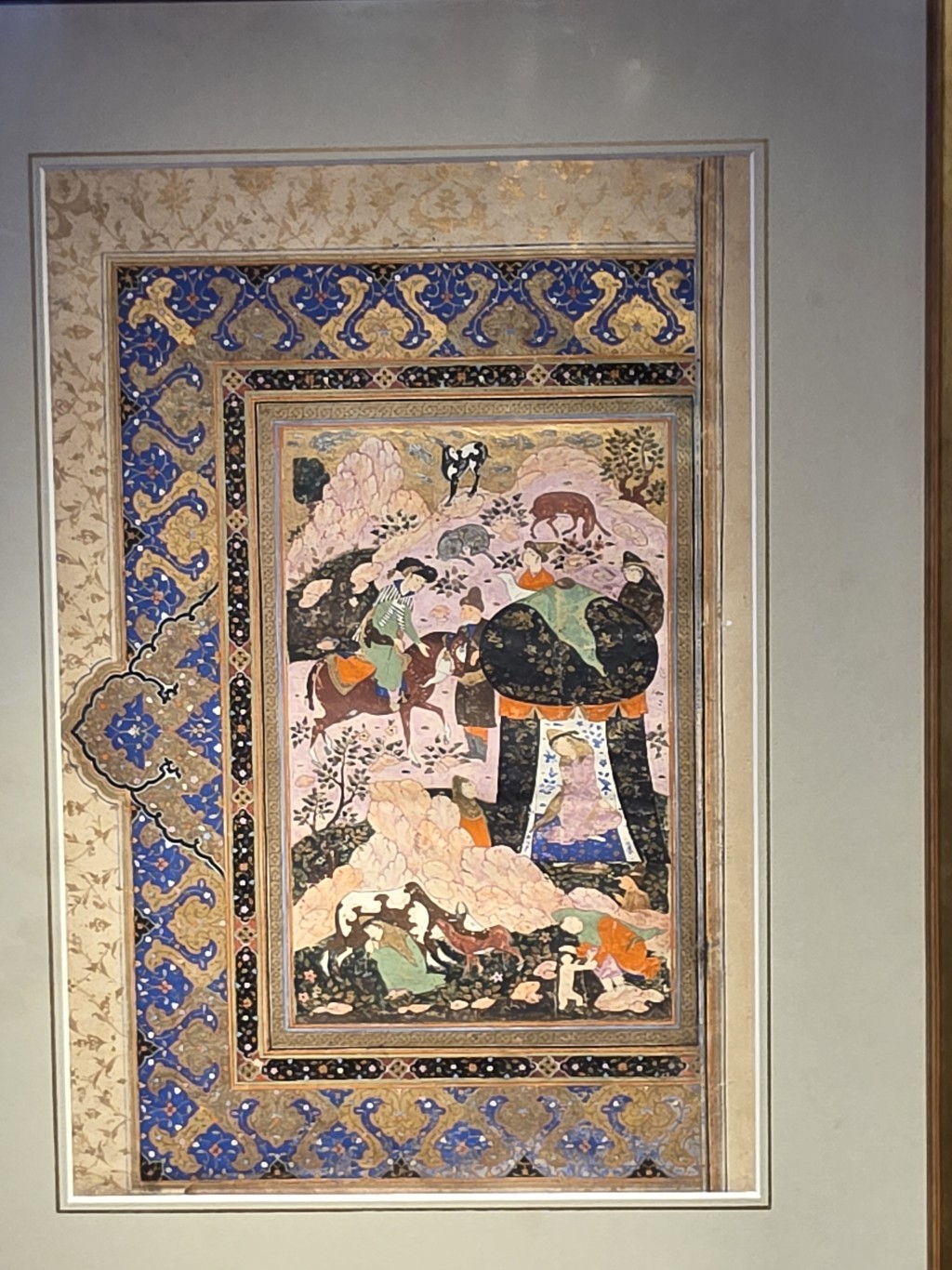
This 17th-century piece of Kamaliddin Behzad school depicts natural landscapes under Chinoiserie style.
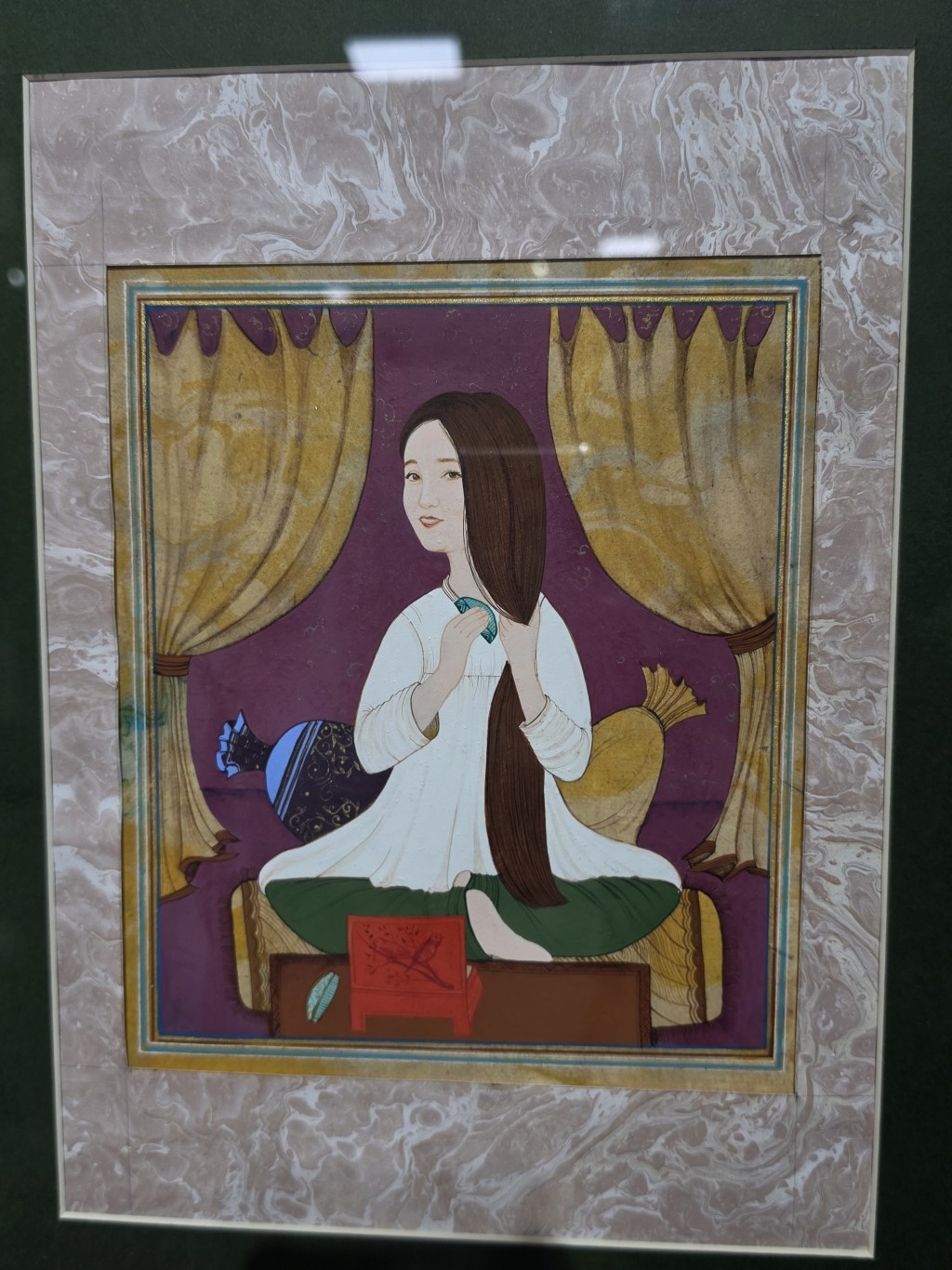
An artist applies miniature technique in painting her self-portrait.
At the Islamic Civilization Center, this sweeping history ignites the imagination. Here, you’ll find a monumental, 100-times enlarged copy of a unique 16th-century miniature by Mir Sayyid Ali Termizi, depicting a lineage of Timurid rulers and their Mughal heirs – Humayun, Akbar, and Jahangir – against a radiant golden sky. Created by a team of artists, this stunning reconstruction is not a relic but a declaration that the tradition is vibrantly alive. Standing before these vast works, the idea of miniature painting is transformed from a quaint craft into a dynamic, narrative powerhouse.
Carry this sense of scale and history a short distance to the Museum of Oriental Miniature Named after Kamaliddin Behzad. While you will find copies of medieval masterpieces from Herat and Tabriz here – the originals now housed in Istanbul and European collections – the museum’s true treasure lies elsewhere. As visitor reviews note, the modern Uzbek miniatures on display show this long artistic tradition to be “a very much alive one.”
Here, the “Raphael of the East” is not just a historical figure; Kamaliddin Behzad, who revolutionized the art in 15th-century Herat by introducing naturalism and everyday scenes, remains a living influence.
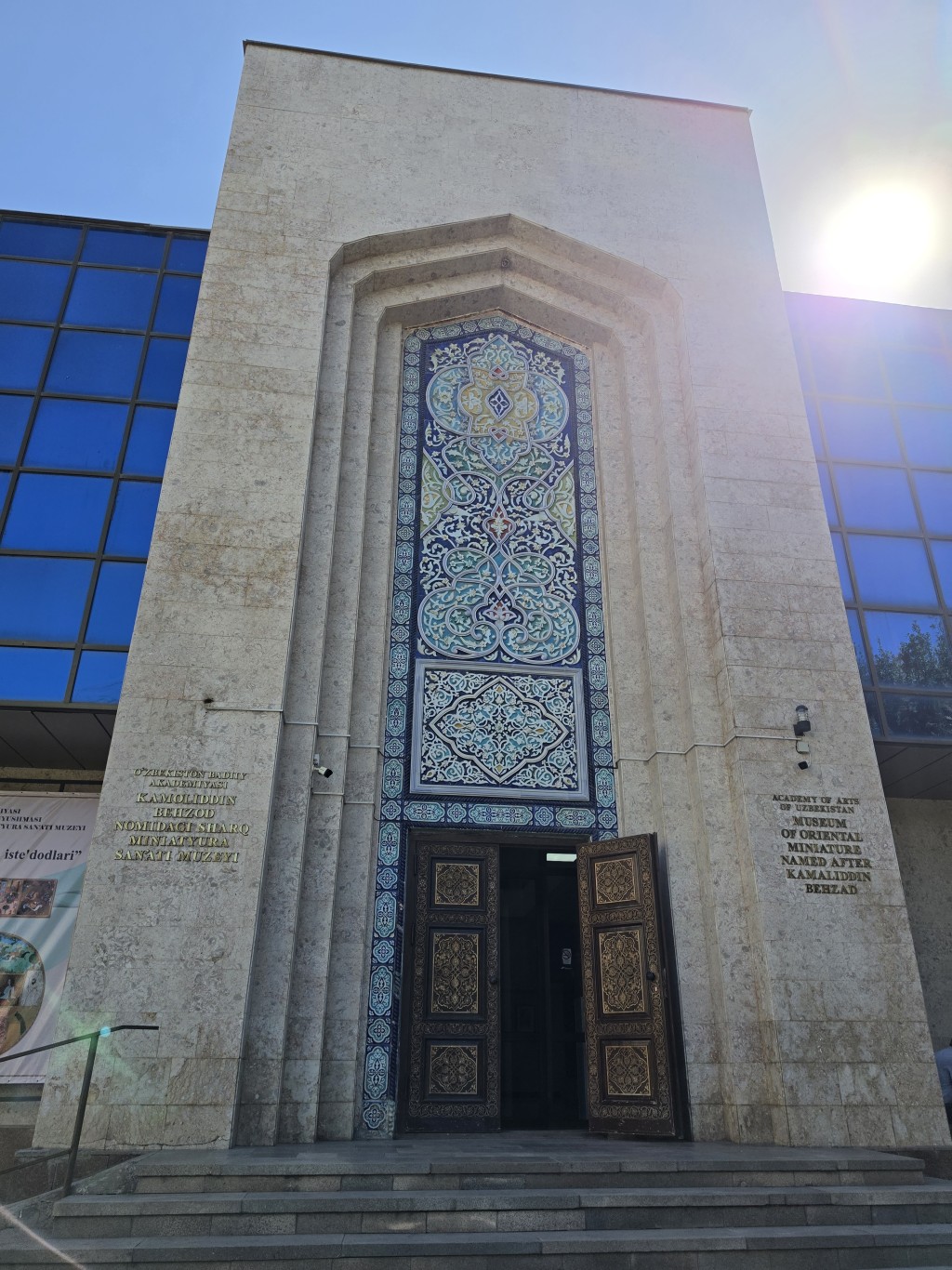
Museum of Oriental Miniature Named after Kamaliddin Behzad.
The museum’s collection, comprising carefully curated replicas and originals of masterpieces from different schools, is a testament to this transformation. You will see how some artists channel the same spiritual tradition of Sufism into Bukhara miniatures, while others explore modern themes of identity and social change. Some artisans continue the traditional craft, painting on Samarkand paper and using watercolors and tempera to depict scenes from the Great Silk Road, delighting modern audiences.
As you study these works, something unexpected emerges: Chinese dragons wrapping around Persian heroes. Phoenixes soaring through Islamic skies. Cloud formations that seem lifted from Song dynasty landscapes. This is the influence of Chinoiserie, a cultural exchange that intensified between the 13th and 15th centuries along the Silk Road.
The Islamic Civilization Center gives you the sweeping epic – the empires, the manuscripts, and the monumental art. The Museum of Oriental Miniature shows you the intimate lyric – the handcrafted details, the cultural exchanges, and the individual stories. Together, they reveal the full, rich journey of an art form that continues to speak across centuries, from the grand halls of history to the personal canvases of contemporary creators.
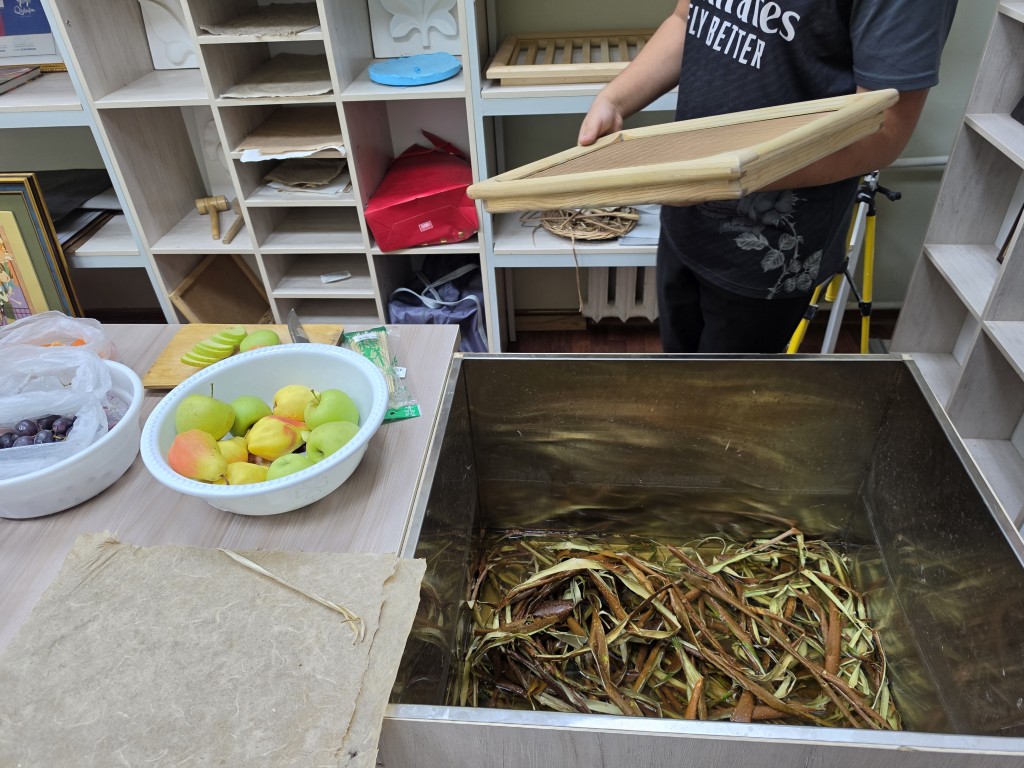
A workshop at the museum shows the making of Samarkand paper from mulberry tree bark.