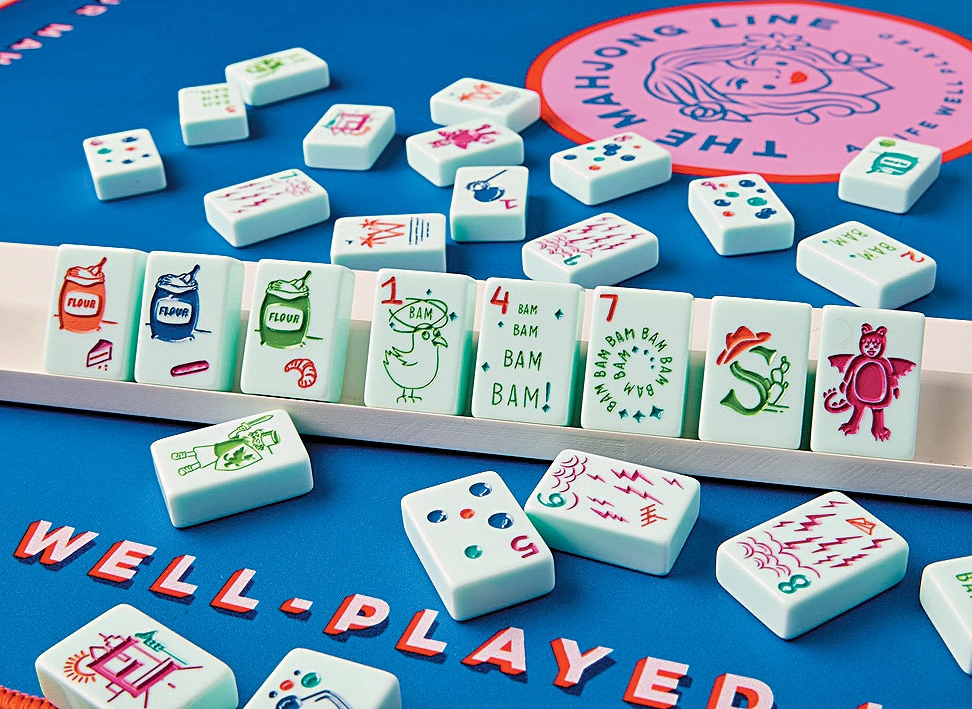
A mahjong craze sweeping the United States in recent years has sparked a cultural clash, with Asian-American communities criticizing US businesses for replacing traditional Chinese characters and motifs on tiles with Westernized designs such as cowboy boots and palm trees.
Originating in 19th-century China, mahjong reached the US in the 1920s, and Jewish-American women founded the National Mah Jongg League in 1937. The game has become a social favorite in recent years, with Yelp searches for "mahjong club" jumping more than 40-fold last year and tables popping up everywhere from libraries and bars to cruise ships and poolsides.
The boom, however, has ignited cultural controversy. In 2021, US luxury mahjong brand The Mahjong Line drew fierce backlash from Asian-American netizens after calling traditional tiles monotonous and in need of a "refresh"—replacing the bamboo and dot suits with the word "BAM!" and bubbles, and swapping traditional flower tiles for pun tiles reading "Flour."
Critics accused the redesign of erasing Chinese-Americans' ties to the centuries-old game. According to D Magazine, The Mahjong Line co-founder Kate LaGere even received a death threat from a woman over the uproar. University of Oregon associate professor of history Annelise Heinz previously told NBC that while mahjong rules and tiles vary around the world, tiles typically retain elements of traditional Chinese motifs.
As mahjong spread globally, multiple variants emerged, including Japanese riichi mahjong, American mahjong and Filipino mahjong. A Facebook mahjong group administrator surnamed Levin told The New York Times: "More traditional groups are very unhappy about American mahjong gradually dominating the conversation around mahjong."
"Many American players don't even know other versions of mahjong exist," she added.
Supporters of American mahjong argue that with the game having been played in the US for nearly a century, cultural evolution through exchange is only natural. Some Chinese-Americans also say they take pride in mahjong's growing popularity in the country, viewing cultural transformation over time as inevitable.
Staff reporter