New York can prohibit the sale of foie gras, a ruling on March 12 by the state Supreme Court's Appellate Division said, according to East Week magazine, a sister publication of The Standard.
This ruling is part of a six-year legal tug-of-war. One of the key groups behind the ban, Voters for Animal Rights, was overjoyed. Chair Allie Taylor said: “The ruling demonstrates the power of citizens pursuing justice and compassion.”
However, the regulation does not prohibit consumers from purchasing foie gras.
In 2019, the city council voted in favor of the ban, with those who breached set to face fines ranging from US$500 (HK$3,903) to US$2,000. However, due to strong opposition from farms, the bill was not enacted as scheduled in 2022.
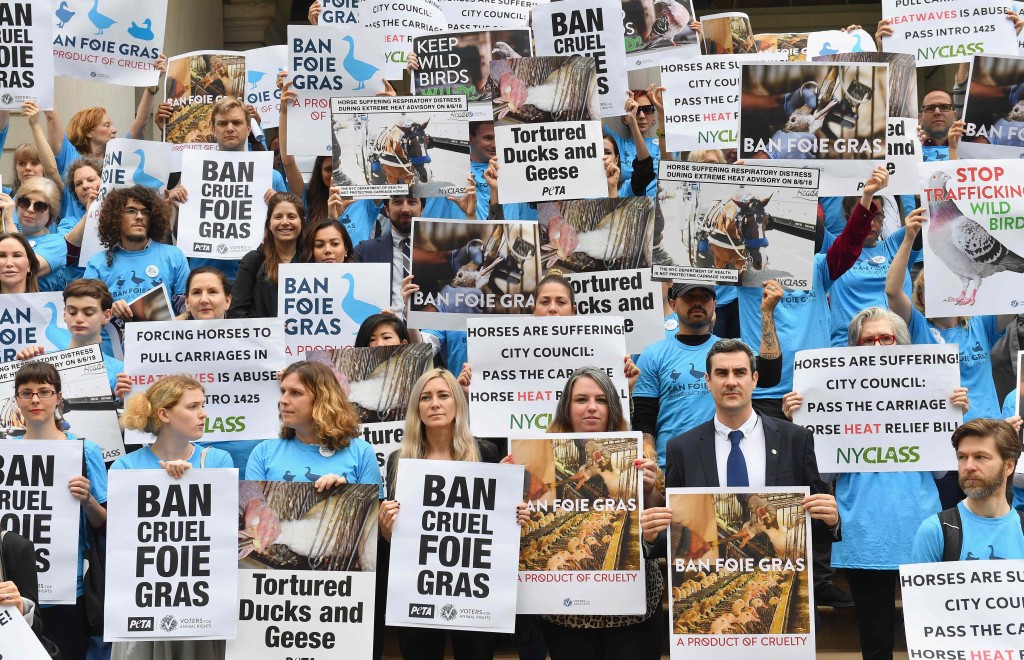
Activists held a rally in support of a bill to ban the sale of foie gras in 2019 at New York City Hall. AFP
New York is home to two of the three major foie gras farms in the US, namely La Belle Farm and Hudson Valley Foie Gras. The city is the primary market for both of the farms, accounting for as much as 30 percent of their revenue. The two farms filed lawsuits against the ban, while the New York State Department of Agriculture and Markets stepped in; the ban was delayed.
Over 350,000 geese are slaughtered each year in Hudson Valley farms and Bella Farms for foie gras production, which often involves forcing geese to consume mixtures of corn and fat two to three times a day, something deemed controversial. Although farmers claim this method is painless for the animal, many criticize the brutal practice of swelling geese's livers up to 10 times their original size.
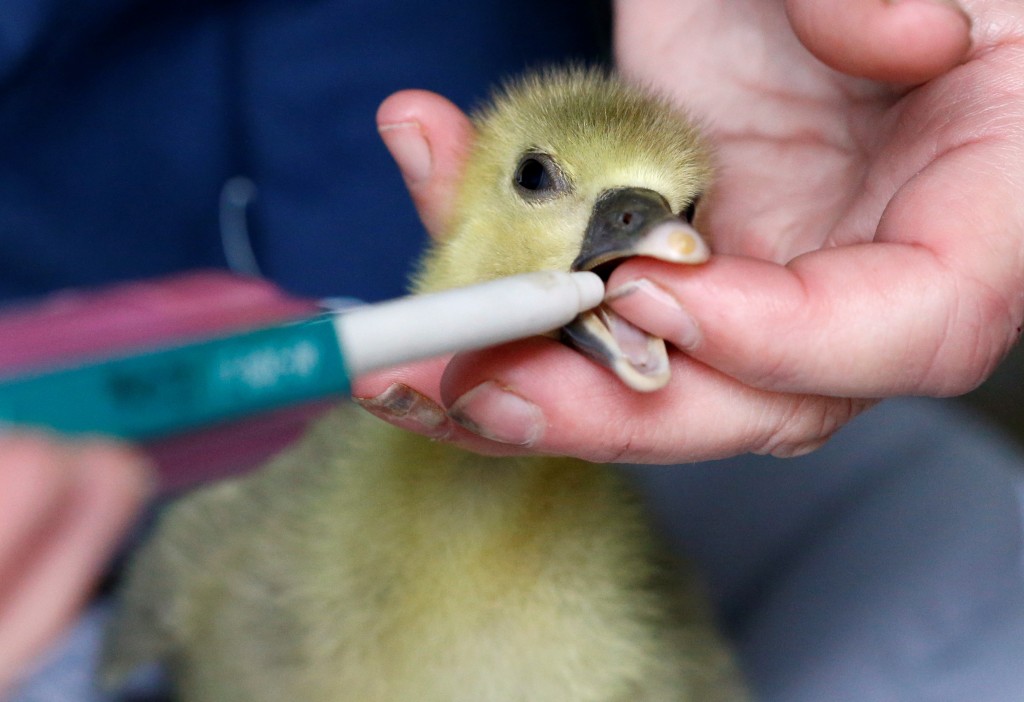
Farmer gives a dose of serum to stimulate fat growth in a gosling's liver. Reuters
Hudson Valley Farms also stated that if the ban took effect, some of its 400 employees might lose their jobs. Meanwhile, Bella Farms said legal expenses alone have cost thousands, noting that the ban would further threaten the farm's survival.
The other US jurisdiction with a foie gras ban is California. When the ban first passed in California in 2004, the state faced backlash from Michelin restaurants and the French government, causing the ban to be delayed and enacted in 2012. Marie-Pierre Pe, chair of the French Interprofessional Committee, has even launched a campaign to defend foie gras; joining hands with Bulgaria and Hungary, and requesting to meet the US secretary of Agriculture in efforts to persuade California to lift the ban.
Animal welfare organizations are pushing the ban to other parts of the country. In Denver, Colorado, the animal rights advocacy group Pro-Animal Colorado urged for the “Bill to Prohibit Force-Feeding of Birds” to be included in the November city ballot. If the ban is approved, it will take effect in July 2027, with violators facing fines of US$1,000 to US$5,000. Portland in Oregon is also considering banning the sale of foie gras produced through force-feeding, and violators could face fines of up to US$5,000.
These bans have led to artificial foie gras emerging on shelves. The US-based Prime Roots partnered with Fabrique Delices from France in 2023 to launch the first artificial foie gras in California made from fungal protein. However, Florida and Texas implemented bans on the import of “artificial meat” to protect their agribusinesses.