






Read More




Nvidia stops shipping US-approved AI chips to China
18-11-2026 18:00 HKT



HK filmmaker Peter Yung's house in Lantau Island sold for $2.88 million
18-11-2026 18:44 HKT
A decade after the UK voted to leave the European Union, the bloc's proposed "Made in Europe" rules are testing the country's vision of a "global Britain" that can pursue its own trade deals with partners around the world.
That was a key argument for Brexit: The UK would not be bound by EU policies set in Brussels. But tougher geopolitical conditions and rising European protectionism are forcing Britain's government to choose between closer ties with its neighbours and much-needed investment from China, current and former UK policy advisers say.
The EU's scheme would require companies to include a certain percentage of European-made components as a condition of accessing EU subsidies or selling to EU governments and agencies.
The main goal is to help manufacturers in sectors including electric vehicles and batteries compete against cheap Chinese imports, but it would also exclude products made in the UK.
British Prime Minister Andy Burnham — who has sought closer ties to the EU since taking office in July — wants UK-built cars and components to count as "made in Europe" under the rules.
"The EU and the UK face many of the same challenges, which is why it is vital we protect trade flows between us," a British government spokesperson told Reuters.
Talks ahead of a summit with EU leaders in Brussels on Friday are proving difficult, however. Key EU member states say Britain, to participate, must align with the bloc on trade protection measures and conditions for investment from third countries.
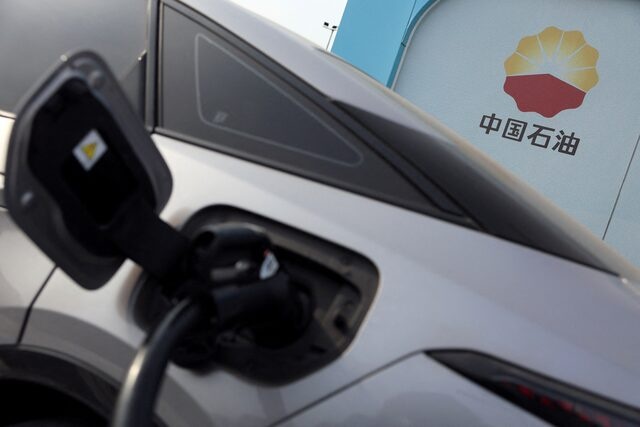
That could mean Britain would have to impose tariffs on Chinese-built EVs — risking a confrontation with Beijing that Burnham would rather avoid. Slapping import taxes on Chinese cars — as the EU has done — could have broader ramifications for the UK's trade with China and related living costs and climate goals.
Last month, China's embassy in London said it was "firmly opposed to any discriminatory practice" involving Chinese products and had raised the matter with British authorities. China would follow developments and "respond accordingly," the embassy said on its website.
The British government didn't comment on China's statement.
"The risk for the UK is that it becomes an easy target for the Chinese to whack because it's relatively exposed, and they know it hasn't got EU protection," said Peter Hill, a senior Downing Street aide under Prime Minister Theresa May and former trade negotiator at the European Commission.
Policy experts said the standoff over cars would likely be replicated over time in other sensitive areas, such as AI regulation.
The rising trade tensions between the EU and China put Burnham's government in a particularly tight spot, according to interviews with nearly 20 political, trade and policy advisers, car industry executives and consumers.
The UK has a largely foreign-owned auto sector that's benefiting from an influx of Chinese investment. At stake is an industry that contributed about 830,000 jobs and £18 billion ($23.66 billion) in added value to the national economy in 2025, according to data from Britain's Society of Motor Manufacturers and Traders (SMMT).
Automotive investment in the UK plunged after the 2016 Brexit vote, with Honda shutting a UK plant in 2021 and Stellantis in 2025. Large auto suppliers have also cut jobs and shut plants across the continent due to weakening demand for combustion-engine vehicles and intense competition with China.
But Chinese automakers are expanding, adding dealerships and jobs across the UK.
Last week, Chinese premium EV maker Xpeng said it would add five new models over the next 12 months to the two it already sells in Britain and expand its dealership network to around 100 locations in 2027, four times the current figure.
China's top car exporter, Chery, has established a British research and development centre and is considering assembling its vehicles in northern England.
"Britain needs that industrial investment," said Philip Nothard, insight director at dealer services firm Cox Automotive.
UK consumers, especially in financially strapped households, appreciate the lower prices of Chinese brands. China's share of UK domestic car sales increased to 17.8% in the year to end-October — double the share in the same period in 2025, SMMT data showed.
In addition, Britain needs rapid uptake of EVs to reach its goal of net-zero greenhouse-gas emissions by 2050.
But the speed with which Chinese firms are taking market share has shaken the British car industry. Executives from other car companies want the country to adopt the EU's economic protection policies.
"Everything we're talking about should be … in service of Europe, not in service of China," said Jim Baumbick, Ford's F.N president in Europe.
The company's 13,000 UK employees are "ready to compete," he told Reuters. "But they want to compete on a fair playing field."
British manufacturers can't afford to be shut out of EU government-purchasing and subsidy schemes, according to the experts and executives who spoke to Reuters.
That would be an "existential" threat, throwing into question the viability of UK plants, said David Bailey, professor of business economics at the University of Birmingham. Of the 717,000 cars built in Britain in 2025, nearly 57% were exported to the EU, SMMT data shows. Another 6% went to China, a key destination for companies such as Jaguar Land Rover.
British business secretary Jonathan Reynolds has made finding a solution to the Made in Europe threat a top priority, routinely talking to EU counterparts and executives in the British car industry, according to one person familiar with the matter.
EU governments and the European Parliament must still agree to a final text for the scheme, including how it will treat allies such as the UK. Italy's minister for enterprises, Adolfo Urso, told Reynolds in London this month that his country supports Britain's inclusion provided there is reciprocity on trade protections and tariffs, including on steel, a separate official told Reuters. France and Germany expressed similar views in an October paper.
Efforts to agree on a joint UK-EU statement for Friday's summit suggest negotiations won't be easy.
While an early draft seen by Reuters suggested Britain would align its policies with the EU under a "trusted partnership," a later draft dropped that language, indicating there was no agreement on a special status for Britain.
The EU has imposed tariffs of up to 45% on Chinese-made EVs and curbed imports of hybrid vehicles. A European official said there was an ongoing discussion about whether the UK would follow suit.
UK consumers are watching closely.
Peter Yeo, 57, bought a Jaecoo 7 plug-in hybrid in March and has since set up a blog where he and around 6,000 owners discuss the car. Chery's Jaecoo 7 was Britain's top-selling car in October.
"The specification of the car is so high compared to similar-price alternatives," Yeo said. "As a consumer, I think the competition is good."
Reuters