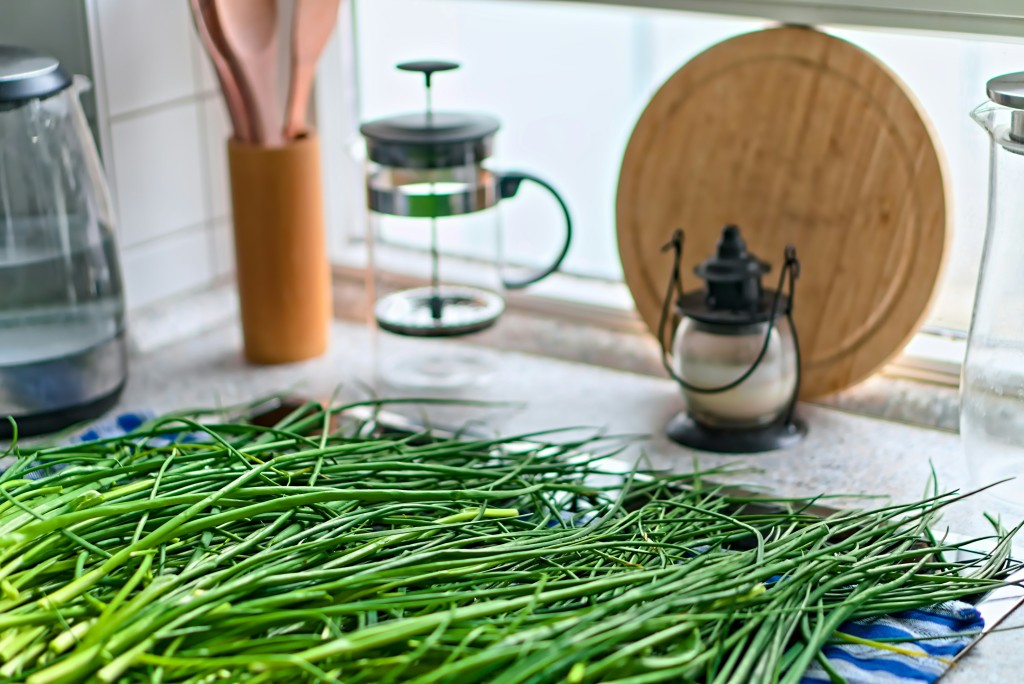
Many people, after buying groceries, are used to putting the whole bag of chives directly into the fridge, thinking this preserves freshness. However, this practice actually accelerates chive spoilage. Experts point out that if chives are refrigerated together with the packaging bag, the moisture inside the bag cannot dissipate, easily causing leaf damage, blackening, and even slime, affecting food safety.
Risks of Storing in the Bag: Moisture Accelerates Spoilage
Japanese cooking expert Papuchan points out that chives themselves have a high moisture content. If left in the bag for a long time, excessive moisture will accumulate inside the bag. When the moisture condenses into water droplets and attaches to the leaves, it becomes a breeding ground for bacteria. Common signs of spoilage include:
-
Leaves becoming limp and losing elasticity
-
Some areas turning black or discolored
-
A slimy feeling appearing on the surface
If you find the inner wall of the packaging bag covered in water droplets, it means the humidity is too high and the chives have begun to spoil, and they should be dealt with as soon as possible.
Correct Method: Absorb Moisture with Kitchen Paper, Then Wrap
To extend the freshness of chives, the key is to control moisture. Experts suggest using kitchen paper towels as an aid, with the following steps:
-
Take out the chives: First take the chives out of the packaging bag. Do not refrigerate them in the bag.
-
Wrap in paper towel: Use a dry kitchen paper towel to wrap the whole bunch of chives. The paper towel can absorb excess moisture.
-
Wrap the outer layer in plastic wrap: Wrap another layer of plastic wrap around the outside of the paper towel to block other moisture in the fridge.
-
Put in the vegetable drawer: Place in the vegetable crisper in the lower part of the fridge, where the temperature is more stable and suitable for storing leafy vegetables.
Extra Freshness Tips
-
Do not wash before storing: Water on the surface of chives will accelerate rotting. They should be washed only before cooking.
-
Avoid squeezing: Chives should be laid flat and not pressed by other heavy objects, to avoid damaging the leaves.
-
Eat as soon as possible: Even with correct storage, chives are still a perishable vegetable, and it is recommended to eat them as soon as possible after purchase.
-
Freezer storage: If they cannot be used up within a short time, chives can be cut into sections, put into a freezer bag, with the air squeezed out, and then frozen.
Chives Are Nutritious: Prevent Colon Cancer, Lower Blood Lipids, and Help Brain Development
Dietitian Li Wan-ping points out that chives are nutritious and have the effects of lowering blood lipids and preventing colon cancer. Their dietary fiber content is high, and children prone to constipation can consume them in moderation. Chives contain sulfur compounds, which can sterilize, fight oxidation, and increase appetite; their rich vitamin C and iron help strengthen resistance and protect children's health.
Many children dislike the smell of chives. Their special odor comes from sulfur-containing aromatic components, which help regulate the autonomic nervous system. Parents can chop chives and scramble them with eggs. Egg yolk contains lecithin, which is beneficial for children's IQ development and brain nerve transmission, helping improve concentration and memory.
Every 100 g of chives has the following nutrition:
Source: Cooking expert Papuchan, Dietitian Li Wan-ping