Doing dishes every day, have you actually been using the yellow and green sides of a scouring pad wrong all along? 3M's official website teaches the correct way to use the yellow and green sides of a scouring pad, and with 1 action, cleaning power soars. Exactly how should a scouring pad be disinfected to prevent it from becoming a breeding ground for harmful bacteria?
According to information on the official website of the well-known brand 3M, the yellow and green sides of a scouring pad each have their own dedicated function, and this clever design has led many citizens to exclaim, "So I've been using it wrong all along":
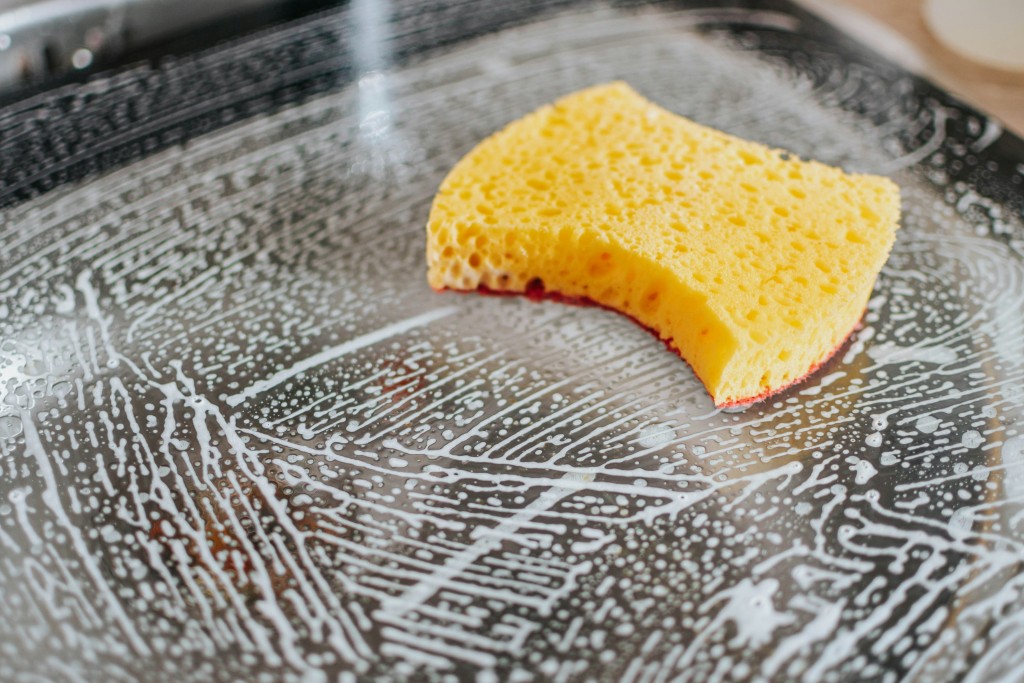
Yellow sponge side: The material is extremely soft and does not contain emery. It is mainly used to help create foam, and is suitable for gently washing everyday tableware and teacups made of general ceramics, glass, and melamine.
Green non-woven fabric side: It contains strong emery and has an abrasive effect. It is specially designed for iron or stainless steel kitchenware, and is suitable for cleaning stubborn, thick grime on gas stoves, range hoods, cast iron woks, or stainless steel pots.
Many citizens mistakenly think the yellow side is just foam for holding, but 3M's official information points out that the yellow sponge side is soft and highly elastic, and has the following important uses:
After dishwashing liquid and water seep into the pores, pressing and rubbing can produce a large amount of foam, thereby saving the amount of dishwashing liquid while greatly improving cleaning power. If you encounter delicate cookware or non-stick pans whose surface coating is easily scratched, you can use the yellow sponge side for cleaning. While effectively removing oil stains and dirt, it absolutely will not scratch the surface of tableware and cookware. The highly absorbent sponge side can also assist the green rough side, making it easier to reach deep into and thoroughly clean dead corners and edges that ordinary scouring pads find hard to clean.
4 Ways to Correctly Disinfect a Scouring Pad
Although a scouring pad is a cleaning tool, it itself very easily hides dirt. If you do not pay attention to cleaning it, the more you use it, the dirtier it gets, and instead it will transfer bacteria to tableware. According to a report by Southern Living, home economics and fabric care expert Mary Marlowe Leverette recommends the following 4 methods recognized as the most effective for killing harmful bacteria on scouring pads:
1. Use a Microwave
The United States Department of Agriculture found that heating in a microwave can kill up to 99.99% of bacteria on a scouring pad, but note that scouring pads containing metal steel wool components must not be put in the microwave.
Materials: scouring pad, water, microwave, drying rack
Steps:
-
First rinse off obvious food residue on the scouring pad with water, and let it fully absorb water.
-
Place in a microwave-safe bowl and heat in the microwave for 1 minute.
-
After the scouring pad cools for 10 to 15 minutes, wring out the water.
-
Place on a ventilated drying rack to air dry.
2. Use a Dishwasher
The United States Department of Agriculture confirmed that washing a scouring pad in a dishwasher can effectively kill 99.98% of bacteria.
Materials: scouring pad, dishwashing liquid, dishwasher
Steps:
-
Place the scouring pad on the upper rack of the dishwasher.
-
Add dishwashing liquid, select the standard cleaning program with the highest temperature and longest time, and it must include a drying program.
3. Use Boiling Water
Materials: scouring pad, stove, flat-bottomed pan, water, drying rack
Steps:
-
Pour at least two cups of clean water into the pan and heat over fire until boiling.
-
Put in the scouring pad and keep boiling for 5 minutes.
-
Let the water and scouring pad cool, then take it out and wring it dry, and place it on a drying rack to air dry thoroughly.
4. Use Chlorine Bleach
Materials: scouring pad, concentrated chlorine bleach, measuring spoon, glass or plastic basin, warm water, drying rack
Steps:
-
Pour about 1 liter of warm water into a glass or plastic bowl, add half a teaspoon of concentrated chlorine bleach, and mix well.
-
Put in the scouring pad and make sure it is completely soaked.
-
Let it soak for 1 minute, then take it out and wring it dry, and place it on a drying rack to air dry.