Read More
It was a total slap in the face when Chief Executive John Lee Ka-chiu singled out the secretary for culture, sports and tourism for criticism in the policy address.Lee certainly could have done and, indeed, is believed to have done so before publicly naming and shaming Yeung.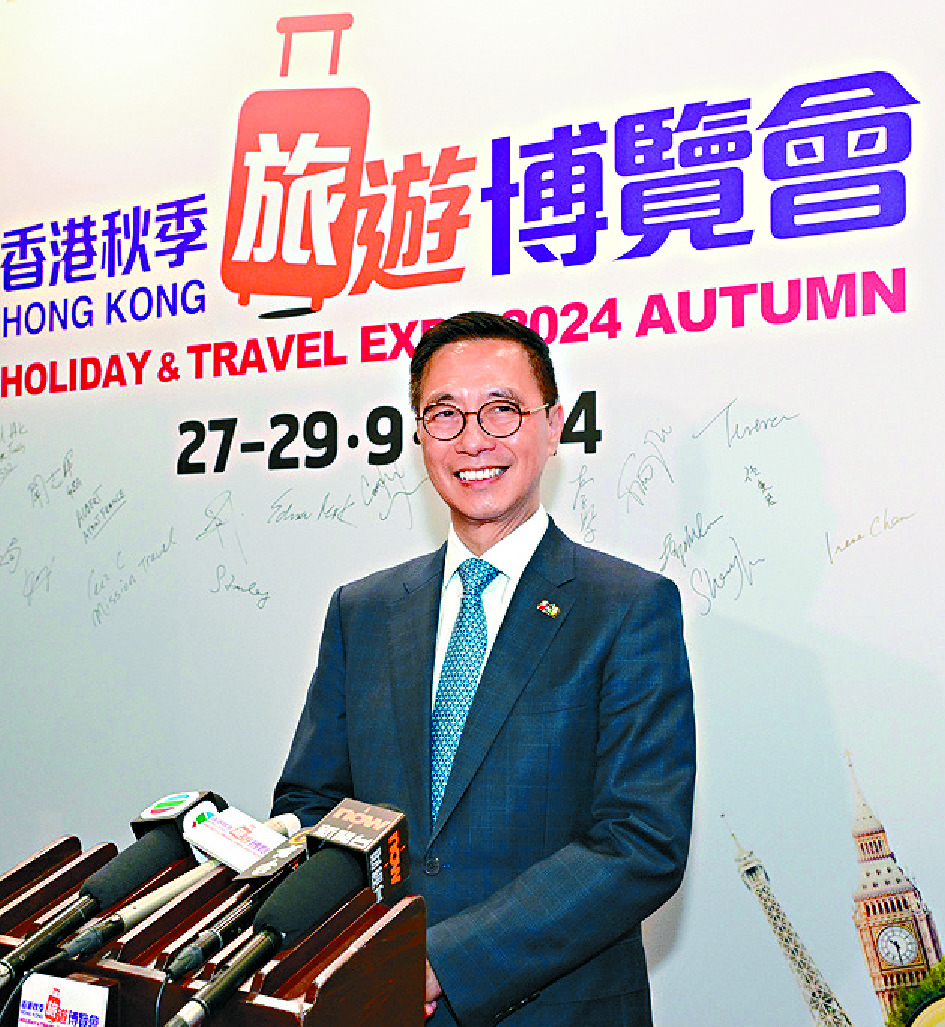
Could the city's leader have opted instead to communicate behind closed doors with Kevin Yeung Yun-hung - the minister under criticism - his concern about his failure to produce an industry blueprint for arts, culture and creative?
ADVERTISEMENT
SCROLL TO CONTINUE WITH CONTENT
Even those not in a senior management position would be able to understand the paragraph of about 150 Chinese characters, or 140 English words, in the annex of the address as an ultimatum in writing - and those in Beijing could also see it.
During one of his meetings with SAR officials, Hong Kong and Macao Affairs director Xia Baolong said tourism was to be found everywhere here at a time when many Hong Kong retailers and restaurateurs started moaning about the loss of customers to competitors in Shenzhen and the Greater Bay Area.
Before Xia's remarks, Yeung had already been given the task of drawing up a master plan to develop an industry out of arts and culture, which are also closely tied to creativity.
The argument has always been simple: if Japan and South Korea can succeed in this, then why can't Hong Kong?Having been named and shamed, Yeung was quick to reply on Facebook, pledging to further consult members of the Culture Commission and committing to publishing a master plan within the year.
Interestingly, he did not forget to put the West Kowloon Cultural District Authority in charge of building an industry chain for arts, culture and creative.Swiftly, the West Kowloon Cultural District Authority - chaired by CPPCC standing committee member and former chief secretary Henry Tang Ying-yen - was tasked with the lead role to produce an industrial plan for the policy areas overseen by the minister.
Perhaps Yeung - as well as anyone else in the administration - may look no further than Japan and South Korea for aspiration since both have experienced strong growth in arts, culture and creative industries in recent years.The "Korean wave" has gained popularity around the world since the 1990s and Japan has a hugely diverse cultural industry, from popular entertainment to comics and anime.
South Korea's pop culture and arts industries were estimated to have generated around 11.4 trillion won (HK$60 billion) in total sales in 2022, exporting content worth billions of dollars.Closer to the city recently was the mainland's global launch of Black Myth: Wukong, which took game players around the world by storm.
The West Kowloon authority definitely has a role to play but it would be misleading to assign it the leading role if Yeung understands what he is expected to deliver by both the chief executive and Beijing. Arts, culture and creative industries are not only about museums and performing arts. They are about almost everything imaginable, be it Korea's Gangnam-style dance, Japan's comics or China's Wukong.Kevin Yeung