Read More
How many times has the city's "pay-as-you-throw" waste charging scheme been postponed? It's easy to lose count.
ADVERTISEMENT
SCROLL TO CONTINUE WITH CONTENT
Worse still, speculation that the scheme may not take off at all mounted recently in light of repeated remarks by senior government officials that they were not quite happy with the feedback received so far to an ongoing pilot trial.
Remarks by top officials, including Environment Secretary Tse Chin-wan, have inevitably left listeners speculating about what these administration officials are actually thinking right now about the scheme's future.
Are they going to shelve the waste-charging scheme for good or launch it in August as planned?
It would be irresponsible to totally ditch the scheme after the Legislative Council completed the legislative process to give effect to the scheme.
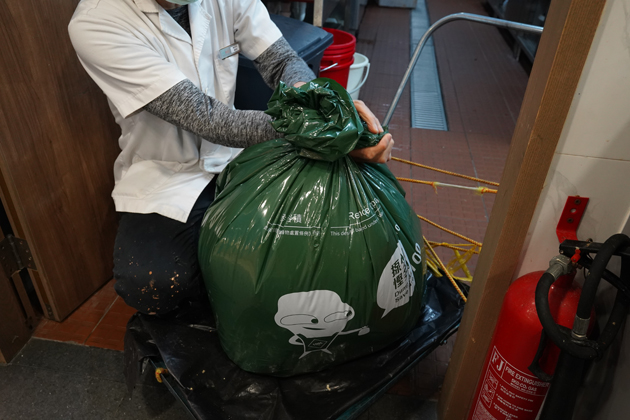
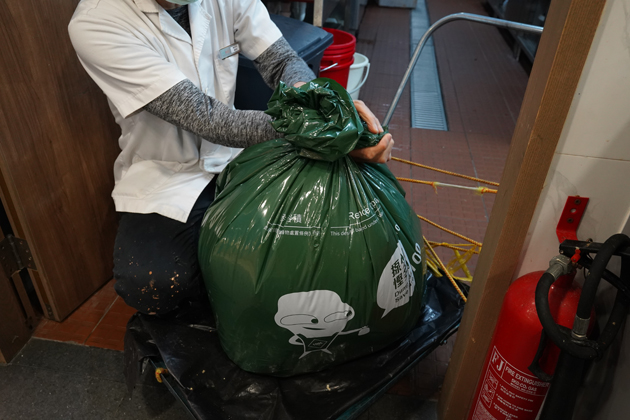
It asks every household to buy bags specified by the government and dump waste in these labeled bags.
According to the current arrangement, cleaners are also required to comply with the regulation to put these individual bags into much bigger bags designated for the use after collecting them from individual households.
Needless to say, many households and janitors would be happy if the scheme were shelved entirely, but this would make a mockery of the rule of law.
When a law is passed, it is supposed to be upheld, not cast aside when desired.
If the scheme could be dropped despite the due legislative process it underwent, does it mean that other statutory schemes or legal provisions could also be ignored at random? Apparently, this is not the case.
As I have said in this column before, the scheme is not wrong in principle, but the question is how it is going to be enacted.
All roads may lead to Rome, but some routes are easier, some tougher. By the same token, there are many ways to implement the waste charging scheme - some smart, some less so.
A simple scheme should never be made complicated. As the pilot trial of the bag-charging scheme continues, it has become evident that the way it has been devised is less than smart, complicating a program that should be simple.
When both households and cleaners say it is troublesome to follow the prescribed procedures, it means there is room to simplify things.
Perhaps the only parties happy with the current arrangement are the suppliers of the designated bags.
Their contracts to produce tonnes of the plastic bags will guarantee revenue even when the economy is going through difficult times.
How much are these deals worth? That's more than a million-dollar question.
It is unlikely that the administration will shelve the scheme by either ditching it altogether or postponing its launch indefinitely because, as said, this would make a mockery of the rule of law when government officials could not have done more to stress such importance.
The only alternative left - without scuppering the law that was passed only three years ago - is to modify the scheme to make it practical and convenient to follow.
The environment secretary is obliged to come up with a better solution.
Hopefully, the scheme will take off with no further delay.