Read More
The UK's Labour party did well in the local and mayoral elections, though not as well as one might have expected.
ADVERTISEMENT
SCROLL TO CONTINUE WITH CONTENT
While performing better than it did in the 2019 local elections, Labour failed to score further from the gains it made in the local elections in 2023 as far as its share of the votes nationwide were concerned.
On the contrary, smaller parties fared better, with the Liberal Democrats and Greens securing way more seats than anticipated.
In Wokingham, a BNO migrant from Hong Kong and ex-Hong Kong district council member Andy Ng Siu-hong ran as a Liberal Democrat candidate and won a seat on the local council.
Meanwhile, a smaller number of the votes lost by the Conservatives went to Reform UK.
While it had been expected that the Tories, led by Rishi Sunak, would suffer one of the biggest electoral losses in the party's history, it became apparent that Labour was unable to win over most of the defected votes.
It is also clear that those who had voted for the Conservatives over the years did not pass their ballots automatically to Labour.
Instead, a significant number chose smaller alternatives despite knowing that these parties would not be big enough to upset a scenario dominated by the Conservatives and Labour. Many voted in protest.
In giving their votes to either the Liberal Democrats, Greens or Reform UK, these former Conservative voters were making a statement that they disliked the party leadership of Sunak, who was installed in a coup without calling a national party vote.
Within the party, those who had voted for Boris Johnson would not support Sunak after seeing his involvement in two party coups - one toppling Johnson and the other forcing out Liz Truss, a Johnson supporter.
The split among the Tories was similar to the divide among the US Republicans.
Those who voted for Donald Trump in the past two presidential elections continue to support him in the upcoming presidential election later this year.
Had the UK local elections been held earlier rather than so close to a general election that the prime minister must call before yearend, Sunak would have been expected to step down to own the devastating election defeat.
There had been calls for Sunak to quit prior to the local elections but such voices have largely subsided since the vote.
It is not that party members wanted him but that no one would be silly enough to take over from him only to be blamed for an inevitable defeat in the general election that will have to be called very soon.
One of the major messages to take away from last week's local election is that while Labour is on course to become the largest party in parliament after the next general election, it may be unable to win an overall majority to control the house without forming a coalition with a smaller party.
The Liberal Democrats to which an ex-Hong Kong district council member is affiliated could well be the king-maker after the general election.
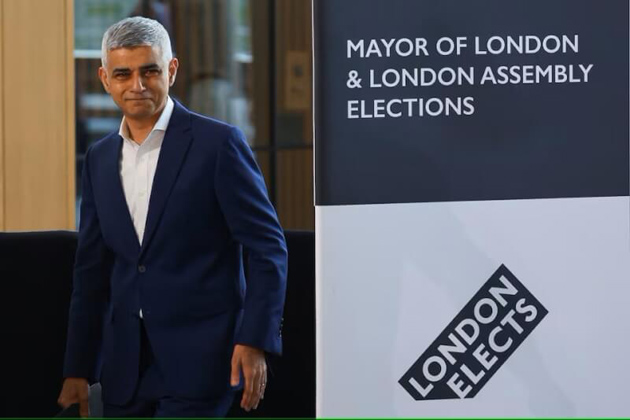
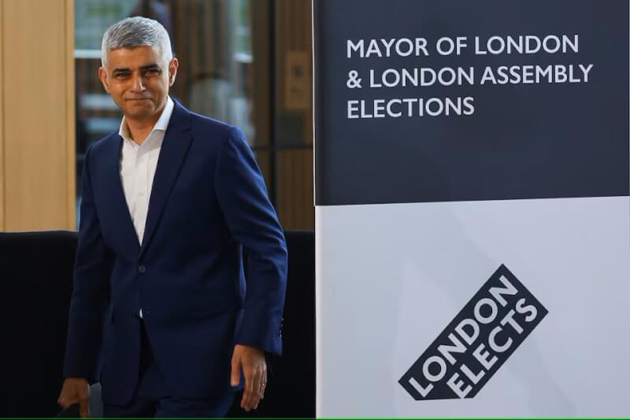
London mayor Sadiq Khan