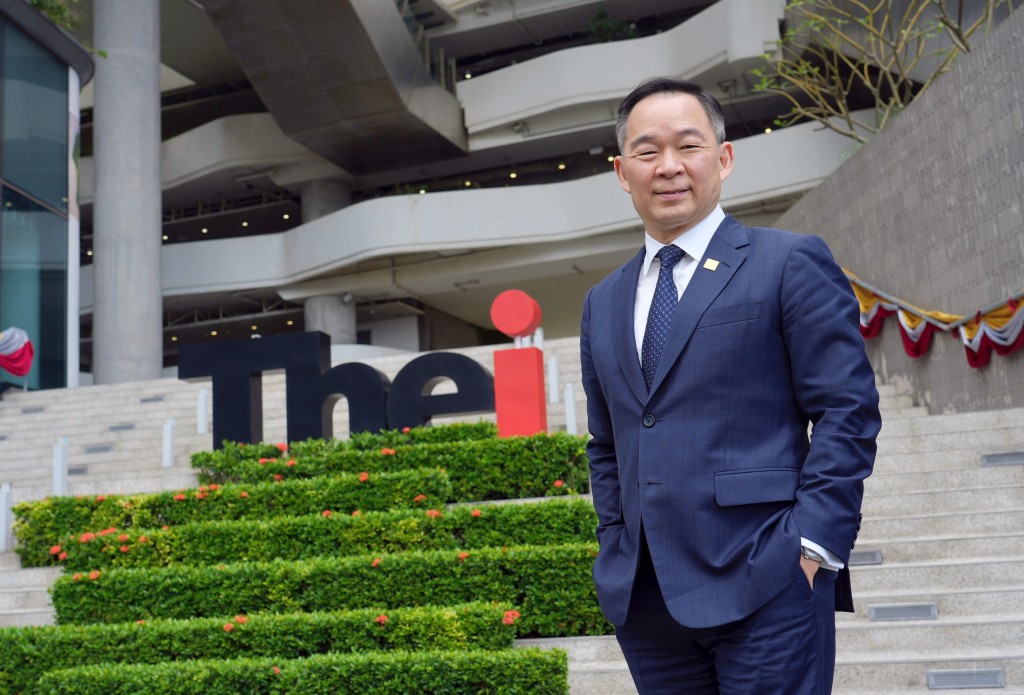
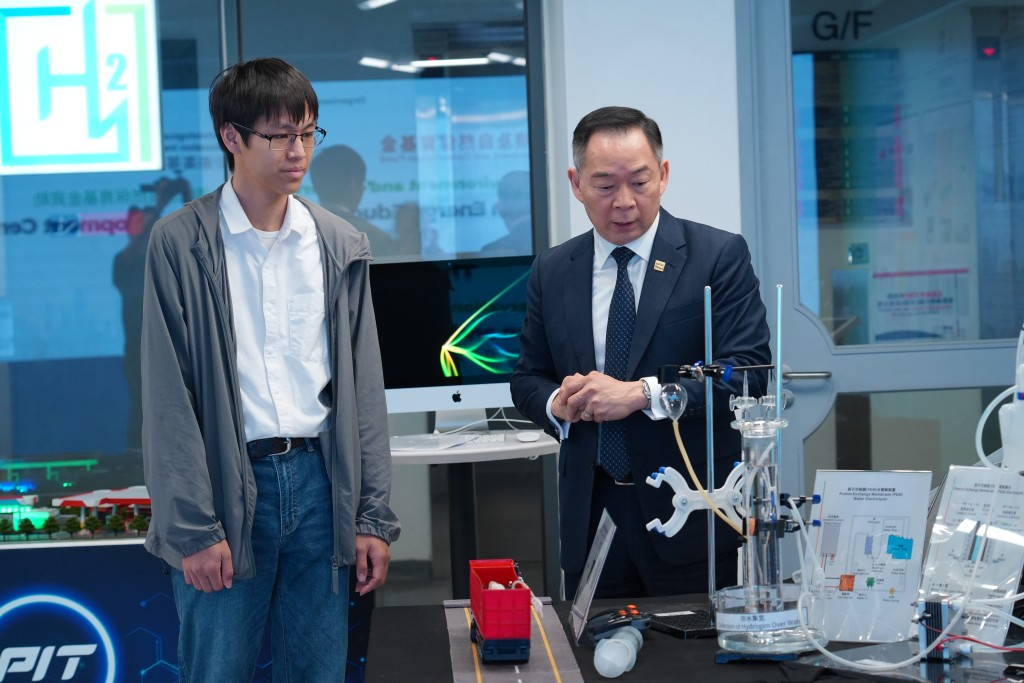
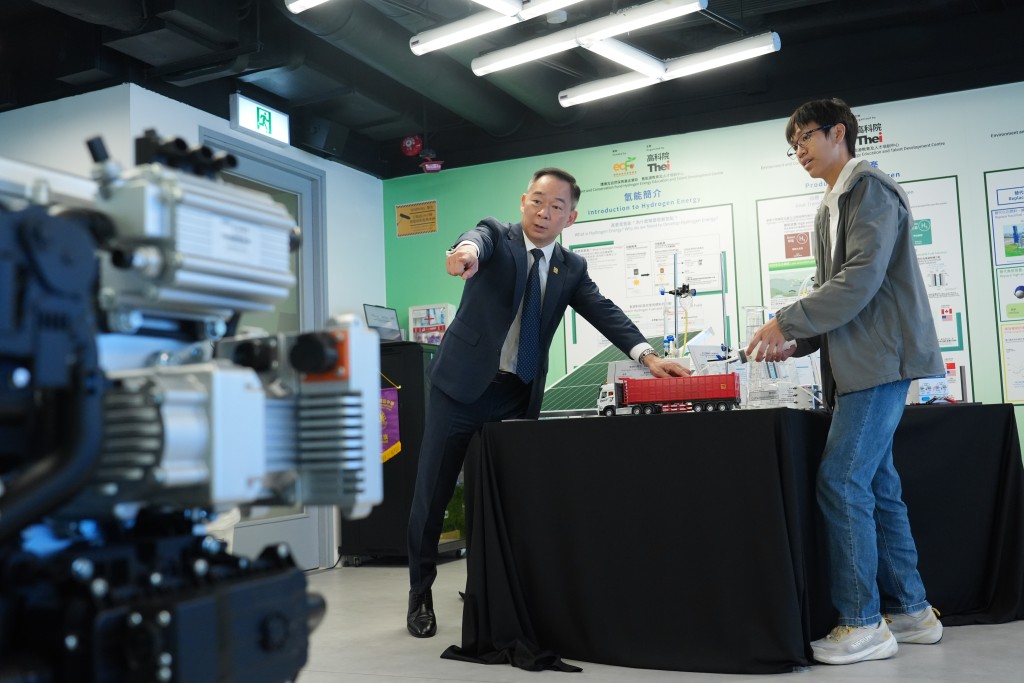
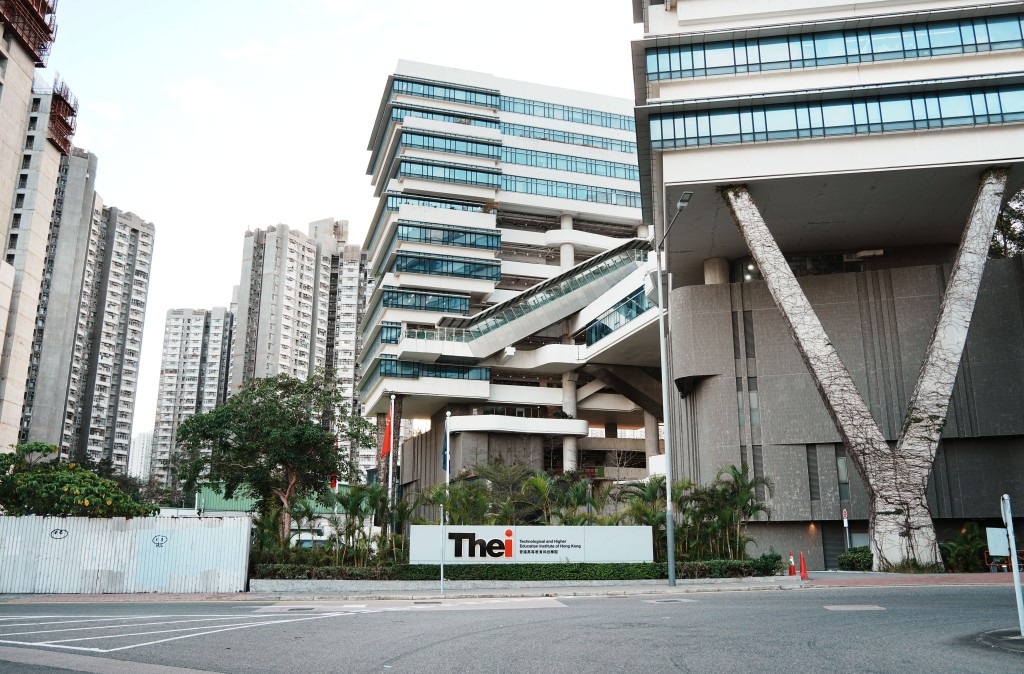
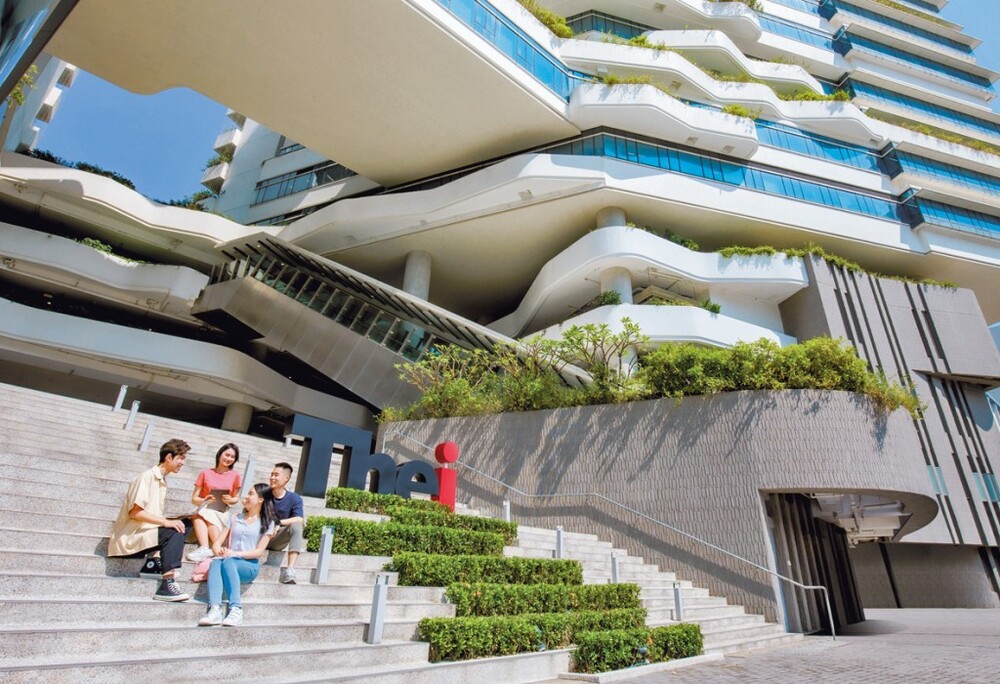
The Technological and Higher Education Institute of Hong Kong is prioritizing the fostering of talent equipped with practical industry skills and advanced AI literacy over the "ranking game" as it seeks to transition into a private university, president Alan Lau Kin-tak said.
The institute’s leader stressed that higher education requires a dual-track approach in which research-intensive universities and applied sciences institutions play equally vital roles.
To bridge the gap between academia and the job market, THEi co-designs its degree programs directly with corporate partners, consulting employers on the specific skills they look for when hiring graduates and building those requirements directly into the curriculum.
THEi co-designs its degree programs directly with corporate partners to meet industry needs.
Compared with traditional universities whose key performance indicators revolve around academic publication numbers, government grants, and teaching, THEi evaluates success through practical outcomes.
Its fundamental criteria include funding from industry, research outcomes that can be used by businesses, and the graduate employment rate, Lau said.
“We are not falling into the ranking game; we are looking for real results,” Lau said. Faculty are still encouraged to publish papers, he noted, but their research must ultimately yield practical solutions for the market.
Preparing students for AI-powered careers
This pragmatic approach is also reflected in how THEi responds to the impact of artificial intelligence on the job market. Rather than viewing it as a threat, Lau believes AI is an essential tool that students must acquire to enhance their competitiveness during job searching.
Under THEi’s curriculum, students spend their first two years mastering core fundamentals before integrating AI tools in their third and fourth years.
Lau stressed that all courses require a compulsory three-to-six-month industry placement to equip students with hands-on experience early on, and almost all students secure a job three months before they graduate.
Anticipating that the current wave of mainland student enrollments may peak within five to 10 years due to demographic shifts, THEi is adopting a risk management approach to diversify its student body.
Lau said the institute primarily targets mainland students using Hong Kong's globally recognized credentials as a springboard for overseas studies, as well as international students who wish to establish careers in Hong Kong or use the city's connectivity as a gateway to the mainland and Asia.
Seeking global talent and university status
Recruitment efforts are primarily focused on Belt and Road nations, Association of Southeast Asian Nations neighbors, and certain European markets, he added. Recently, THEi enrolled a Swedish student who was drawn to its applied sciences model, which is already well established in Europe.
To ensure financial barriers do not deter talent, the institute offers dedicated scholarship tracks tailored for mainland, Belt and Road, and international students who lack the financial means to self-fund their studies.
THEi seeks to raise its mainland student enrollment cap to 40 percent.
Furthermore, it is in the process of upgrading to a University of Applied Sciences, having already passed three Programme Area Accreditations and maintained the required minimum enrollment of 1,500 students.
Currently, it is registering under the newly amended Post Secondary Colleges Ordinance, which regulates self-financing post-secondary colleges offering degree and sub-degree programs.
Once the three-year transitional period is completed, THEi will apply for an Institutional Review conducted by the Hong Kong Council for Accreditation of Academic and Vocational Qualifications, with the official university title ultimately granted by the Chief Executive.
THEi president urges industry synergy in new uni town
The government must prioritize surrounding corporate and industrial ecosystems in the Northern Metropolis University Town rather than merely building standalone school buildings, THEi president Alan Lau Kin-tak said.
Lau noted that THEi must first focus on achieving its goal of upgrading to a University of Applied Sciences before carefully considering a move into the Northern Metropolis.
Alan Lau says the institute is not yet ready to join the Northern Metropolis University Town.
While the institute does not intend to join the first phase of the Northern Metropolis University Town at Hung Shui Kiu, it is taking a wait-and-see approach and remains open to future stages.
Lau pointed out that the key factor for THEi’s future move will depend on whether the university town’s surrounding science parks and enterprises align directly with the programs it provides.
Citing mainland industrial parks and New Energy Vehicle hubs as a model, Lau said clustering NEV firms directly around a campus research center allows students to collaborate on live projects and helps commercialize research and development.
Regarding the broader research ecosystem between Hong Kong and mainland institutions, Lau pointed out that mainland research universities hold a distinct edge backed by a robust surrounding supply chain.
While mainland universities handle fundamental breakthroughs, institutes such as THEi can leverage their strengths in commercialization and generating practical solutions for industry, he added.
THEi seeks 40pc mainland quota, vows strict vetting
THEi has applied to the Education Bureau to raise its mainland student enrollment cap from 30 percent to 40 percent after fully utilizing its current quota this academic year, president Alan Lau Kin-tak said, while pledging strict vetting against fake academic credentials.
Under government stipulations, self-financing institutions must max out their existing tier – stepping up gradually from 20 percent to 30 percent – before applying for the 40 percent ceiling.
Lau noted that the institute’s mainland student headcount remains modest compared with Hong Kong’s eight publicly funded universities, with students enrolled across all disciplines.
He attributed the school's appeal to its strong local job placement and practical skills training. For example, its Chinese pharmacy program uses Cantonese as the medium of instruction instead of English or Mandarin.
The requirement was introduced in response to calls from local industry partners, who stressed that graduates must be able to speak Cantonese to communicate with elderly patients and dispense herbs in local clinics.
At the same time, the school has hired instructors to run dedicated Cantonese classes to help Mandarin-speaking students adapt to the program.
Furthermore, Lau stressed the institute's rigorous admissions checks amid the expanding quotas, as Hong Kong universities have faced a surge in admissions fraud involving applicants submitting forged academic credentials.
"Students come here to learn real skills, not expecting to simply buy a diploma," Lau said, highlighting that THEi will never compromise its standards.