Chen Zhu, former Chinese health minister, who won the Shaw Prize in Life Science and Medicine, has urged Hong Kong to use its "patient capital" to help commercialize mainland China's booming biotech innovations locally during his visit for the award recently.
Chen noted that China's drug out-licensing deals are set to hit US$170 billion (HK$1.3 trillion) this year.
Because drug development takes 10 to 15 years, many early-stage assets are licensed out to foreign firms, he said, urging Hong Kong to form a biomedical alliance with the Greater Bay Area to capture these opportunities.
Chen also praised the planned Centre for Medical Products Regulation in the Northern Metropolis, noting the drug regulatory authority modeled on the US Food and Drug Administration has the potential to set international standards for modern therapies.
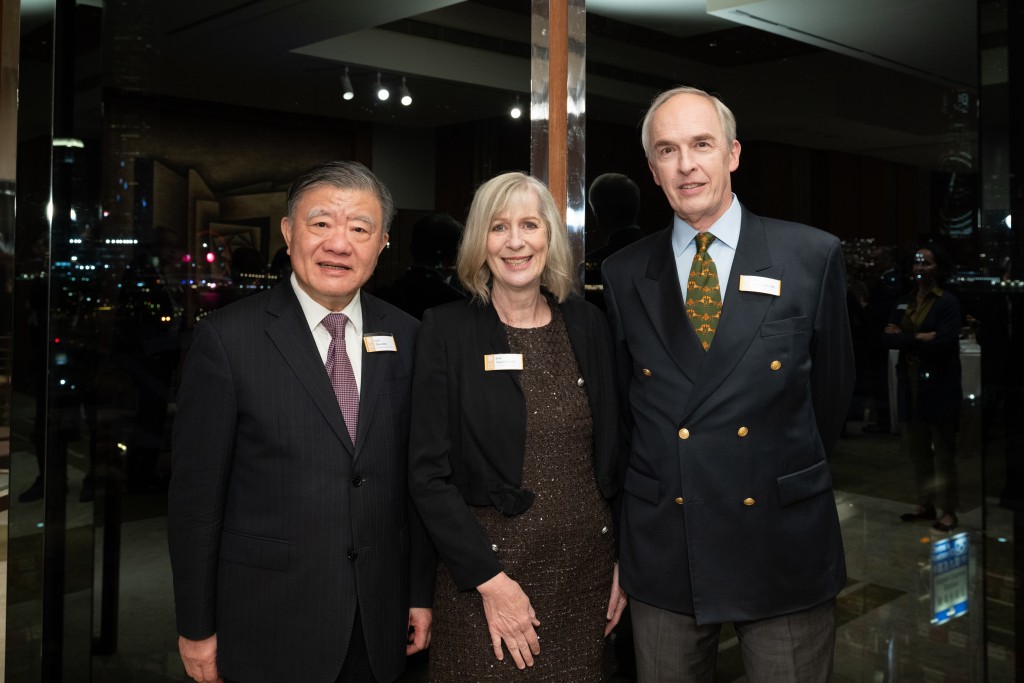
Chen was in the city to receive his share of the US$1.2 million Shaw Prize. He, alongside Anne Dejean and Hugues de Thé from France, earned the accolade for a chemo-free targeted therapy that transformed one of the world’s most aggressive blood cancers into a curable disease.
Unlike cancers that mostly strike the elderly, the disease typically hits working-age adults at an average age of 42 to 45. Without targeted care, over half of patients historically died within days of diagnosis from severe internal bleeding.
A 35-year cross-border collaboration
Dejean and de Thé first discovered that APL is caused by a chromosomal rearrangement producing an abnormal hybrid protein, PML-RARα, which disrupts blood cell maturation.
Dejean, a member of the French Academy of Sciences, noted their molecular discovery and the clinical development in China occurred simultaneously but separately.
"It was disconnected," Dejean said. "It's not our discovery that led to the treatment. It was totally independent towards the Chinese story."
Yet the two tracks later aligned. "In the end, everything fits, which is very, very rarely the case [in medicine]," de Thé said.
In Shanghai, Chen’s team pioneered the clinical use of retinoic acid combined with arsenic trioxide, an agent from traditional Chinese medicine.
De Thé said their team had observed in animal models that "retinoic acid and arsenic have a very strong level of synergy to eliminate the disease," crediting Chen with quickly moving the finding from mice into human clinical trials.
Chen added that the two groups were like a pendulum. "Sometimes Shanghai was ahead, sometimes Paris was ahead, but it always maintained a dynamic balance," he said.
World-first oral drug
Building on the laureates' pioneering work, University of Hong Kong researchers have since turned the intravenous arsenic treatment into a world-first oral drug.
The chemo-free oral treatment boasts a long-term cure rate of 97 to 98 percent and allows patients to recover at home, said Harry Gill, a clinical associate professor of medicine at the university. He added that the drug is currently undergoing clinical trials for mainland registration.
Hong Kong records 25 to 30 new cases of the disease a year, while the mainland sees about 4,000, Gill noted.